
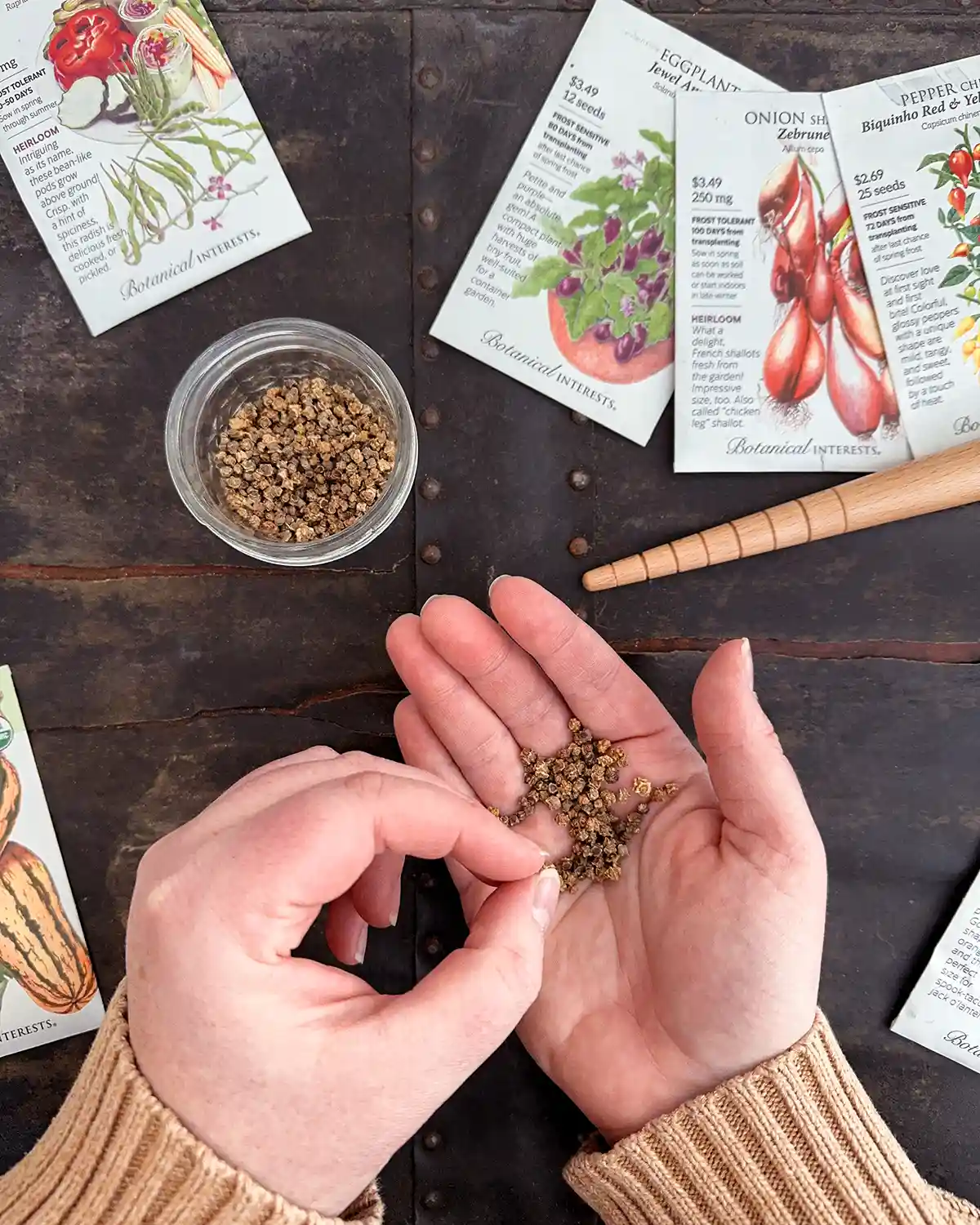
Another year, another grow list. I officially bring to you our 2026 Kitchen garden grow list. I tried to pare down the list, I really did, but true to form, there are sooooo many vegetable and herb varieties on this list. If I’m being honest, one of the reasons I grow a kitchen garden is because I like variety and trying new things. Purple peppers? Sign me up. Fancy cornichon cucumbers to make French pickles? Yes please.
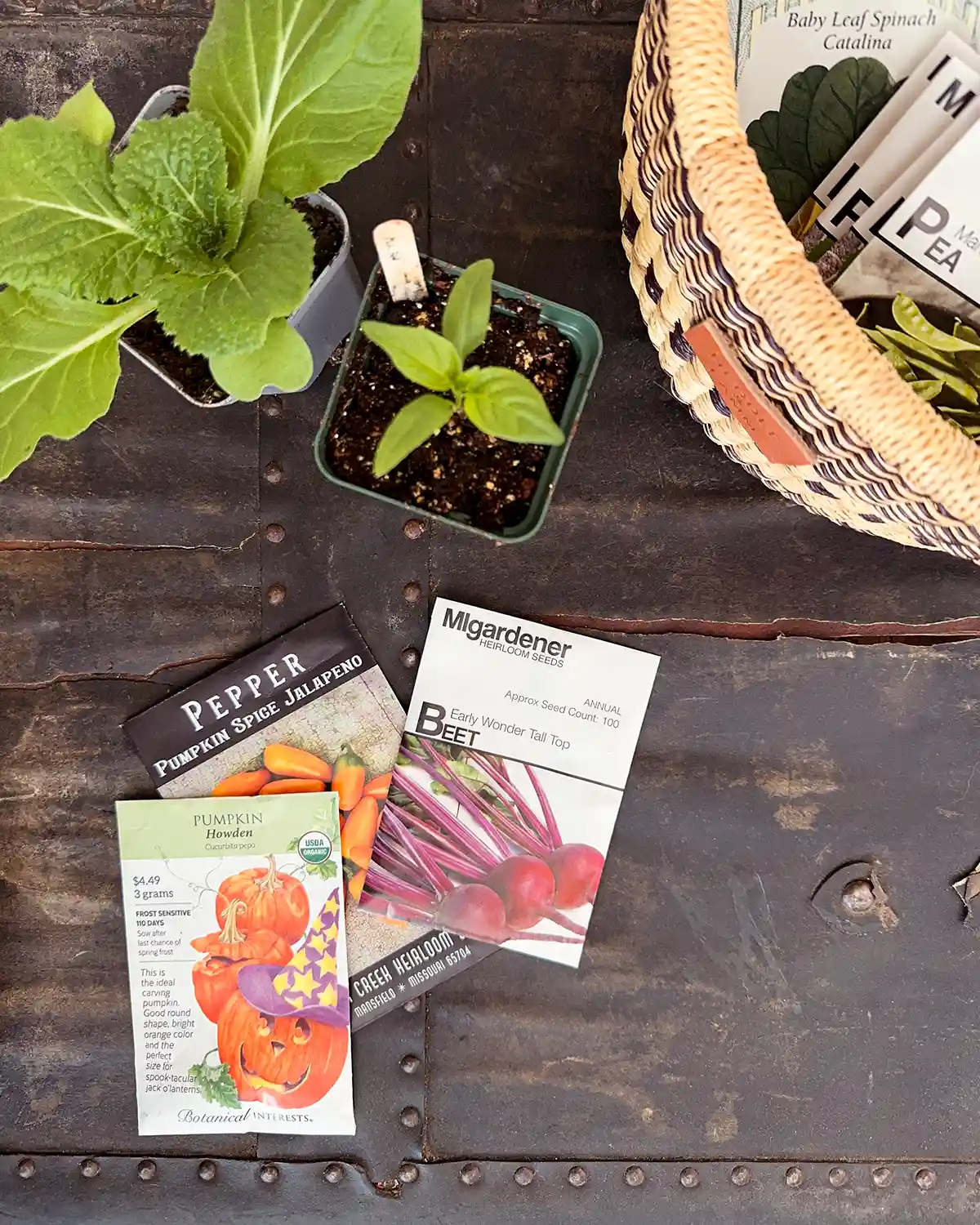
This year’s garden goals are really focusing on production as much as possible. Our garden petered out big time last year due to a major drought. Since I water the garden with well water and a hose, I basically abandoned it in early August, the height of the garden season, because I feared our well would run dry. When you watch your neighbors struggle, you go into major water conservation mode. Rectifying that and coming up with a backup system is high on the project plans in the garden.
But enough about light stuff like droughts and climate change (note the sarcasm), and let’s ogle some seed varieties.
Before we begin, we are in zone 5b in central Vermont.
* New to me variety for 2026
Artichokes
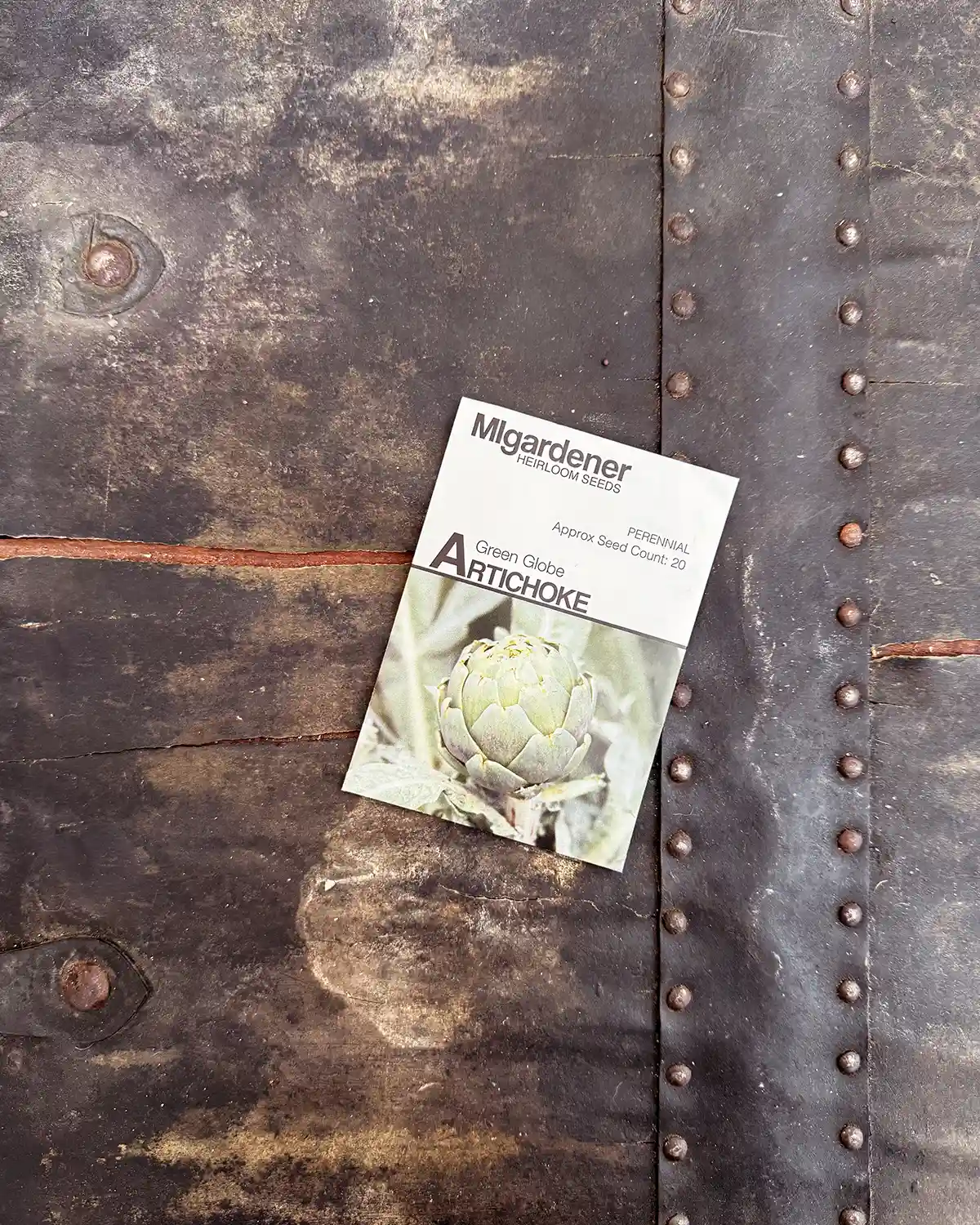
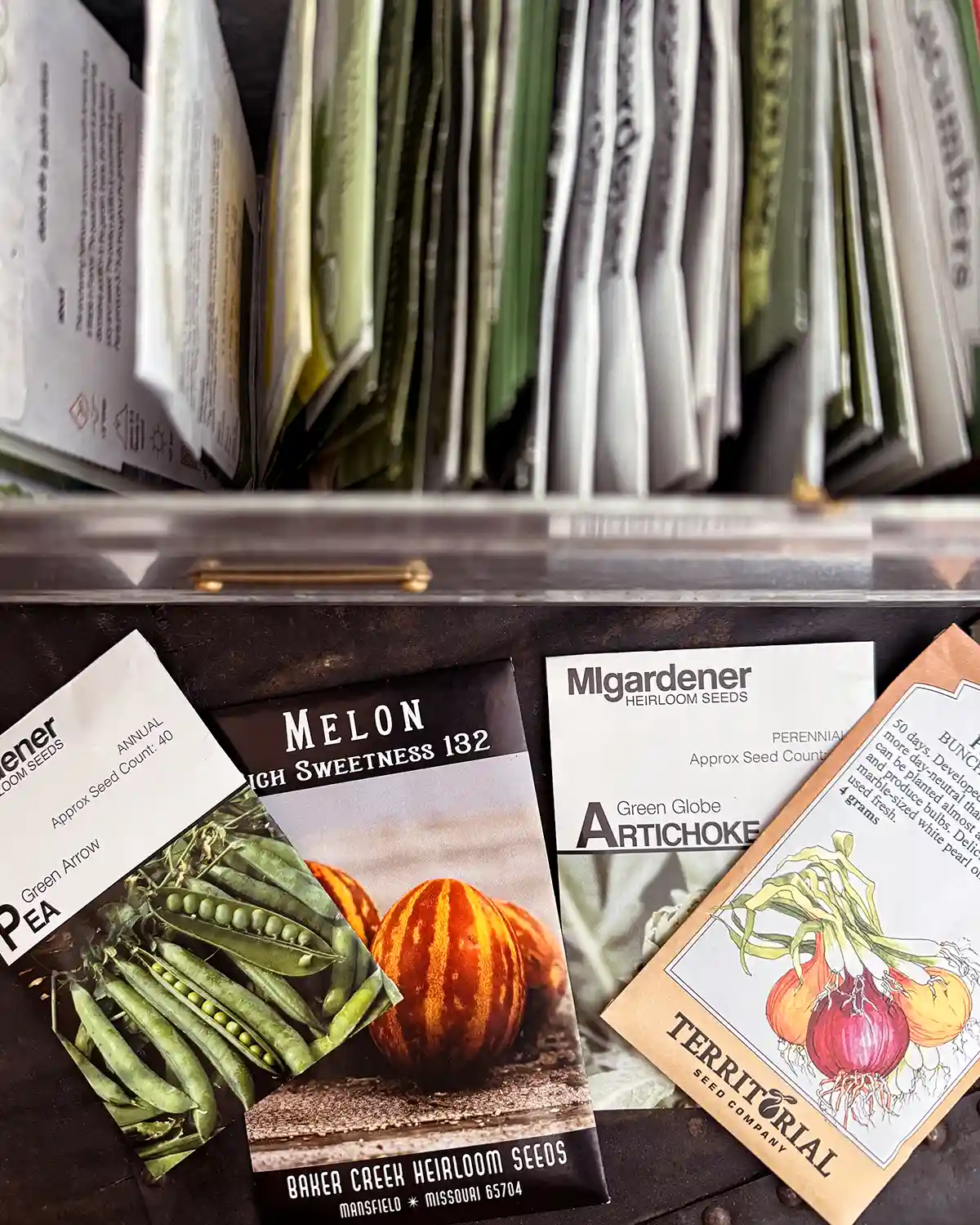
Every year, I try to overwinter artichokes, and every year they seem to fail. However, I managed to overwinter one five or six years ago. Someday I’ll set myself up better to overwinter them, but it hasn’t been a priority. This variety is our tried and true.
Beans (Dry)
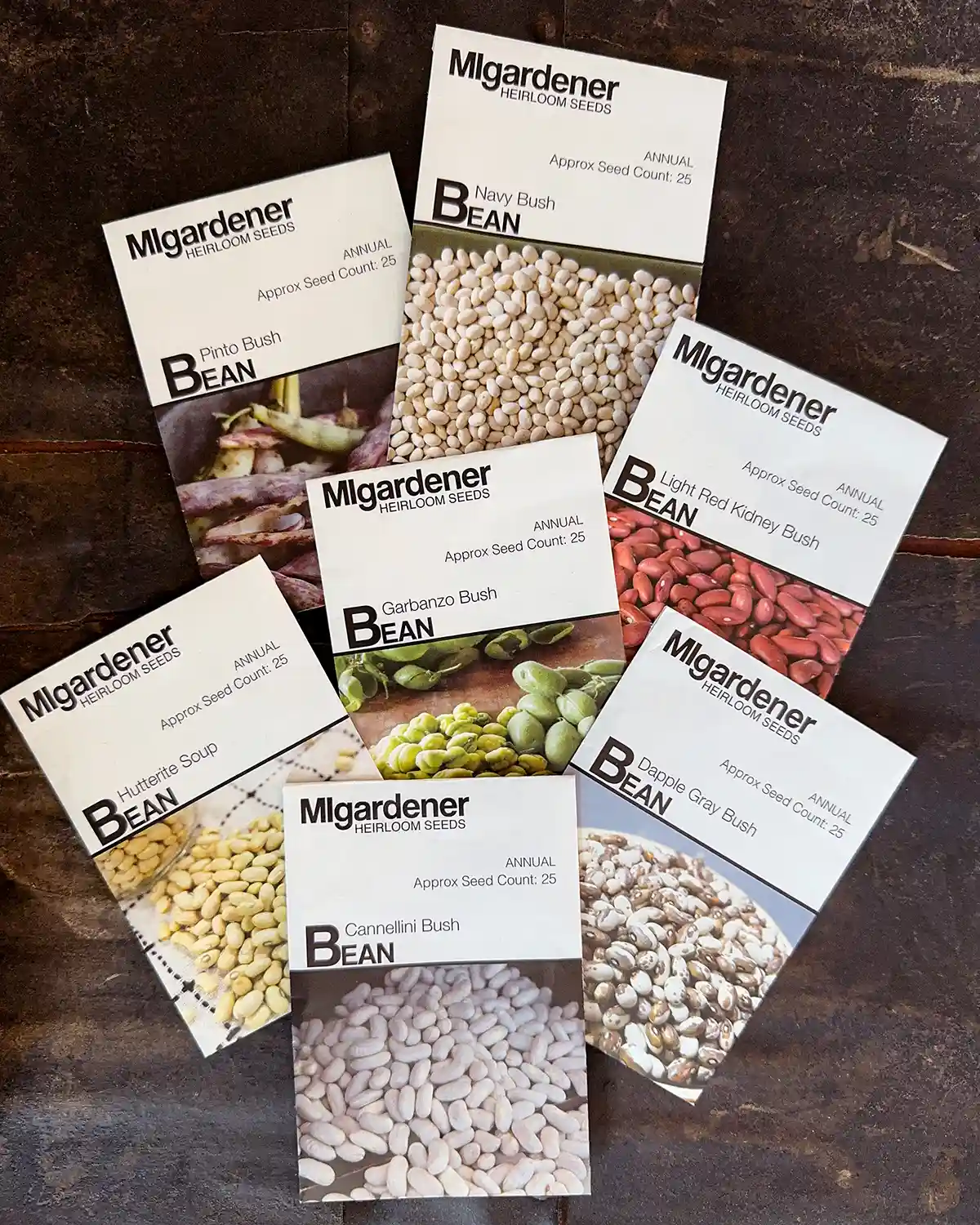
I love dry beans!. They’re one of the staples in the garden, and I love how long they store in glass jars in my pantry. We are woefully short on beans right now, and I saved just enough to seed starting for this season’s garden. Note to self, grow more dry beans. Although the bush varieties take up a large space. So if you’re short on room, there are other, more prolific things to plant in the garden.
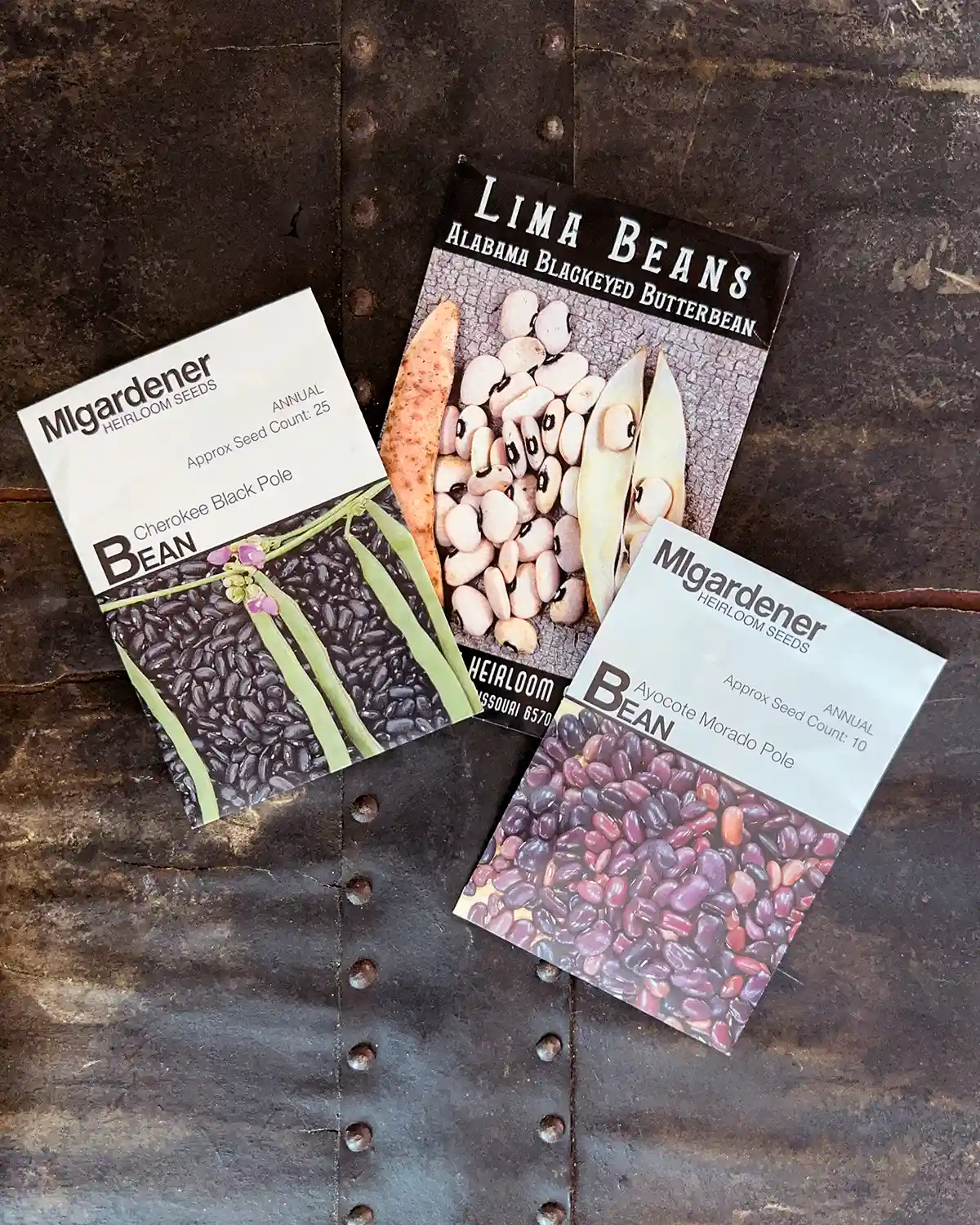
I’m excited to try the Ayocote Morado beans. They’re very high in protein, highly regarded for use in Mexican dishes, and a hearty option for soups and stews. I also picked up Rebosero bean seeds, another Mexican heirloom to try, specifically for their reputation as being THE bean for making refried beans.
The Greek Gigante seeds are another new-to-me variety that I’m super stoked to try. I have an old Martha Stewart cookbook, and she has several recipes that call for these oversized beans, and she states there is just no substitute for them. When Martha speaks, I listen, and grow the damn beans since I haven’t found a place to purchase them.
Bush Varieties
- Cannellini Bean
- Dapple Gray Bush Bean
- Garbanzo Bean
- Hutterite Soup Bean
- Light Red Kidney Bean
- Navy*
- Pinto Bush Bean
Pole Varieties
- Ayocote Morado*
- Black Eyed Butterbean
- Cherokee Trail of Tears Black Bean
- Greek Gigante*
- Rebosero Bean*
Beans (Snap)
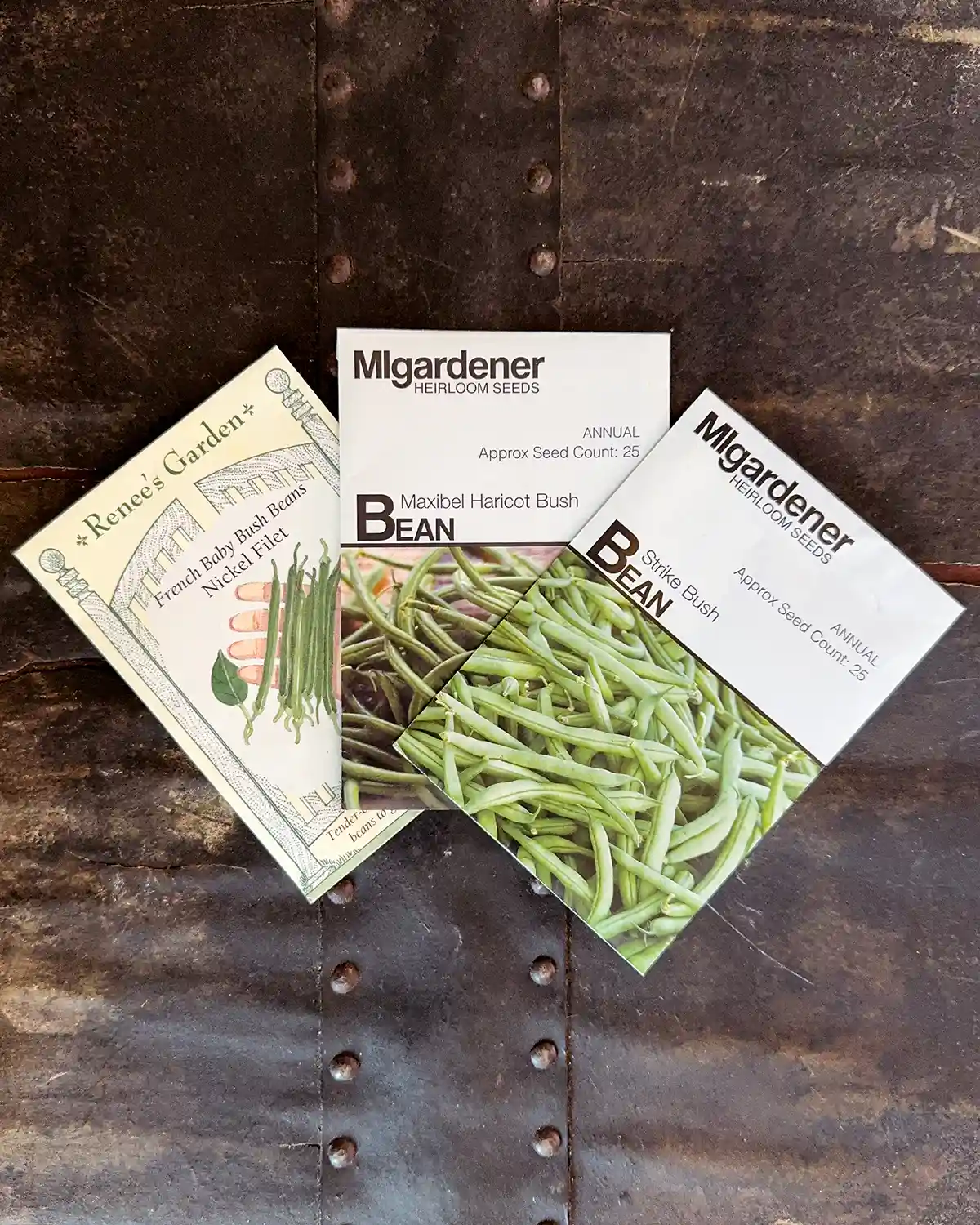
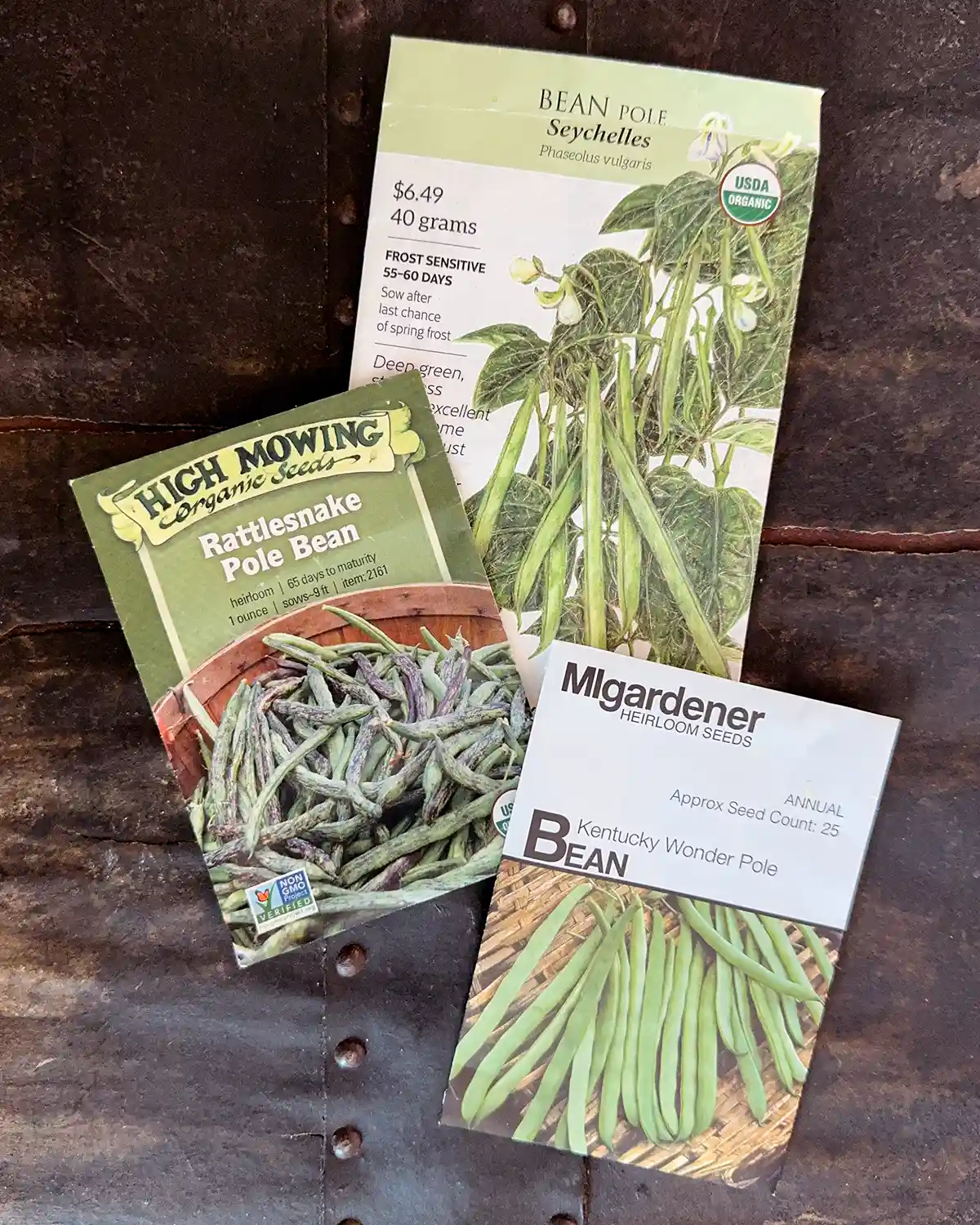
The snap beans went bananas last year, thanks to switching out some of my usual bush varieties to pole beans. We ate our fill of beans and then some. The plan this year is to again focus primarily on pole beans for fresh eating, since they provide a continuous harvest throughout the season. But I may mix in a few tried and true bush varieties to freeze for winter consumption.
If I had to grow one bean forever and ever, hands down, it’s Seychelles pole beans. I tried them last year, and they were outstanding! They are super prolific, similar to Strike and Kentucky Wonder, but have more flavor like my favorite bush variety, Maxibel Haricot Vert. I’m trying to use up the remaining seeds I have in other varieties and will likely stick with Seychelles and Maxibel Haricot Vert from now on.
Bush Varieties
Pole Varieties
Beans (Soy)
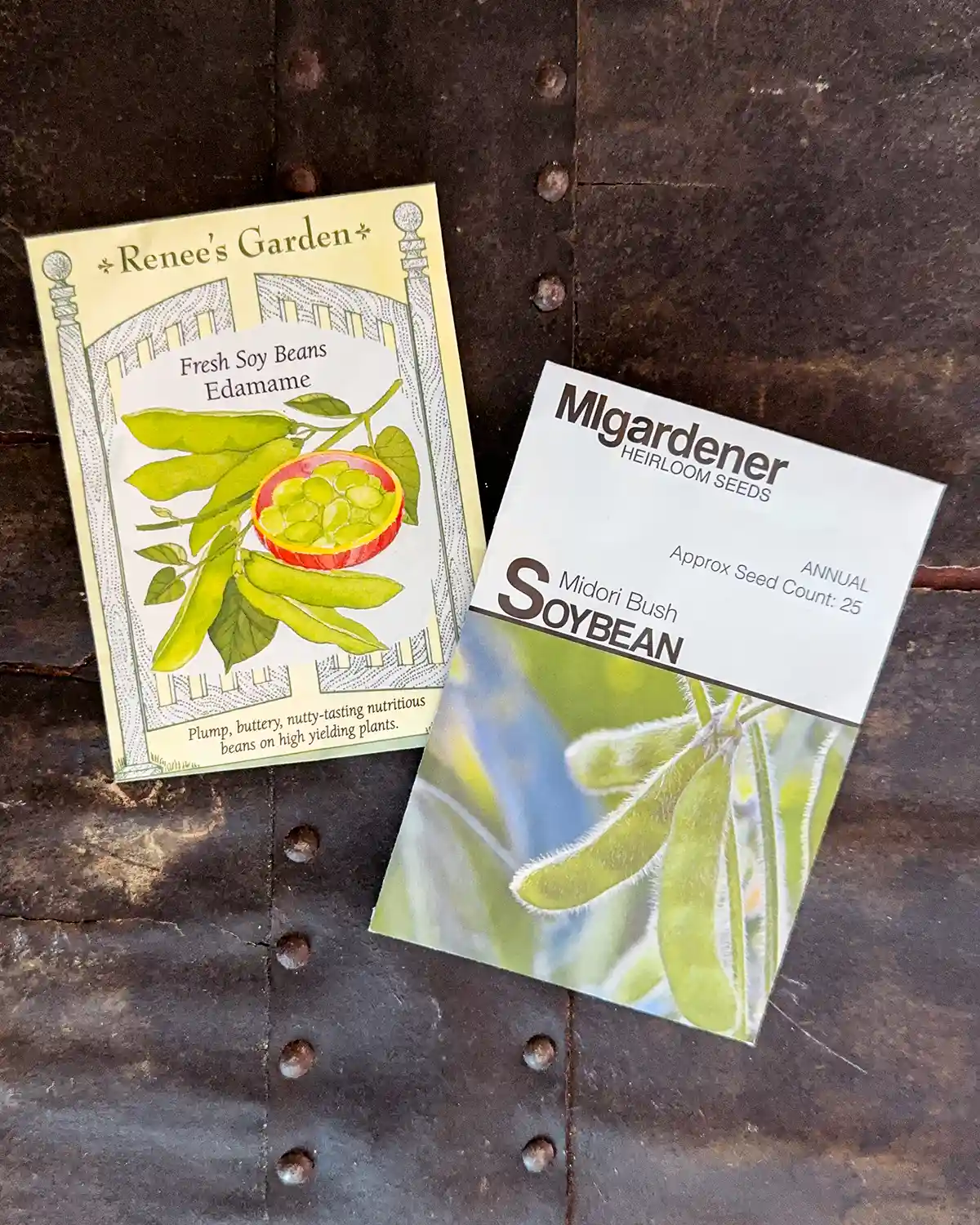
This is a new-to-me category for me this year. Well, kind of. Last spring, Rowan requested edamame plants in the garden. They have edamame at school regularly, and she loves it. Naturally, I said yes and sourced a packet from the local garden center. It was the last one I could find; time was dwindling since they have a long growing season, and so I bought them. There were eight seeds in the packet, and not a single one germinated. So I did better sourcing this year and have a couple of different varieties to try.
Beets
It’s the same old song and dance with beets again this year. Although my seeds are getting very old and aren’t germinating as well. I may try to overseed them this year, and maybe next year I’ll try a few different options. I love beets, especially pickled or roasted. Mmmm. And beets are far too expensive at our local grocery store, so here’s hoping we have an abundant harvest so I can eat my fill.
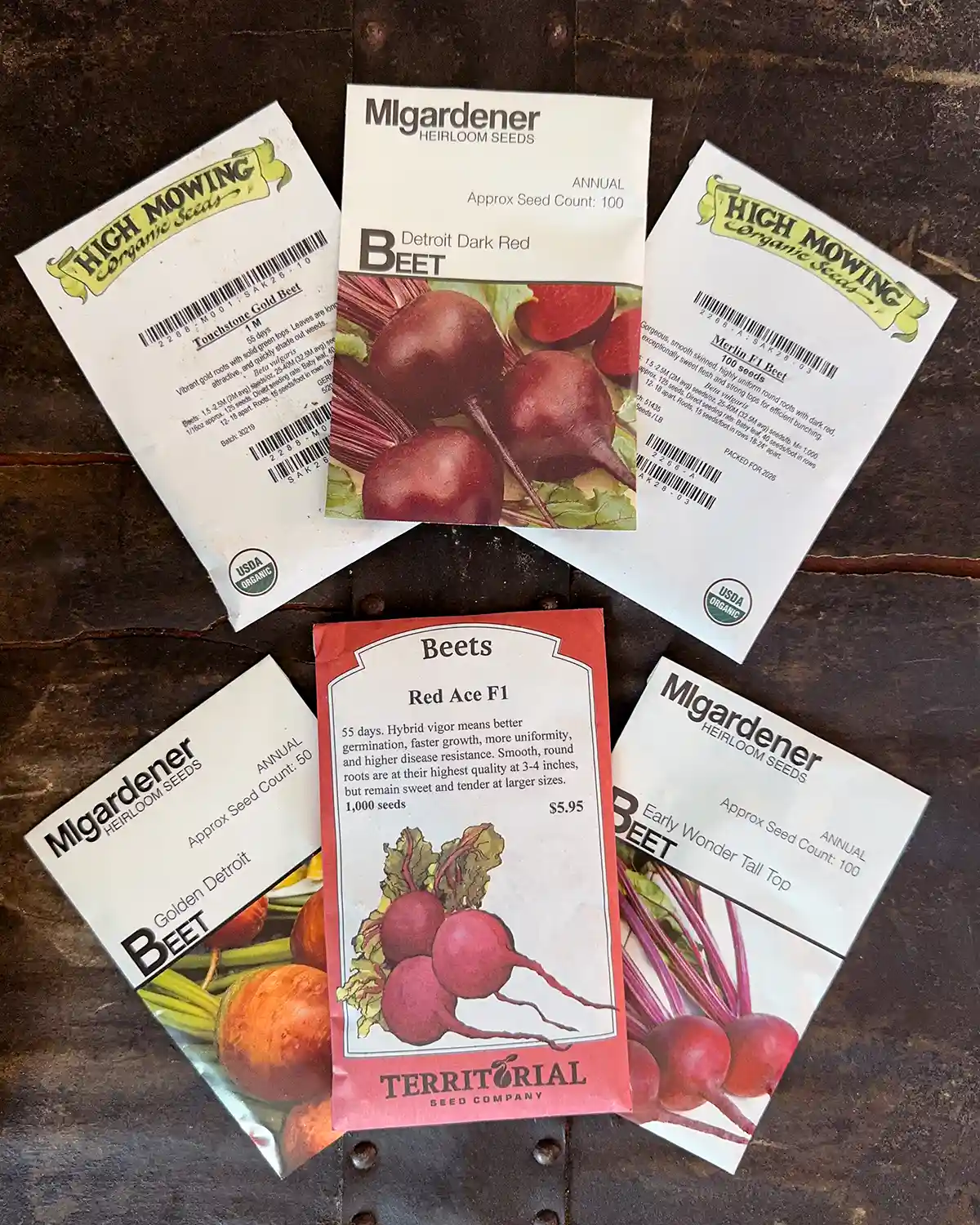
I am trying a new-to-me beet, Red Ace from Territorial Seeds. It’s a hybrid variety that’s supposed to grow faster in the spring. Sometimes I don’t get great spring beet harvests because the hot weather ramps up so quickly. And warm-weather beets don’t taste good. So maybe these will become my spring beet.
If you’re new to beets, I suggest starting with the golden varieties like Golden Detroit or Touchstone Gold. Many beet haters complain of the earthy flavor, which is true of all beets but less so with the golden varieties. They’re great gateway beets.
- Detroit Dark Red Beet
- Early Wonder Tall Type Beet
- Golden Detroit Beet
- Red Ace Beet*
- Sweet Merlin Beet
- Touchstone Gold Beet
Broccoli
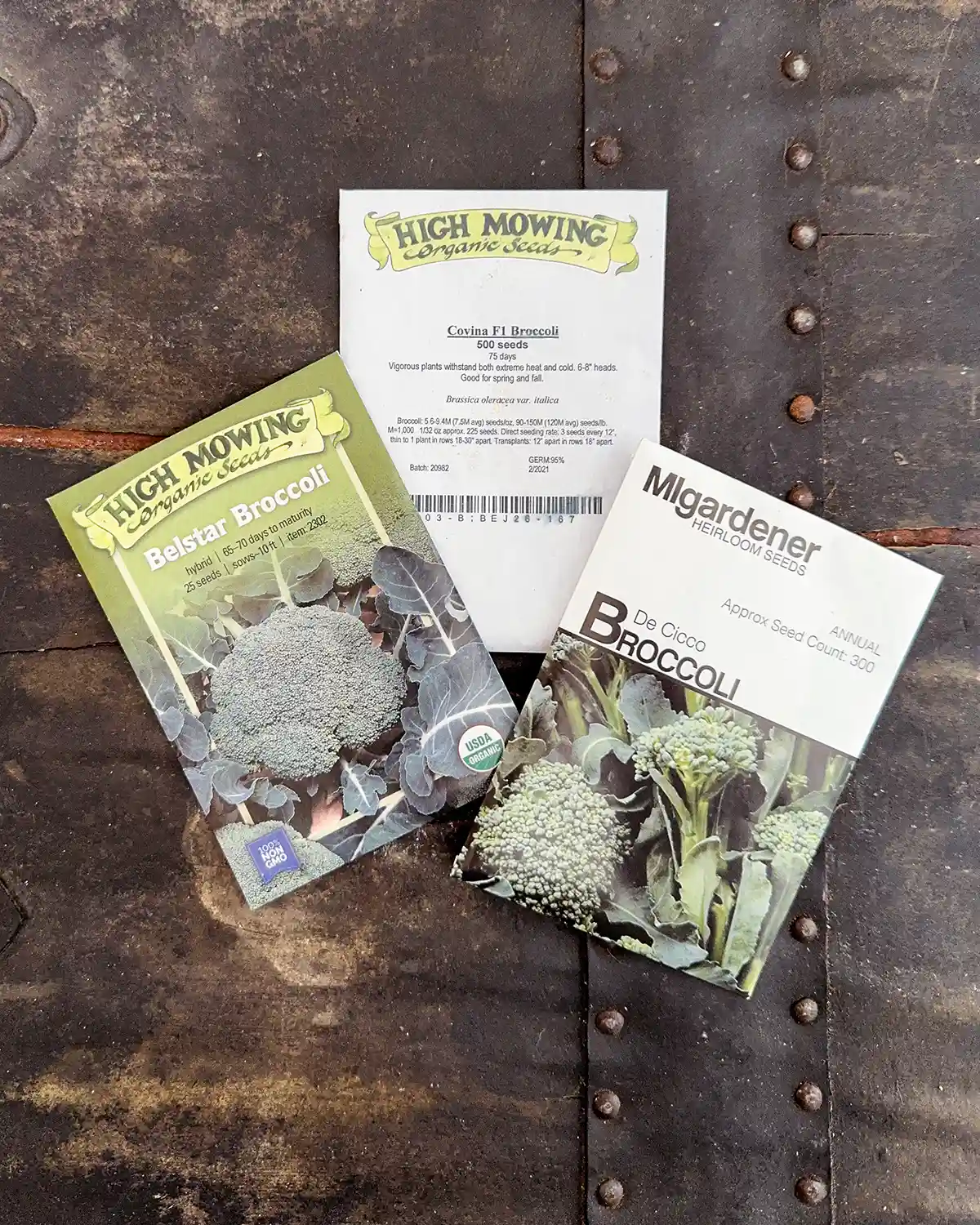
Let me introduce you to my favorite broccoli trio, Belstar, Covina, and De Cicco. Normally, I love to grow heirloom varieties and will choose them over a hybrid any day. But sometimes, you just want to get dependable harvests. For fall broccoli growing, I lean on the heirloom De Cicco. But in the spring, which often gets too warm for broccoli, I prefer the F1 hybrids Belstar and Covina. They are solid winners for me as long as I start them indoors early.
Brussels Sprouts
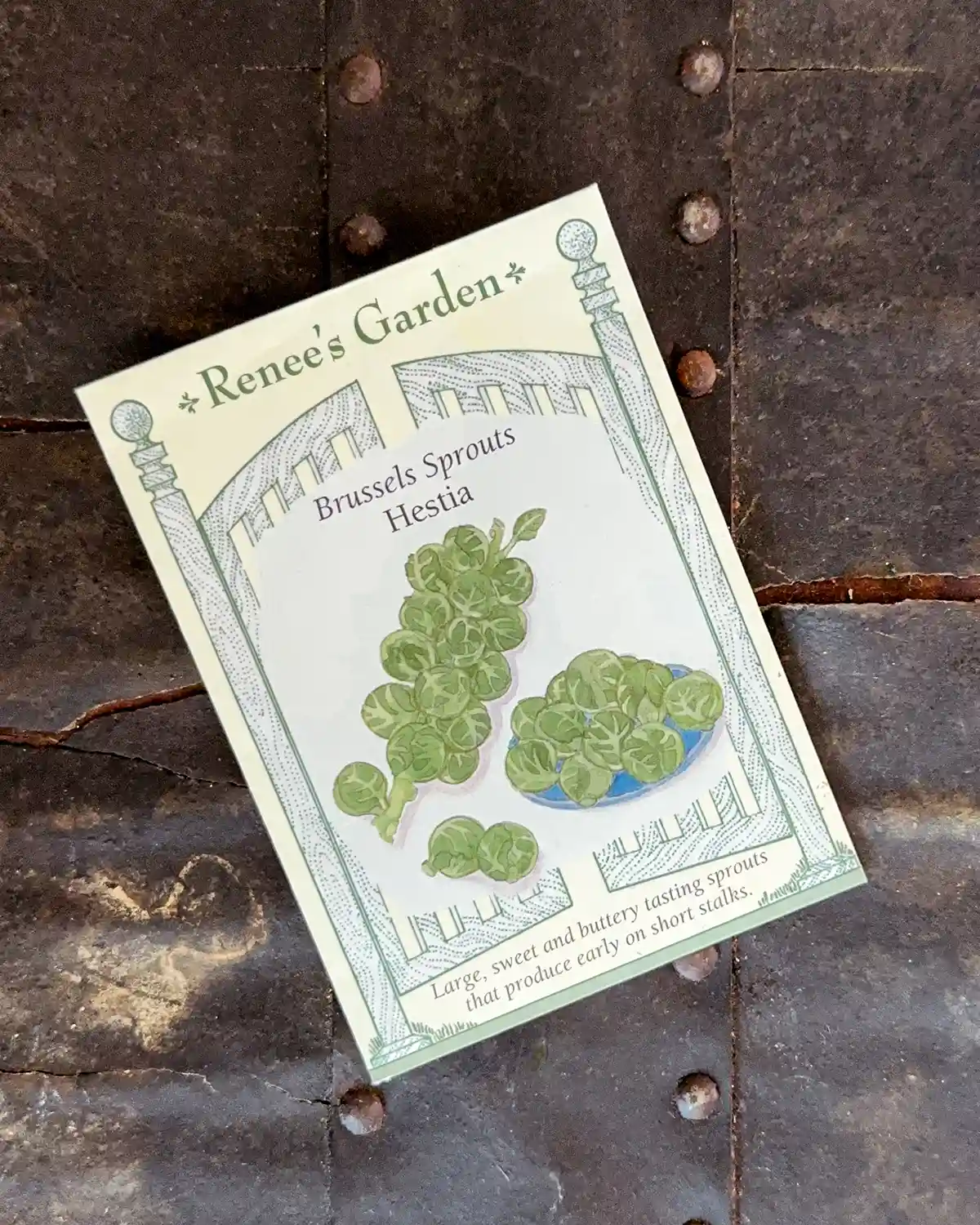
I’ve tried ALOT of different brussels sprouts over the years without much success. The harvests were pretty minuscule. Then last season, I impulsively purchased some Hestia seeds, and the variety blew me away. So naturally, after figuring out THE ONE, it’s all I bought for seeds this year, and I am having the hardest time with them. The first packet I bought online arrived empty. The replacement came, and the seeds were mostly crushed. I got one, sad seedling. The third packet came, and only four or five seeds germinated out of 20-ish. Maybe I’m just not meant to grow brussels sprouts?!
Cabbage
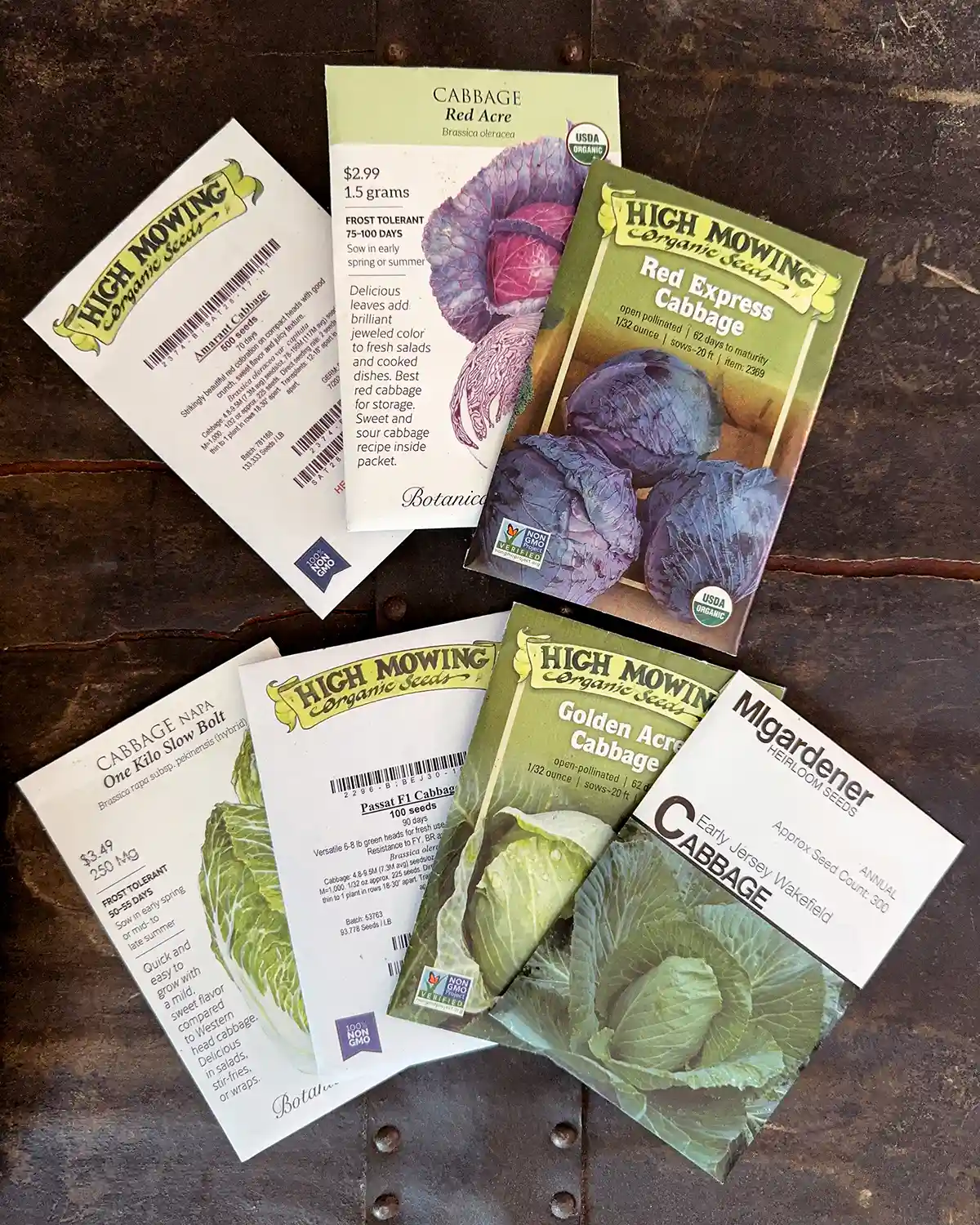
Last growing season, I set out on some cabbage trials to find my all-time favorite red cabbage, along with a variety or two of green cabbage. The trial was a success, but I didn’t write down my favorites. While I’ve got the green cabbage nailed down, I cannot recall the red cabbage winners. Since I still have plenty of seeds of each, let’s test them again!
Passat was a new-to-me large-headed cabbage that I grew last year, and it blew me away. It’s a hybrid, but I had yet to grow a large cabbage to use for cabbage rolls in the fall, and this was it. I loved it so much, I bought a bulk pack this year and plan to grow so much more of it.
One variety I’m trying out this year is Napa cabbage. It’s synonymous with Chinese cooking, and I decided to give it a whirl to use it in spring rolls. I’m already impressed with how fast, big, and healthy the seedlings are growing. They’re bursting out of their pots and ready to head outside soon.
Red Cabbage
Green Cabbage
Carrots
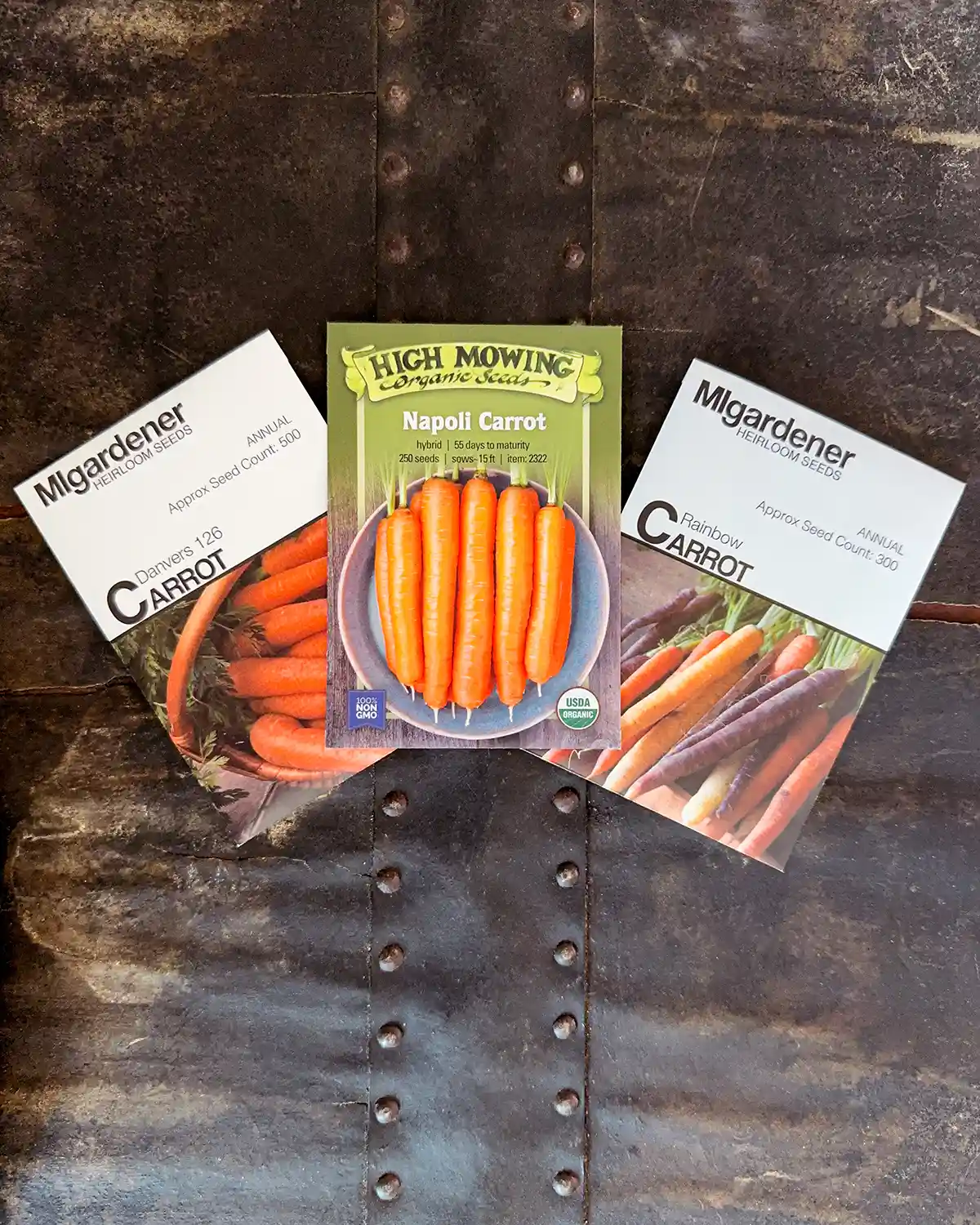
There are three varieties of carrots that I just cannot quit. Danvers 126 (heirloom) and Napoli (F1 hybrid) for cooking and storage. Both are solid growers and produce the most perfect carrots that store well through the winter. I also just can’t quit the Rainbow Carrot blend, a mix of yellow, white, orange, and purple carrots. I was surprised by their storage capability, as we just finished off the last of the colorful carrots on Saint Patrick’s Day. Typically, I grow the rainbow blend for fresh eating and snacking.
I’m not feeling overly adventurous with carrots this year, so I’m sticking with the usuals.
Cauliflower
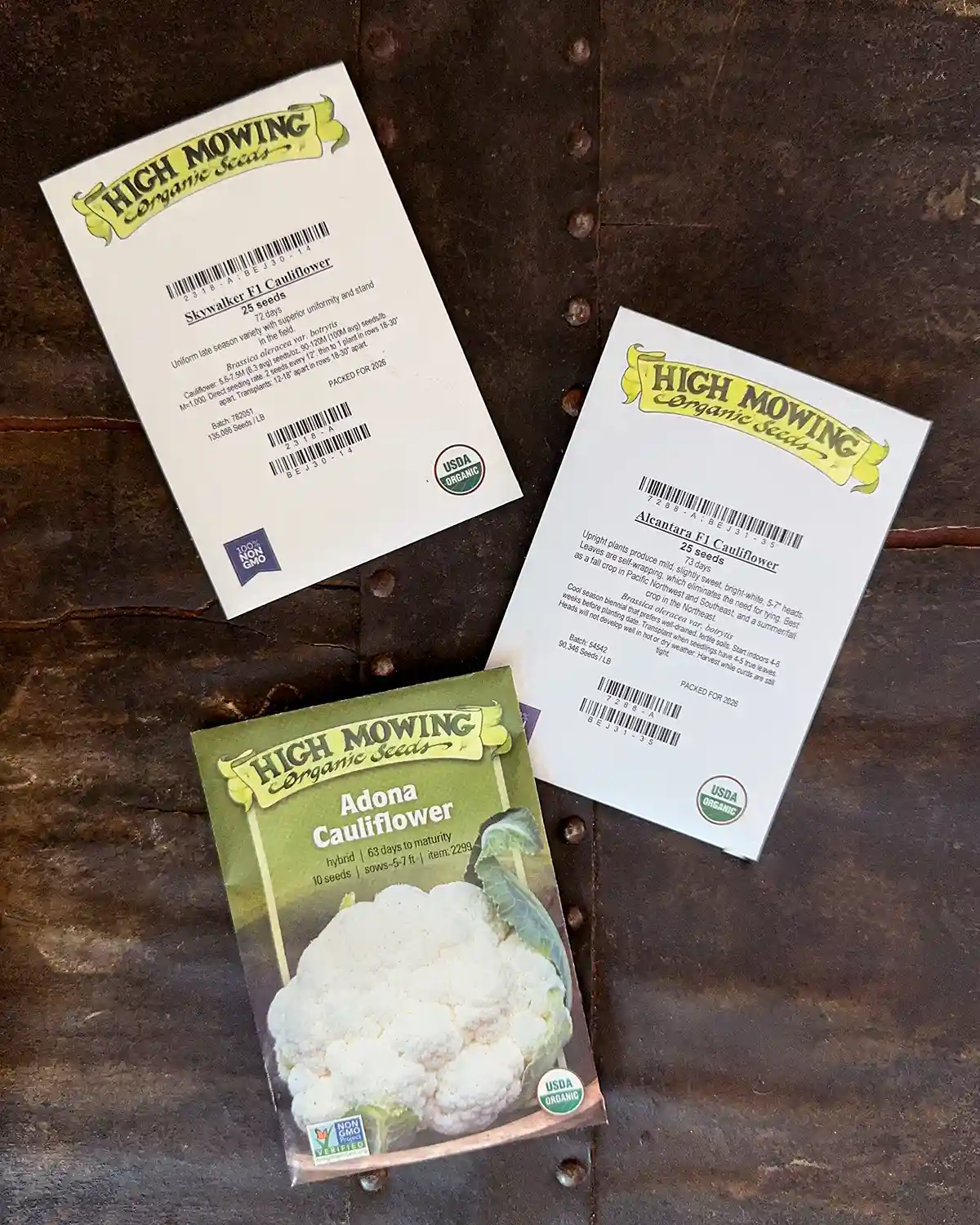
Cauliflower is not a vegetable I’ve had much success with yet, but it is one I so desperately want to grow. I’ve gotten close in years past, but they either rot or bolt right before harvest time. So I’m hitting the cauliflower trials hard this year after not even bothering with it last year and trying a few new varieties. They’re all hybrids, which I haven’t tried yet. Whenever I have big misses with a vegetable category, I usually try hybrids since they are bred to be more reliable and resist common growing problems.
I have the highest hopes for the Alcantara variety, mostly because the leaves are self-wrapping. To get those nice, crisp, white cauliflower heads, you have to protect them from the sun, which yellows the heads. I like the idea of self-wrapping. One less thing to do.
Celeriac
I didn’t grow, or even intend to grow, celeriac last year, but I missed it. It’s one of my favorite vegetables, especially enjoyed as a puree or mash, but I am the sole member of my family who enjoys it. For those who don’t know, celeriac is a root vegetable that produces a large bulb-like root that tastes like celery. When cooked and mashed, it’s like eating potatoes with celery flavor.

Celery
I’ve long grown celery, having the greatest success with Utah Tall, but struggled to keep the plants watered and fed enough to produce the tender, delicious stalks. Last summer, I tried using a couple of Olla Pots in the middle of the celery. They’re terracotta self-watering pots. Bury them, fill them with water, and they provide much more consistent watering. What a difference it made in our celery harvests!

Corn
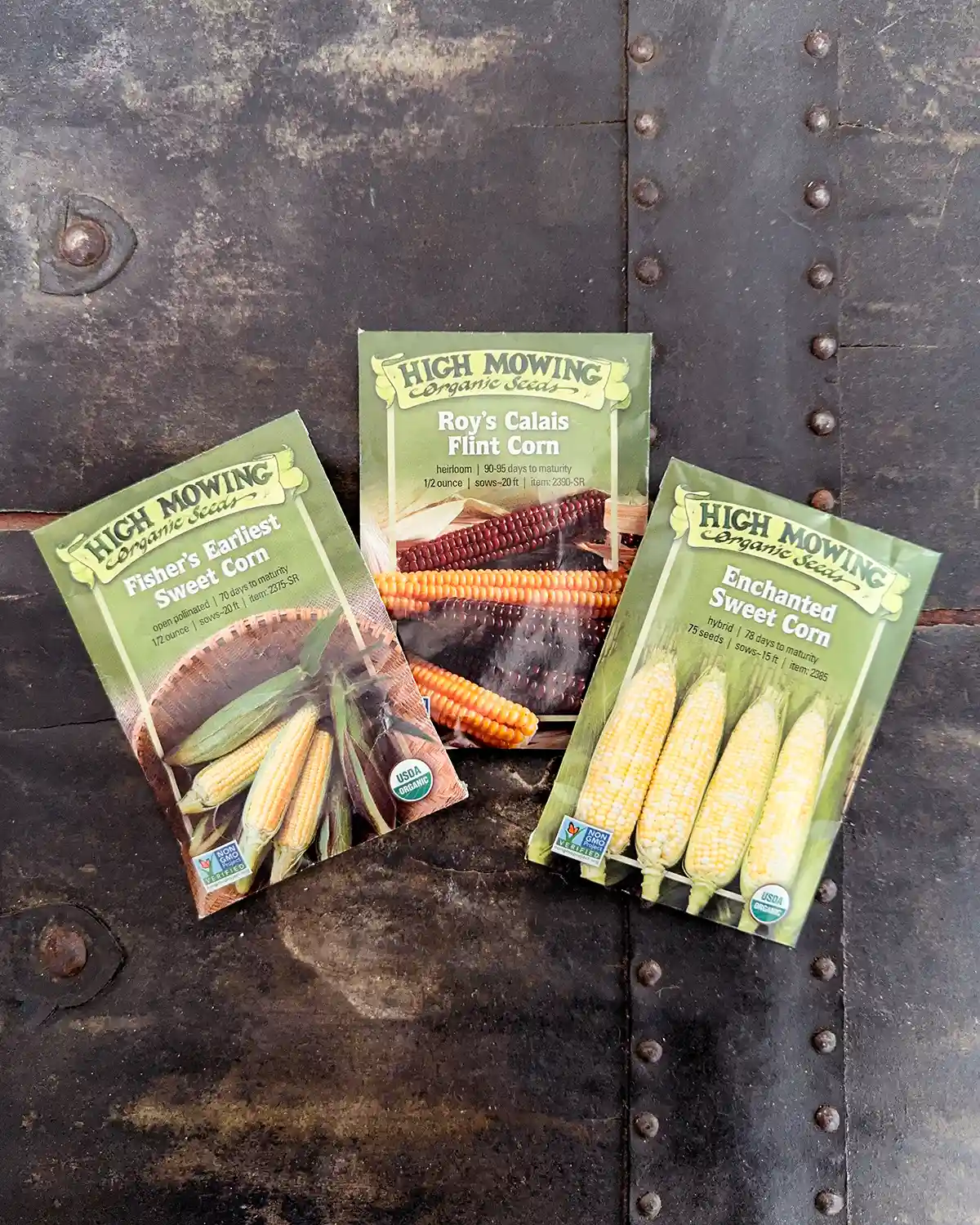
Last summer, I ran out of space in the garden before I could plant the corn. Which wasn’t a big deal since there is a massive, organic farm just a few minutes’ walk from our home, and they grow the most delicious corn. I’m always hit or miss with corn growing since I have such easy access to a farm stand that sells corn. If I do grow it, here are the seeds I plan to plant, leftover from last season.
Cucumbers
Our cucumber harvest from last summer was spectacular! This made up for the garden planning faux pas from the previous season of not leaving enough space for cucumbers. We enjoyed so many cukes fresh, salted with vinegar, in salads, and as pickles. The standout snacker with the kids, forever the Cucamelon. The best pickler for small, whole cuckes, Cornichon. The best larger pickler is a toss-up between Sumter and Boston Pickling. Although Sumter extended longer into the season.
- Boston Pickling
- Cucamelon
- French Cornichon
- Green Finger Cucumber
- Marketmore 76
- Silver Slicer Cucumber
- Sumter Cucumber

Eggplant
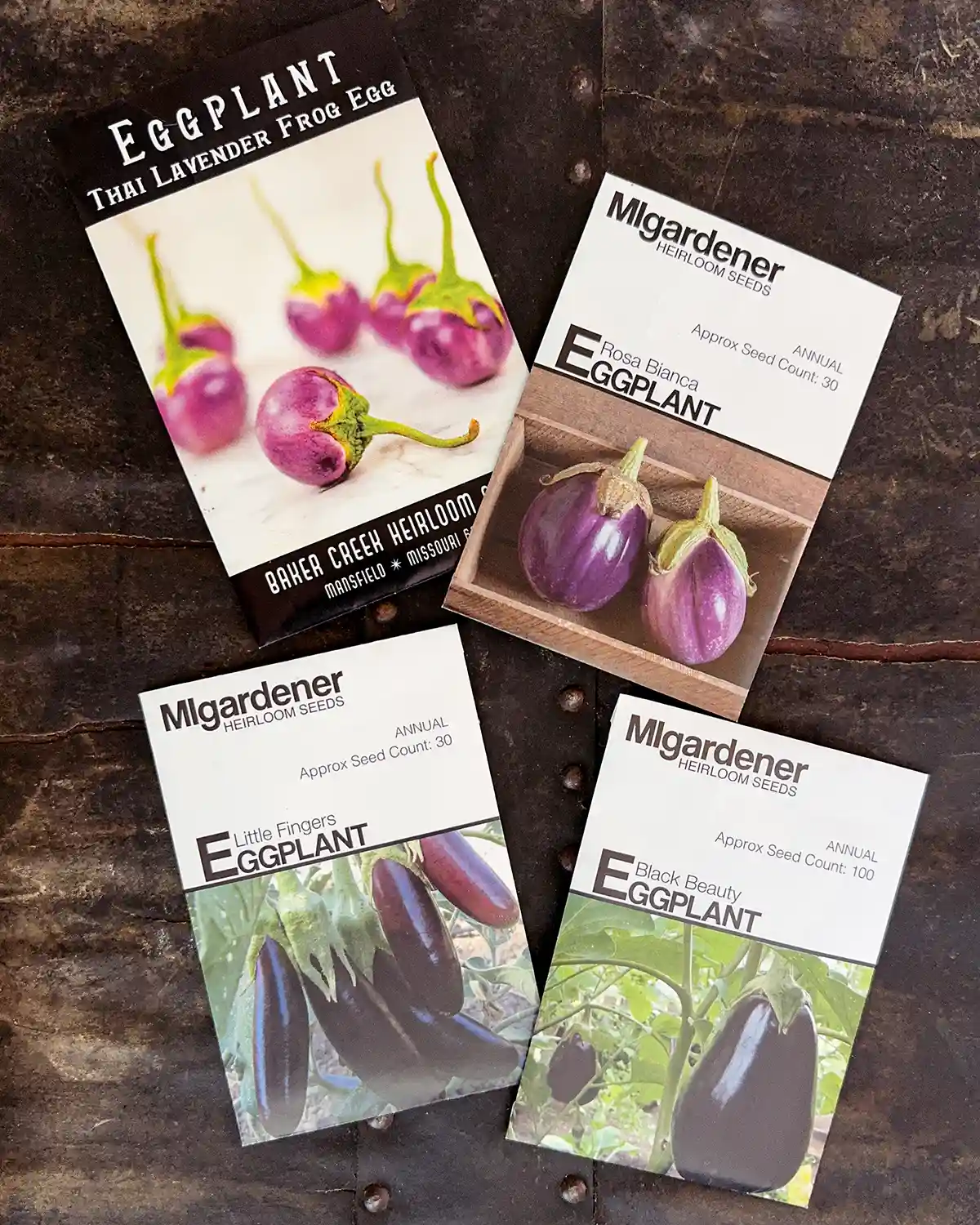
Eggplants continue to evade me. I noticed last summer that the plants started strong, but as the high temperatures and drought hit, they were dropping blossoms. This season, I started them extra early in hopes that the added time would help yield an eggplant or two.
Herbs (Kitchen)
This season, I would like to up my kitchen herb game. I grow most of the herbs, everything from sage and rosemary to dill, cilantro, parsley, basil, and more. This year, I would like to be more consistent and establish one bed specifically as my herb garden, especially for the things that keep coming back or reseed themselves.
- Basil, Genovese
- Chives
- Cilantro, Caribe
- Dill, Teddy
- Oregano
- Parsley, Italian Flat Leaf
- Rosemary
- Sage, Common
- Thyme

Herbs (Medicinal)
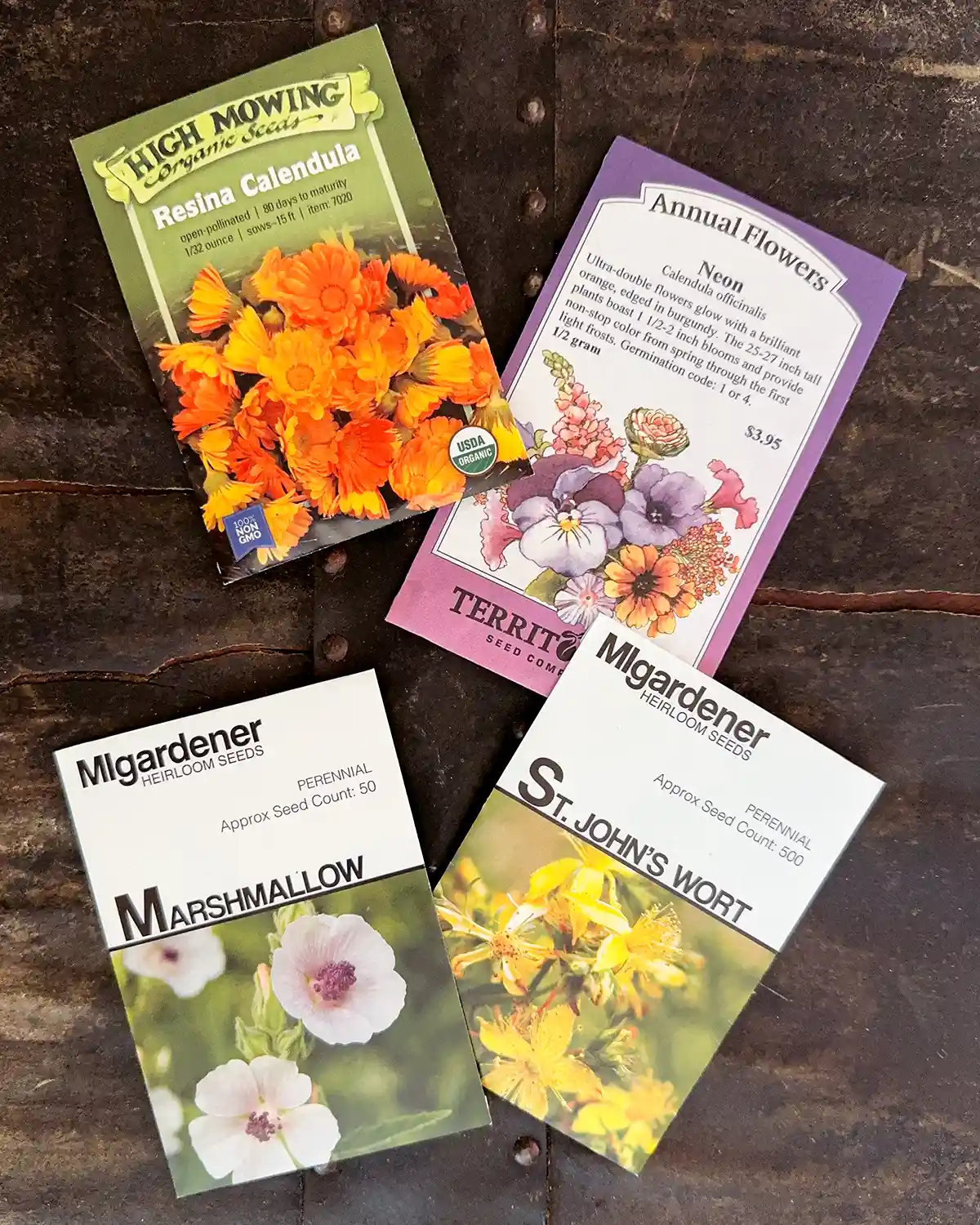
In the fall of 2025, I officially became a certified aromatherapist. It was such hard work but so rewarding. I still have no idea what I plan to do with it. Sometimes, life leads you in interesting directions, but the plant and medicinal knowledge I gained, even just for our family, was astounding. I’m still processing it all. Despite my urge to grow ALL THE THINGS, I’m slowly starting a medicinal garden. Where, I don’t know, but I’ll figure it out.
Herbs (Tea)
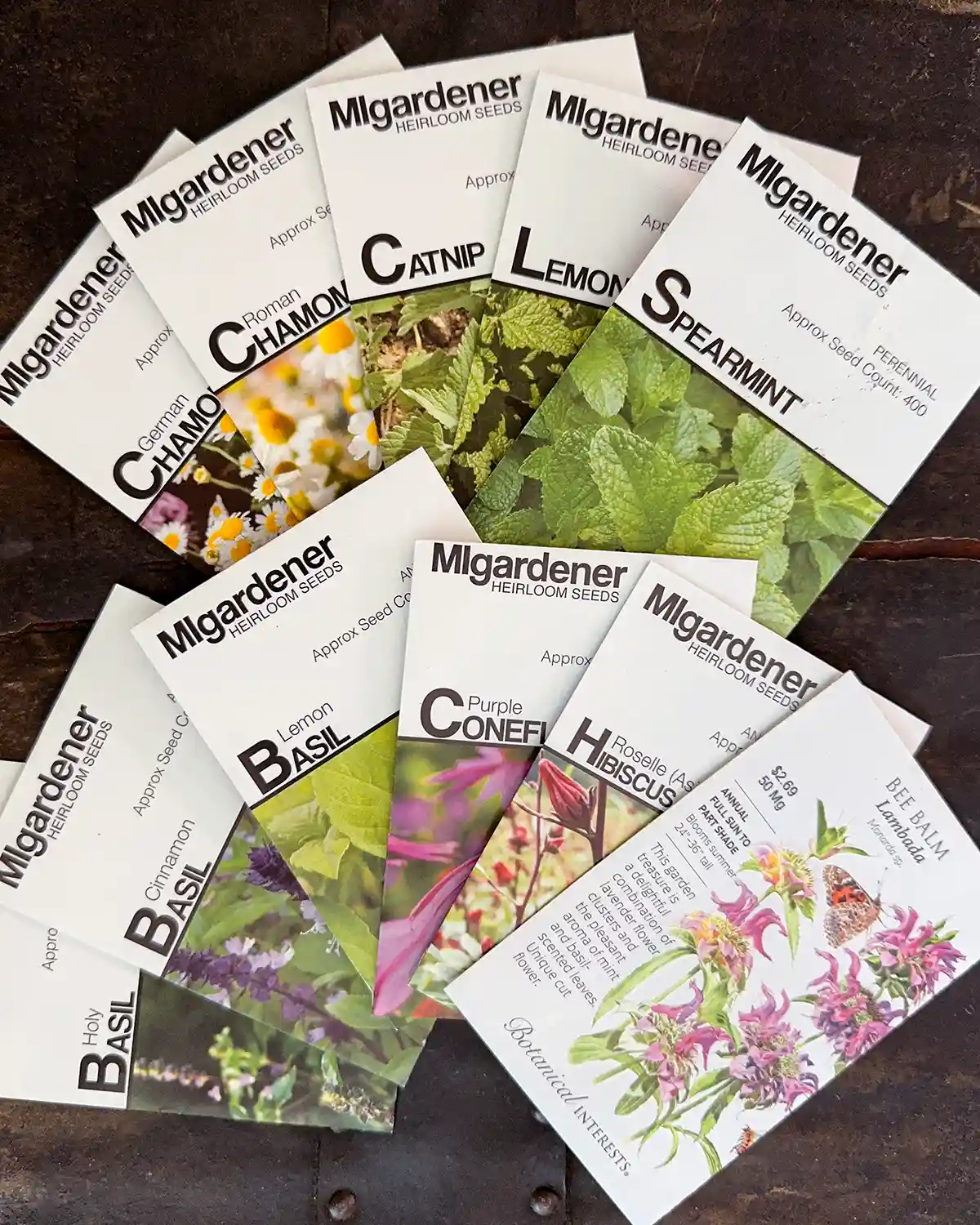
Coinciding with the medicinal garden, Rowan’s other request has been to plant a tea garden. Her class at school has a tea garden they tend and make teas from regularly. Her current favorite combo is bergamot and catnip tea. Naturally, we must try to grow a tea garden.
- Basil, Holy Tulsi*
- Chamomile, German*
- Chamomile, Roman*
- Cinnamon Basil*
- Catnip*
- Lemon Balm*
- Lemon Basil*
- Purple Coneflower (Echinacea)*
- Roselle-Asian Sour Leaf (Hibiscus)*
- Spearmint*
- Wild Bergamot*
Kale
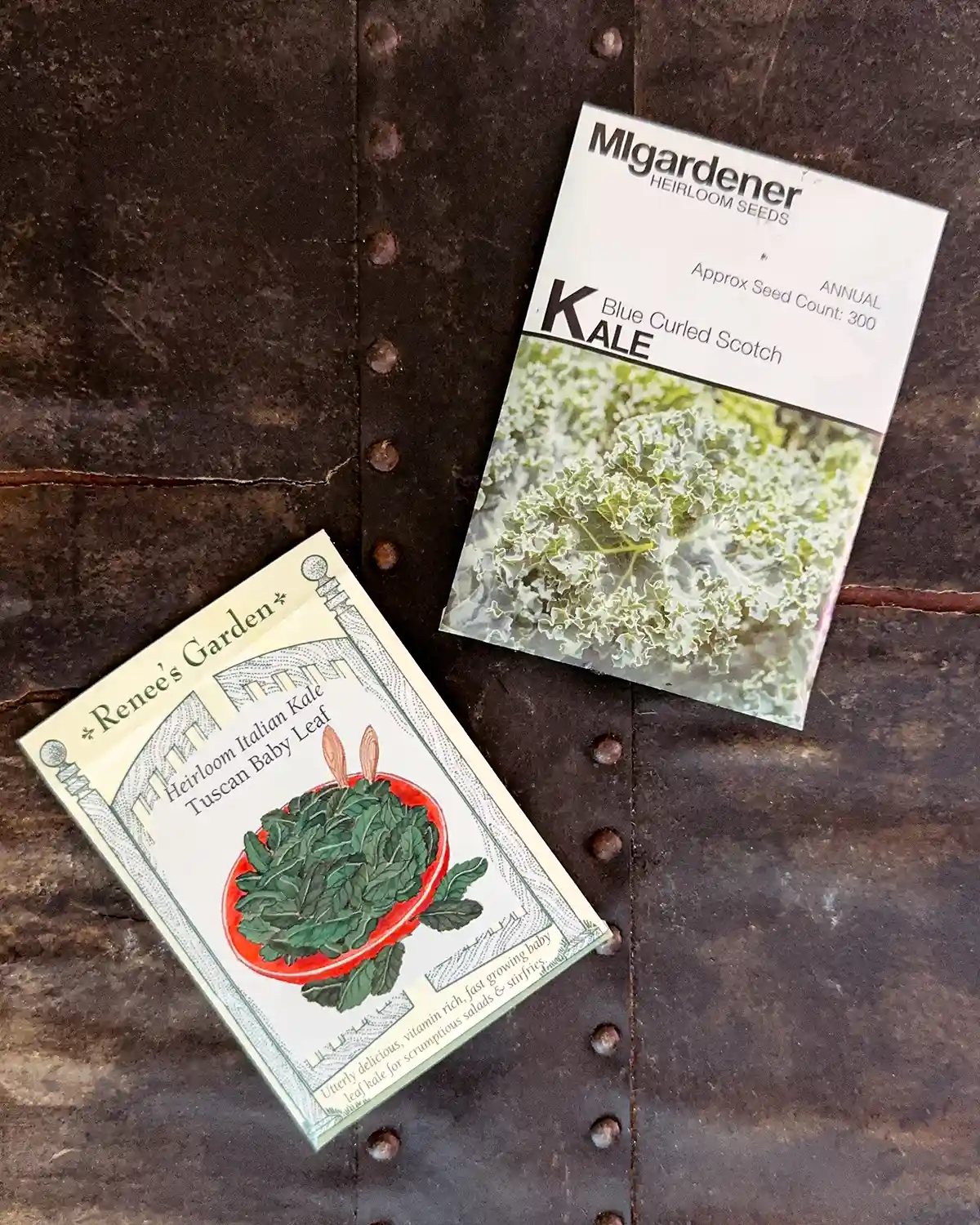
Kale is a garden staple in this household. I’ve grown and eaten it so much that I’ve finally nailed down my favorites. Blue Curled Scotch for salads, kale chips, and freezing. Tuscan Baby Leaf for the sweetest, most tender baby kale salads.
Kohlrabi
Kohlrabi, the baby sister of the cabbage, is an unsung hero in our kitchen garden. My kids love them (last summer, Bea, at age three, was pulling them out of the garden and eating them like apples!). They grow faster than cabbage and make a delicious slaw. And you can slice them like french fries and roast them.
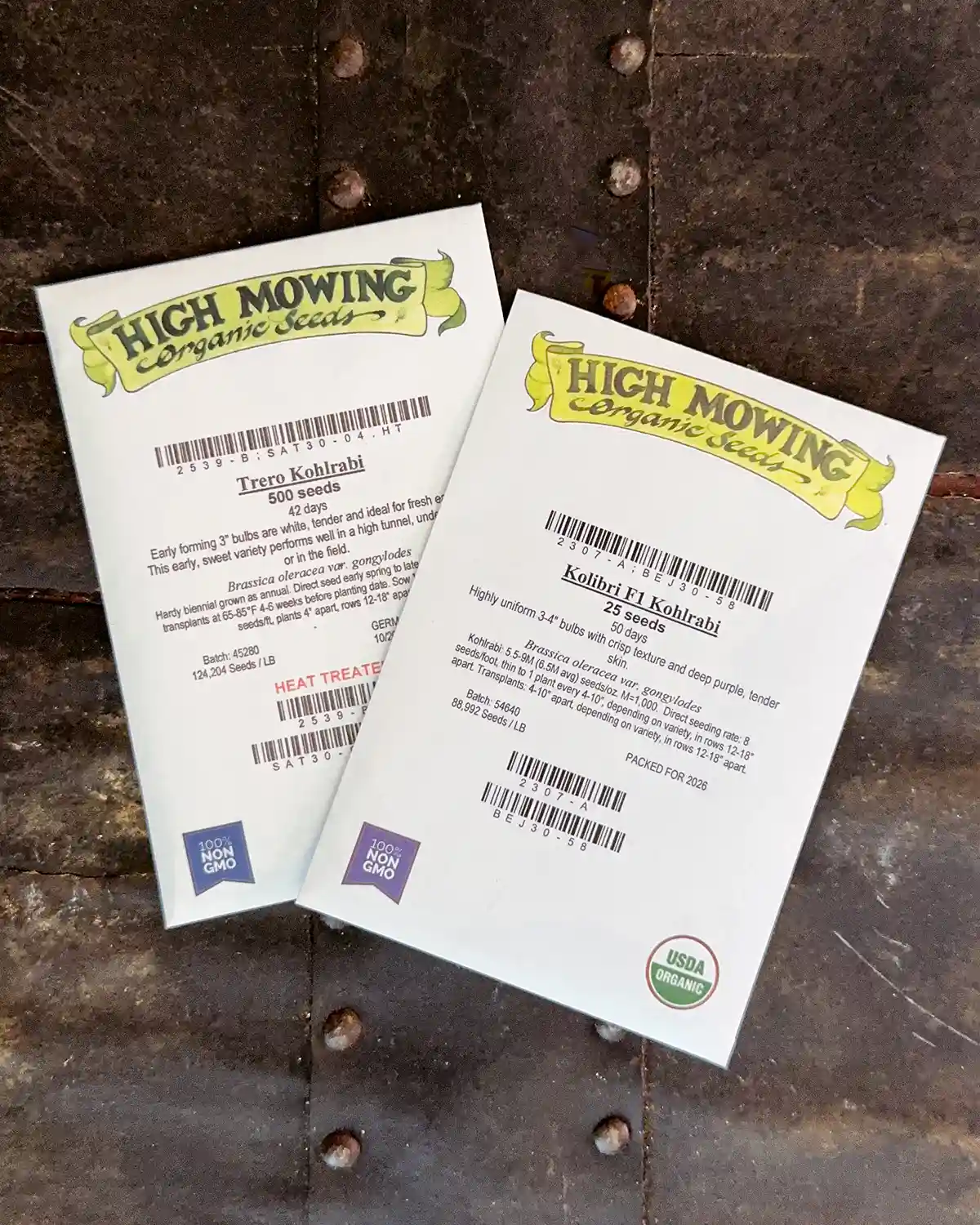
I’ve tried so many varieties of kohlrabi over the years, but I haven’t had much success outside of the hybrids. The one exception is the open-pollinated Trero from High Mowing Seeds. They grow fast, well, and consistently. Here are my two tried and true favorites.
Leeks
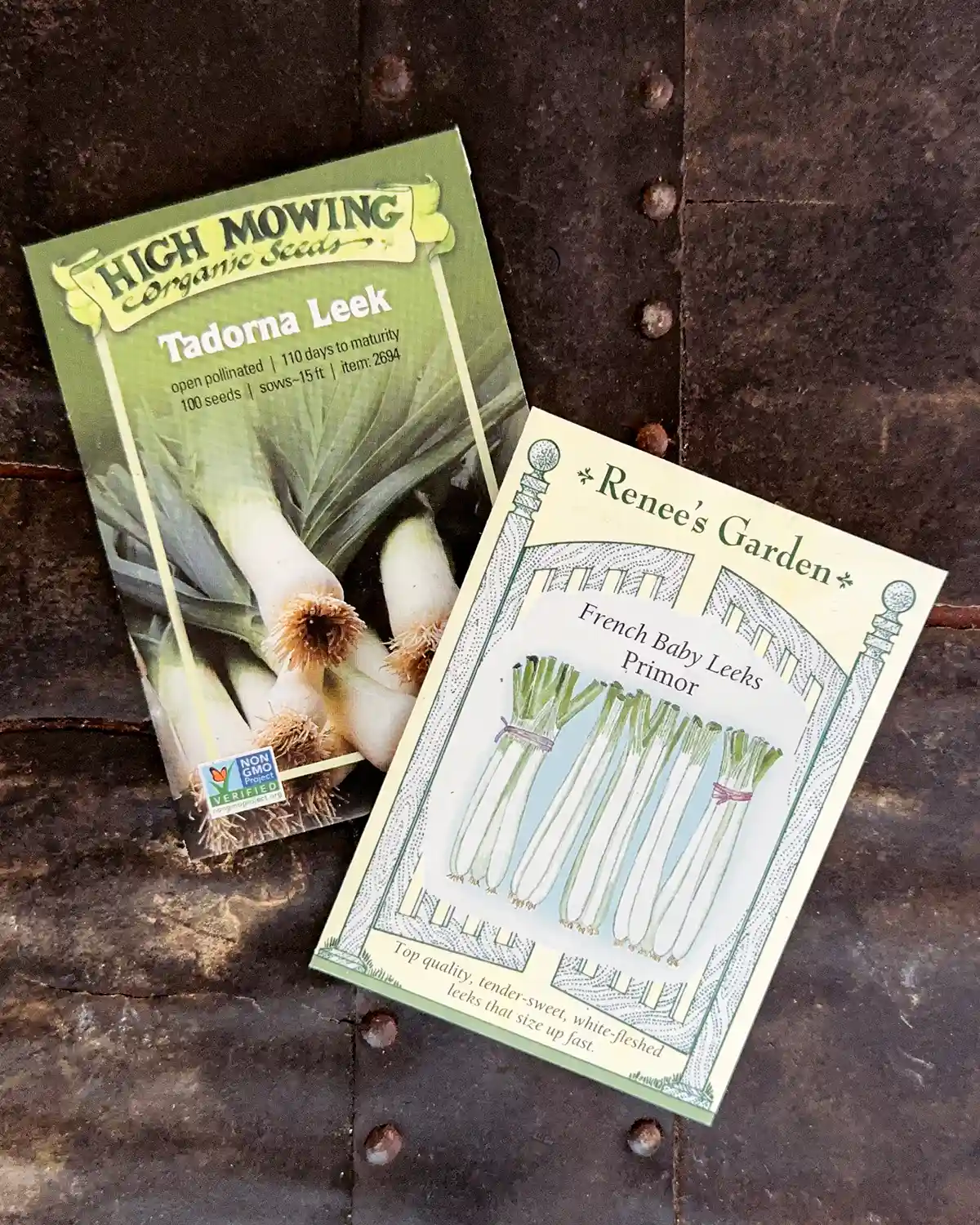
It’s been a long time since I’ve grown leeks, and I’ve never been terribly loyal to any one brand or variety. This season, I’m growing a couple of different varieties.
Lettuce
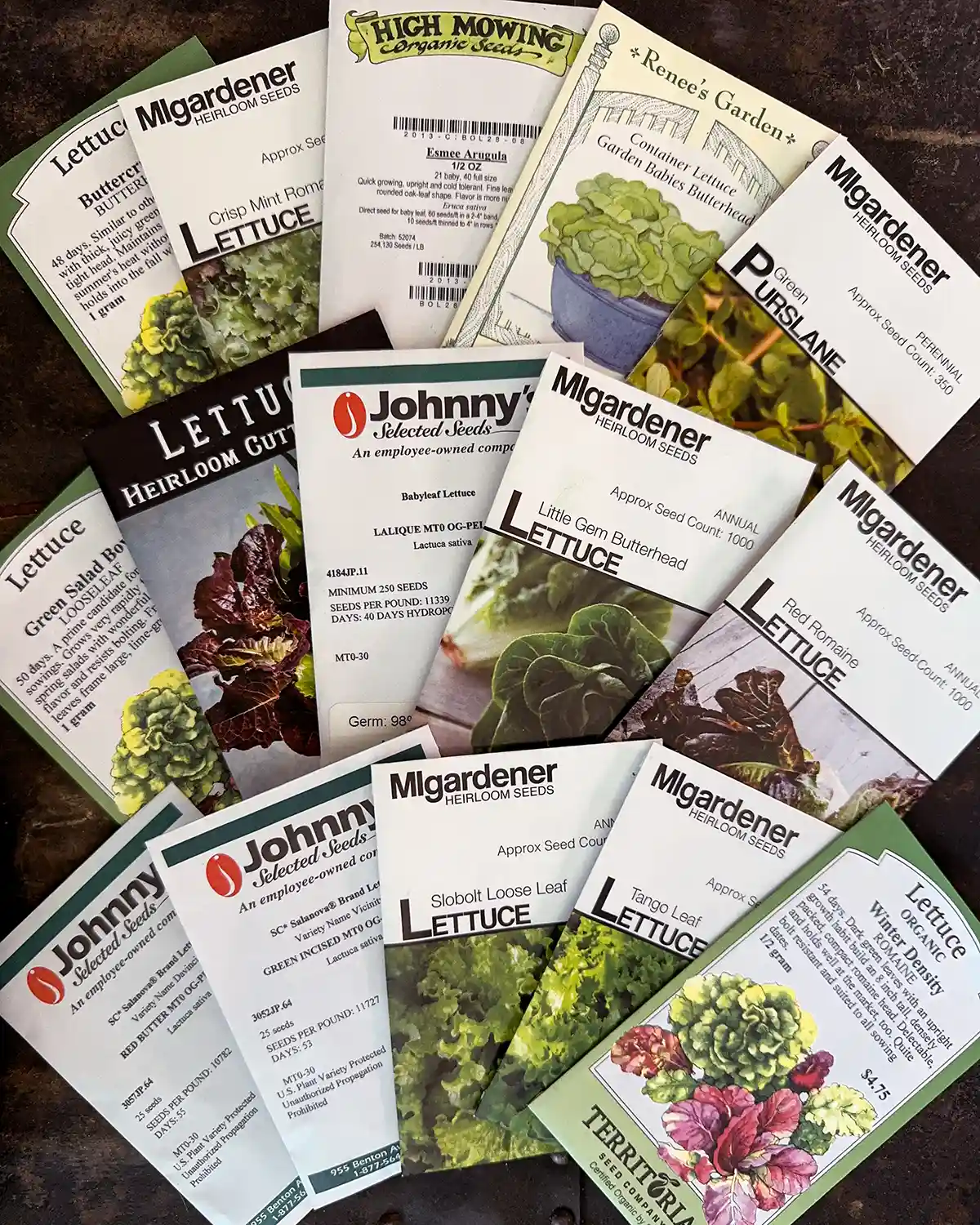
There’s something about lettuce that is just so fun to grow. I love growing a wide variety of lettuce types for an eclectic salad bowl mix. This season, I’m going with some of my regulars (Buttercrunch and Slow Bolt Loose Leaf), bringing back some old loves (Salanova, I do love thee), and trying out some new-to-me varieties.
After reading an article about sources of Omega-3s and how green purslane is a salad green full of them, I decided to grow it. It will be nice to add some extra nutrition to the salad bowl mix.
Colby has put in a request for this crunchy, crisp lettuce that we get in the local saladbowl mix at our co-op. It looks similar to Lalique and Crisp Mint, so I’m trying those out this season. Without further ado, my overly extensive salad seed collection. I’ll likely not grow all of these, but maybe a few plants of each.
- Buttercrunch Butterhead Lettuce
- Crisp Mint Lettuce*
- Esmee Arugula
- Garden Babies Butterhead Lettuce
- Green Purslane*
- Green Salad Bowl Looseleaf Lettuce
- Heirloom Cutting Mix Lettuce
- Lalique Lettuce*
- Little Gem Butterhead Lettuce
- Red Romaine Lettuce
- Salanova Premier Mix
- Slobolt Loose Leaf Lettuce
- Tango Leaf Lettuce
- Winter Density Romaine Lettuce*
Melons/Watermelons
2025 was not the year of the melon. It was partially my fault for starting the seedlings too late and then planting them in garden beds that desperately needed more amending than I provided. And partially the fault of the draught. And also the fault of the dog/cat/garden critter that dug up many of the plants. Needless to say, we did not harvest any melons. But that’s not stopping me from trying again. Some of our favorites:
- Baby Doll Watermelon
- Golden Giant Asian Melon
- Green Flesh Honeydew
- Hale’s Best Jumbo Cantaloupe*
- Honey Rock Cantaloupe
- Kajari Melon
- Mango Melon*
- Minnesota Midget Cantaloupe
- Mountain Sweet Yellow Watermelon
- Rich Sweetness 132 Melon
- Sugar Baby Watermelon
- Tendersweet Orange Watermelon

Onions/Shallots
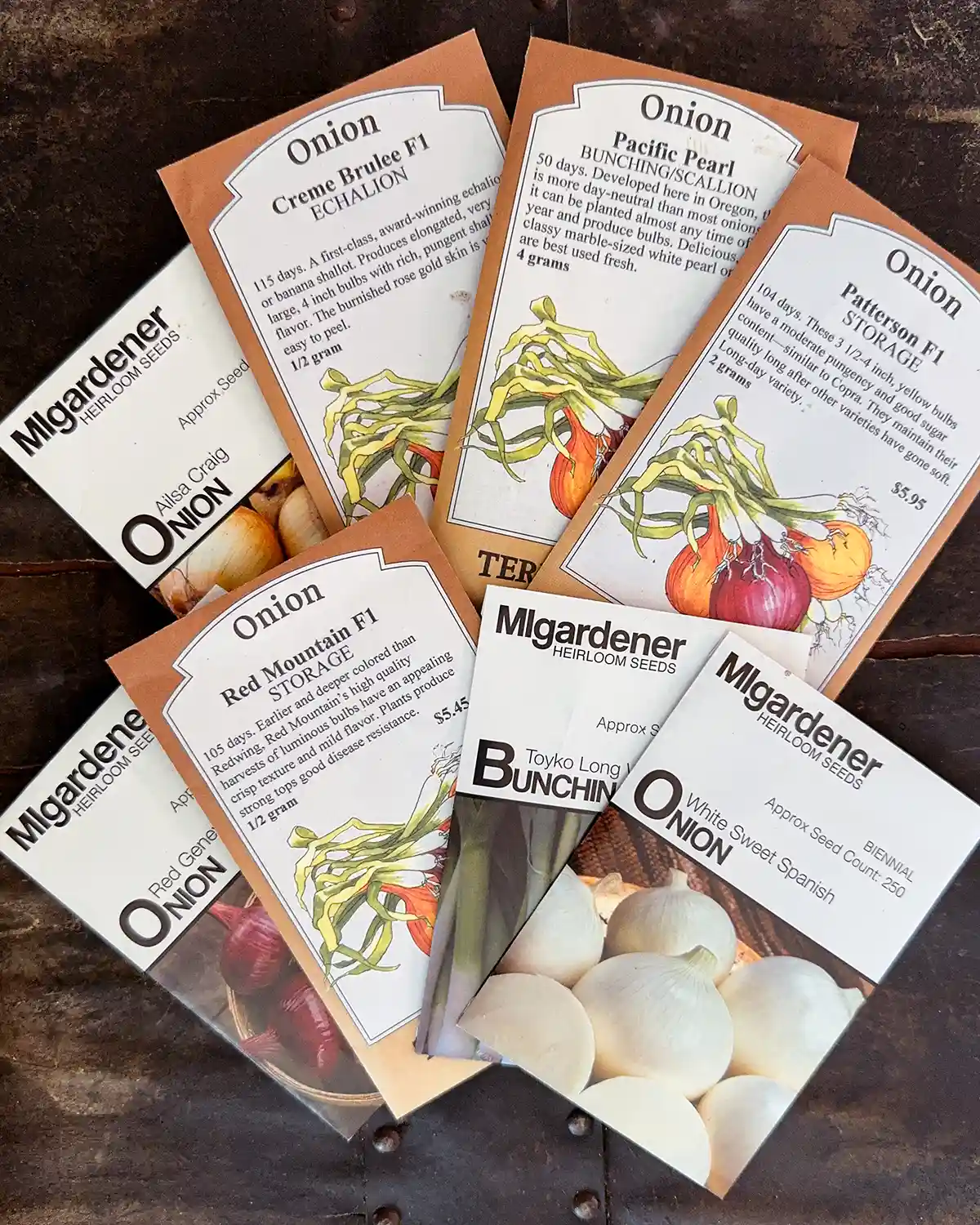
Onion seed varieties always seem to be a toss-up every year. I keep trying to grow my favorites, year after year, but every year, I can’t seem to order my onion seeds at the right time, and it always ends up being a mixed bag of what I can get. This year is no different, although when I couldn’t get my usual Zebrune shallots, I came across the Creme Brulee, which are highly regarded by chefs. I’m curious to see how it grows and tastes.
- Ailsa Craig Onion* (fresh eating, not long shelf life)
- Creme Brulee Shallot* (3-5 months storage)
- Pacific Pearl Onion
- Patterson Onion (10-12 months storage)
- Red Geneva Onion (3-6 months storage)
- Red Mountain Onion* (4-6 months storage)
- Tokyo Long White Bunching Onion
- White Sweet Spanish Onion (2 months storage)
Parsnip
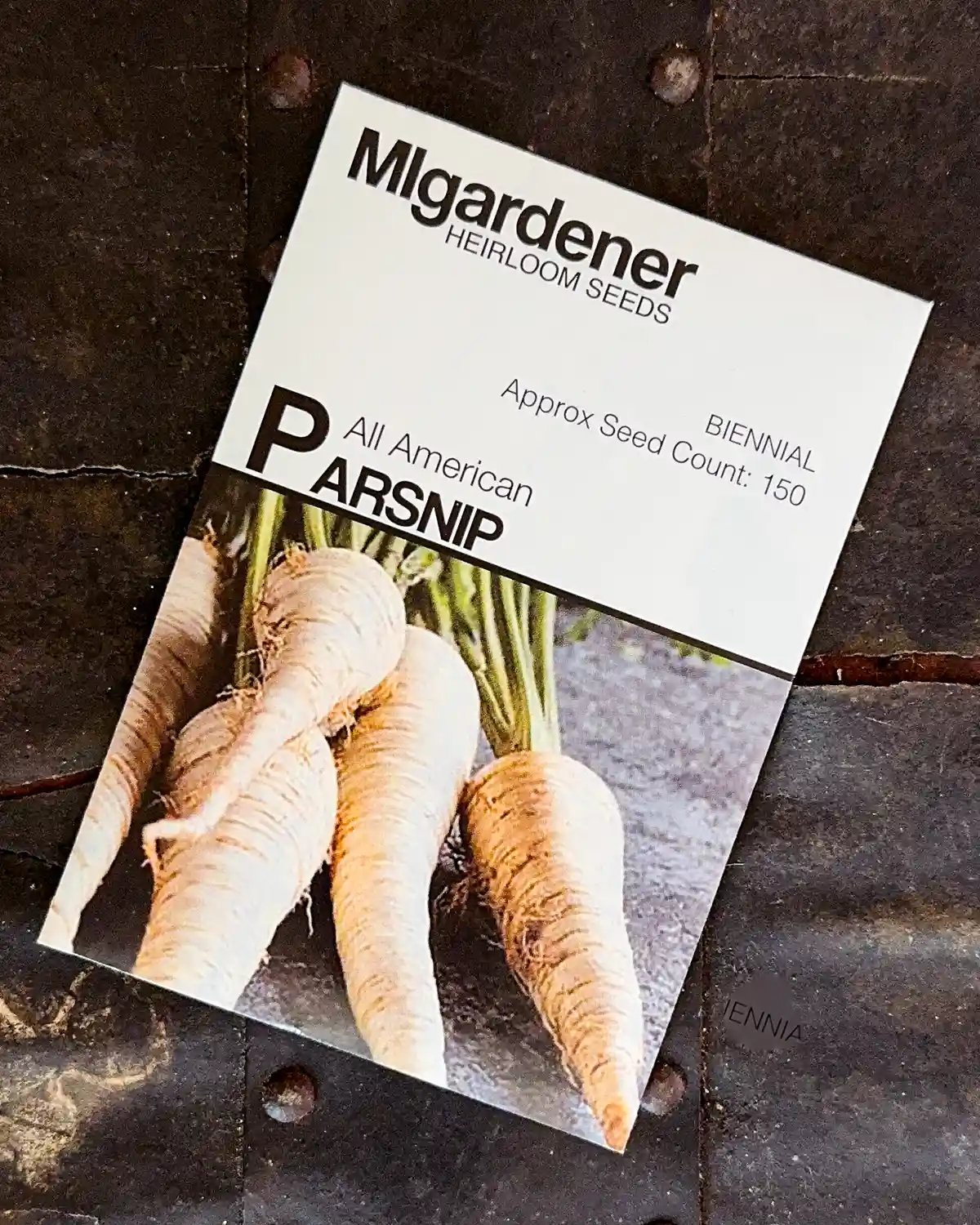
Typically, I buy High Mowing’s parsnip seeds when I see them in our local garden center in mid-winter. Since they didn’t have them, I tried a new variety from my favorite place to order seeds online, MI Gardener. I love parsnips, so I can’t wait to see how these do.
Peas
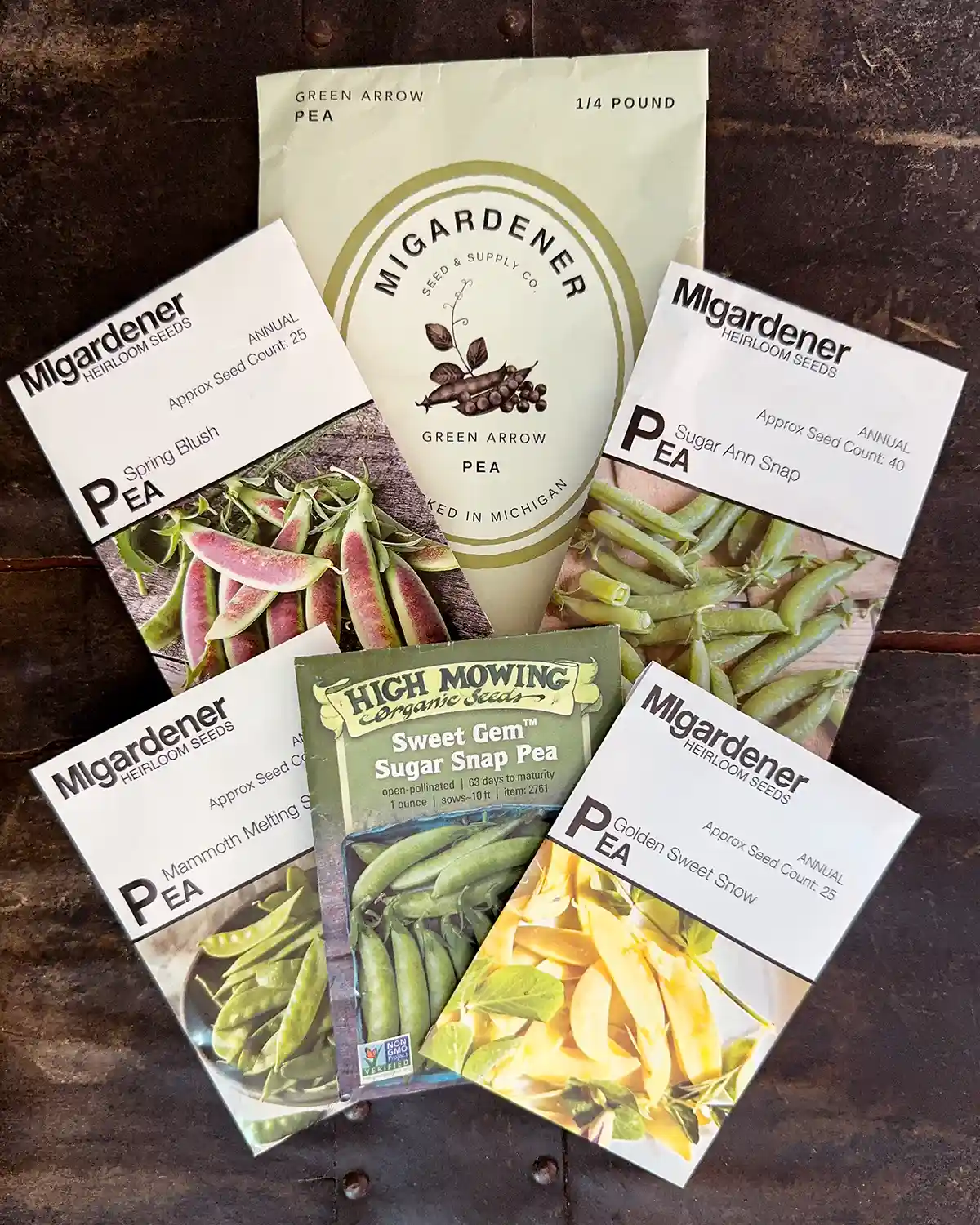
Peas are a must-grow for our family. The entire family loves and eats a plentiful amount of peas. From fresh snacking on snow peas, to newly shelled peas served with butter and cream over baby potatoes to stir-fried snap peas, there’s not a pea we won’t eat.
Last year’s pea selections were a 10 out of 10, no notes. Okay, maybe one note. Grow more of them. So that’s the plan, to grow many, many, many more peas than we did last spring and fall.
Shelling Peas
Snap Peas
Snow Pea
Peppers
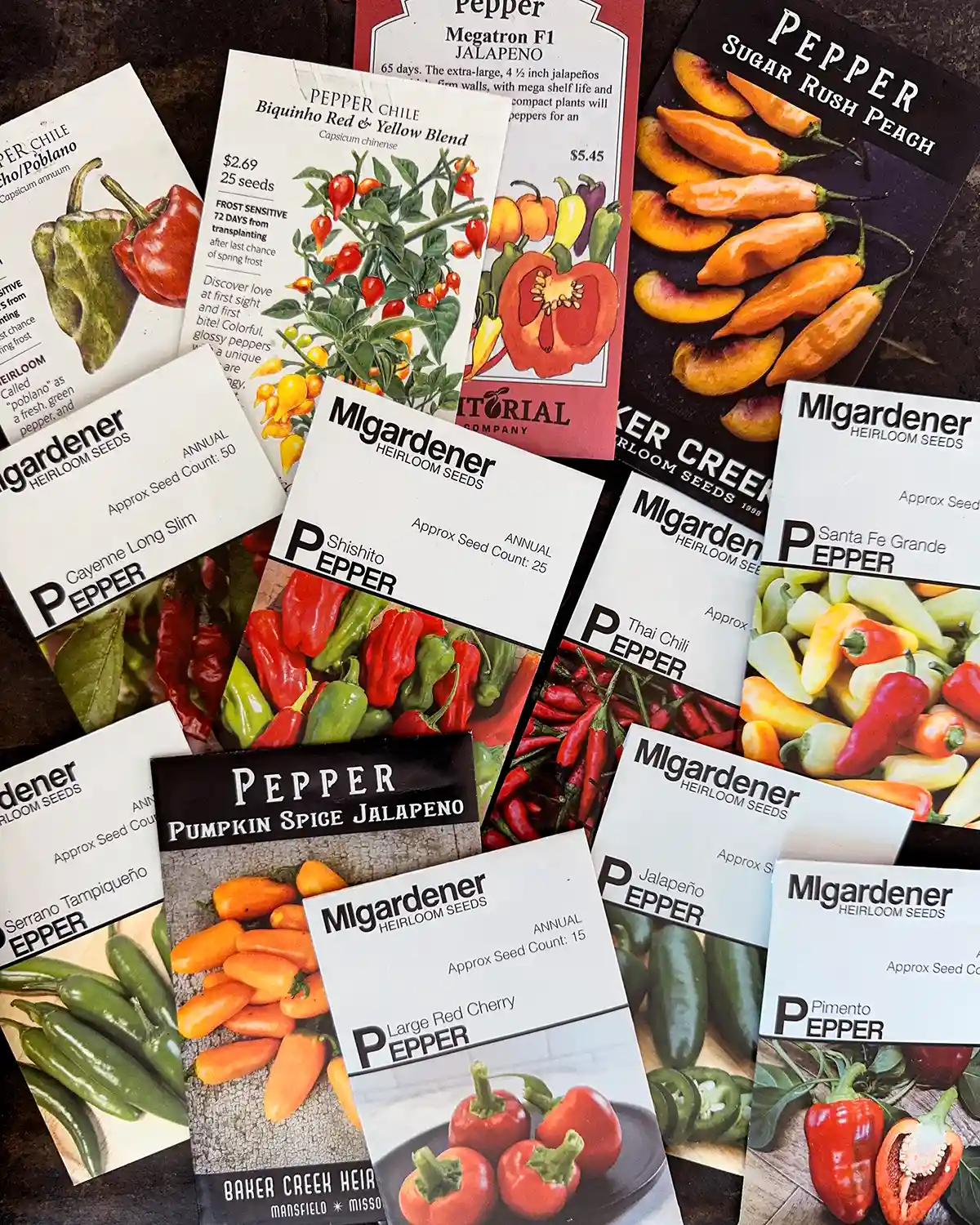
It’s been a weird year of seed starting peppers this spring. I started most of them towards the end of January, and had really terrible germination (I think it was a combination of inconsistent heat from the pellet stove and the soil mixture being too damp). Then I restarted a bunch more towards the end of February and had only slightly better germination. But I have at least a couple plants of each variety, so I should be good.
Hot Peppers
The new hot peppers I’m excited to try this year are the Pink Biquinho and Megatron Jalapeno. I fell in love with biquinho peppers last year, eating them fresh as these tiny little pops of heat in salads. I came across the pink variety on Etsy. In a sad twist of events, only one germinated, and a mouse ate most of the plant after I potted it in a bigger container. Fingers crossed it can recover.
The Megatron is a ginormous jalapeno pepper. All I want to do with those peppers is make massive jalapeno poppers and stuffed peppers.
- Ancho Poblano Pepper
- Biquinho Mix Pepper
- Biquinho Pink Pepper*
- Cayenne Long Slim Pepper
- Jalapeno Pepper
- Large Red Cherry Pepper
- Megatron Jalapeno Pepper*
- Pimento Pepper
- Pumpkin Spice Jalapeno*
- Santa Fe Grande Pepper*
- Serrano Pepper
- Shishito Pepper
- Sugar Rush Peach Pepper
- Thai Chili Pepper*
Mild Peppers
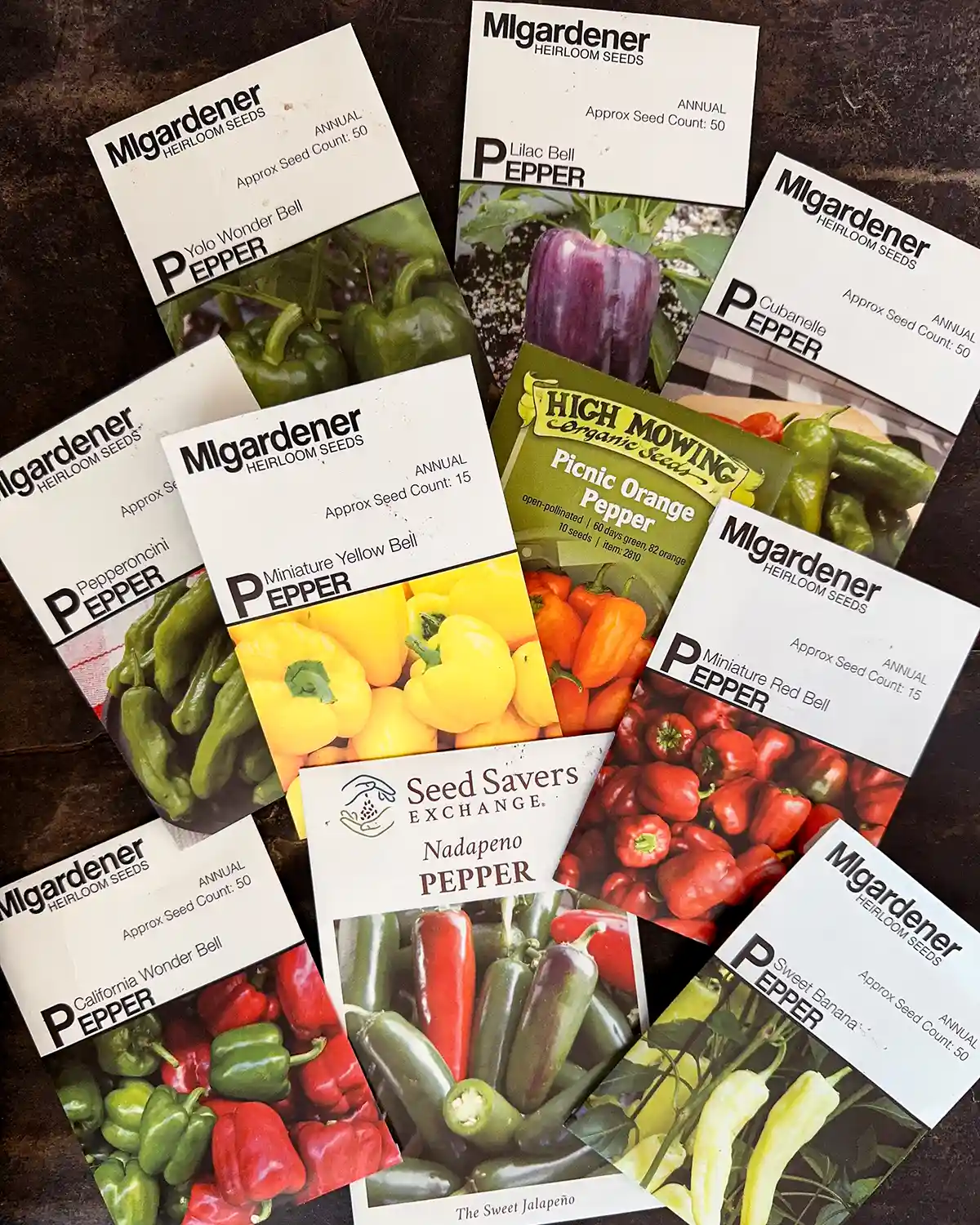
My kids have become bell pepper lovers as of late. But just the red, orange, and yellow ones. NOT the green ones. Because of this, I upped our bell pepper growing and am trying a pair of purple-hued peppers that I’m sure will enthrall them.
- Banana Pepper
- California Wonder Bell Pepper
- Cubanelle
- Lilac Bell*
- Miniature Red Bell Pepper
- Miniature Yellow Bell Pepper
- Nadapeno Pepper
- Pepperoncini Pepper
- Picnic Orange Pepper*
- Yolo Wonder*
Potatoes
It’s been a few years since I grew potatoes, but I’m bringing them back this season. They do take up alot of space, so in order to grow them successfully this year, I need to expand our growing zone just a little bit. Fingers crossed we can make it happen in time. I ordered a few of my favorite seed potato varieties, along with some sweet potatoes, which I haven’t tried growing yet. Let’s see if they’ll do okay in our zone. It’s questionable.
Pumpkins
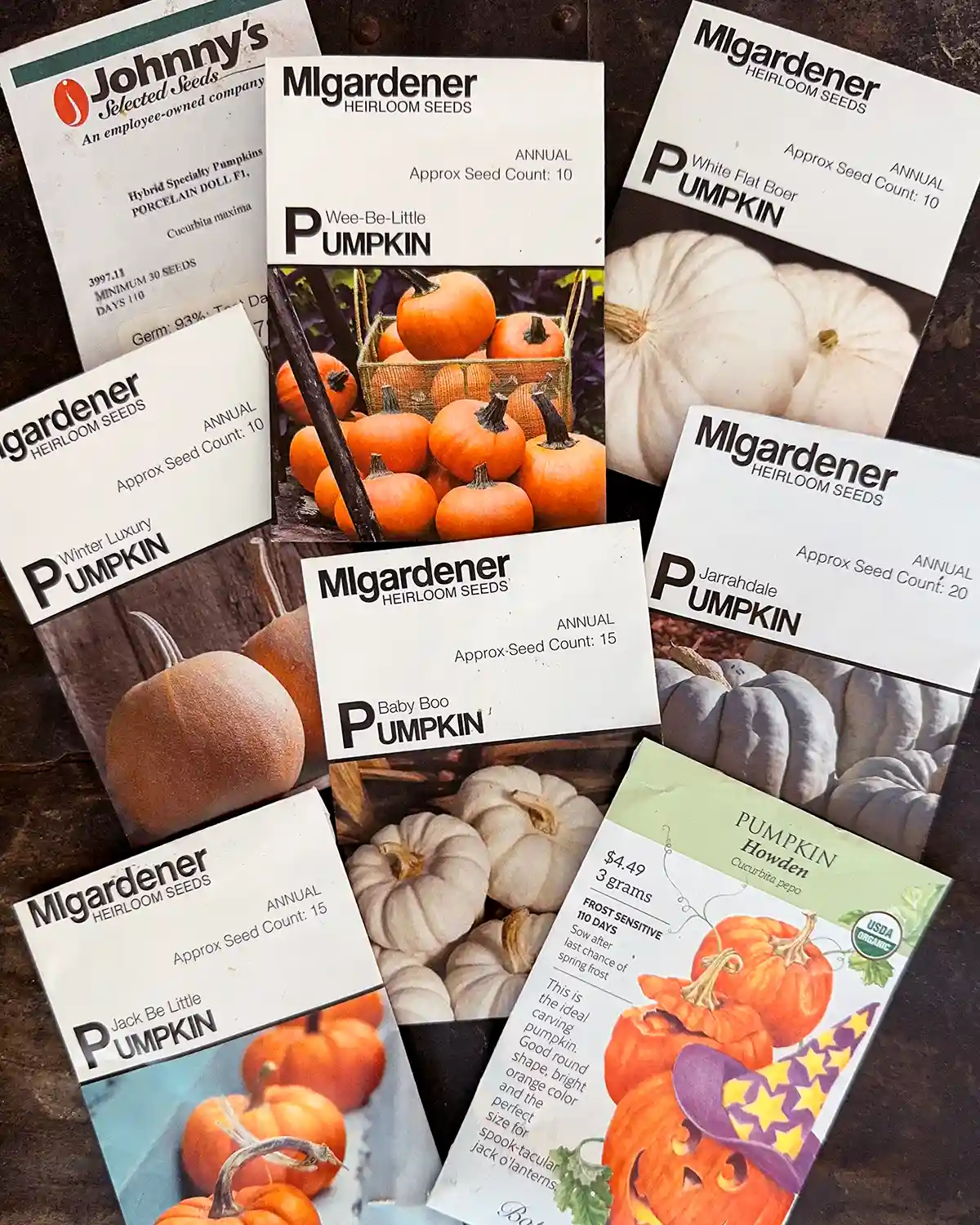
I could give or take when it comes to pumpkins since most of them are for the fall porch, home decor, and kid carving. Just don’t mess with my Jarrahdale Blue (the best blue/green porch pumpkin) or Winter Luxury (hands down best pie pumpkin variety out there). I didn’t harvest either variety last year, thanks to a critter eating many of my pumpkin plants as they flowered, so I’m growing them with a vengeance this season.
- Baby Boo Pumpkin
- Howden Pumpkin
- Jack Be Little Pumpkin
- Jarrahdale Blue Pumpkin
- Porcelain Doll Pumpkin
- Wee-Be-Little Pumpkin
- White Flat Boer Pumpkin*
- Winter Luxury Pumpkin
Radishes
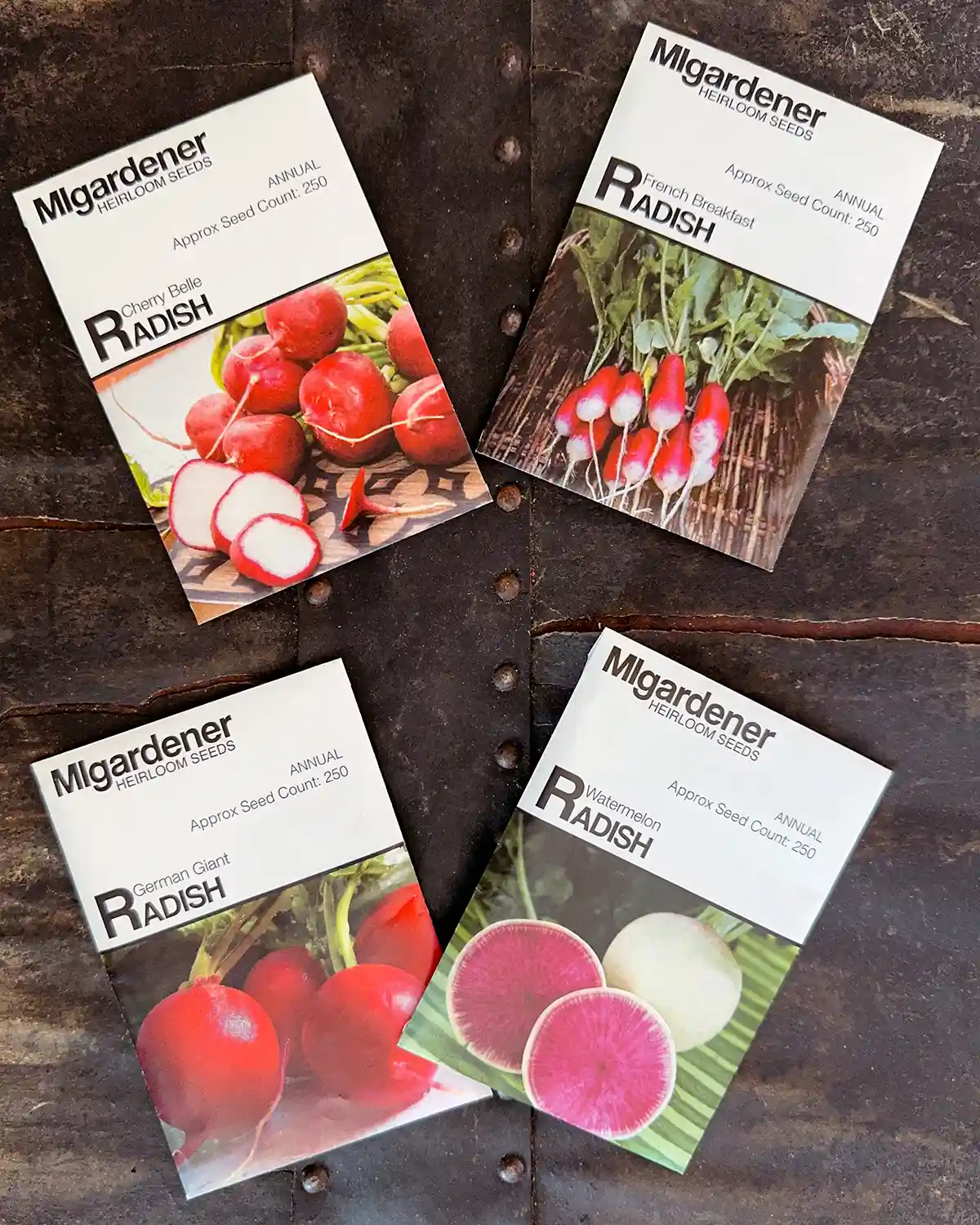
The old standbys are back for another season of radish growing. My kids’ favorites are the French Breakfast and Cherry Belle since they’re the least spicy. I’m really curious about this German Giant variety that produces massive, spicy radishes. Speaking of which, I could probably start these outdoors today.
Spinach
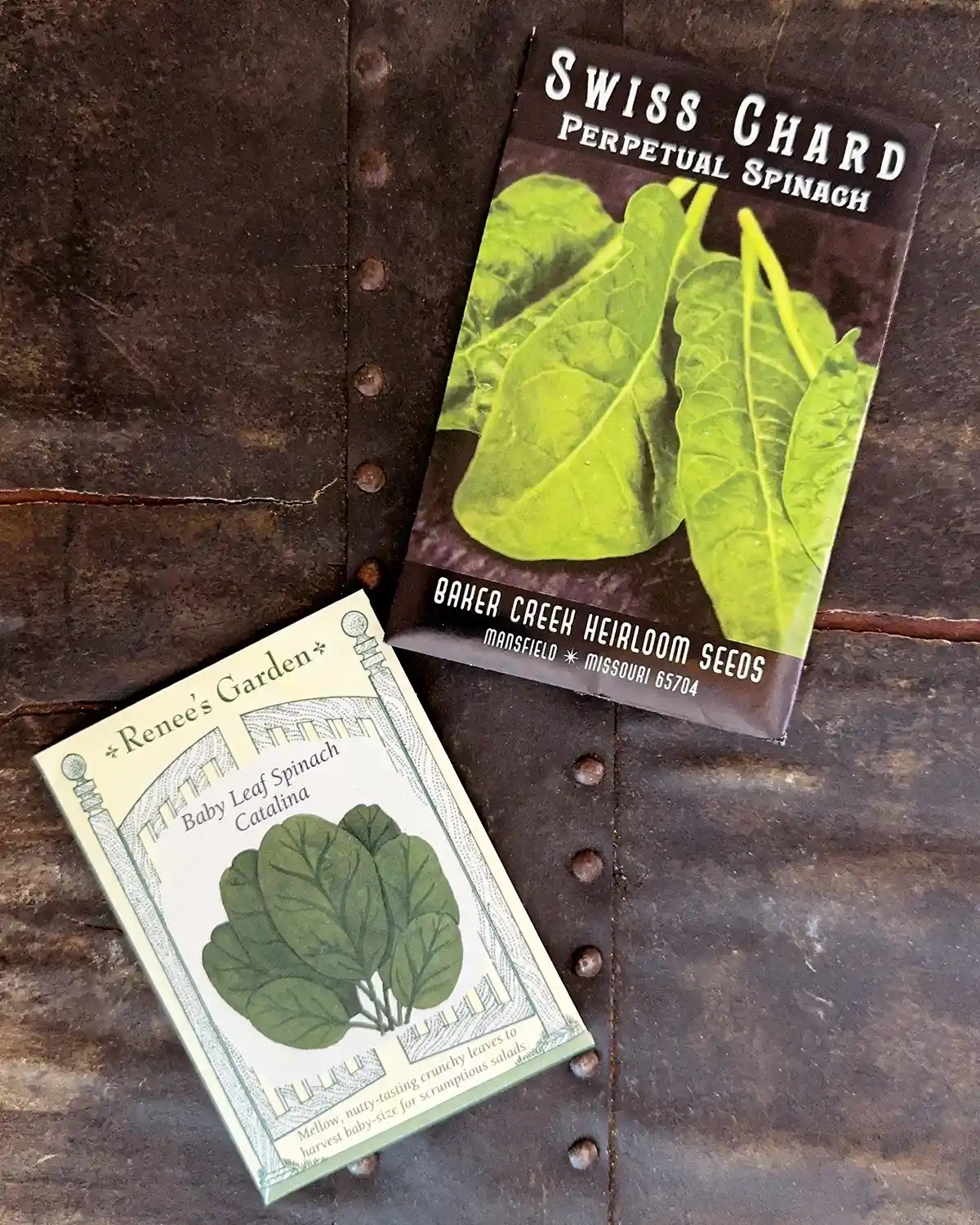
I had some serious trouble with my spinach seeds last year. They were 5+ years old and had pretty poor germination. So I picked up more of my number one favorite. I also included Perpetual Spinach in this list. It’s technically a swiss chard, but it looks and tastes like spinach, and doesn’t bolt in the summer heat. If you want mid-summer spinach, this is the variety for you.
Squash (Summer/Zucchini)
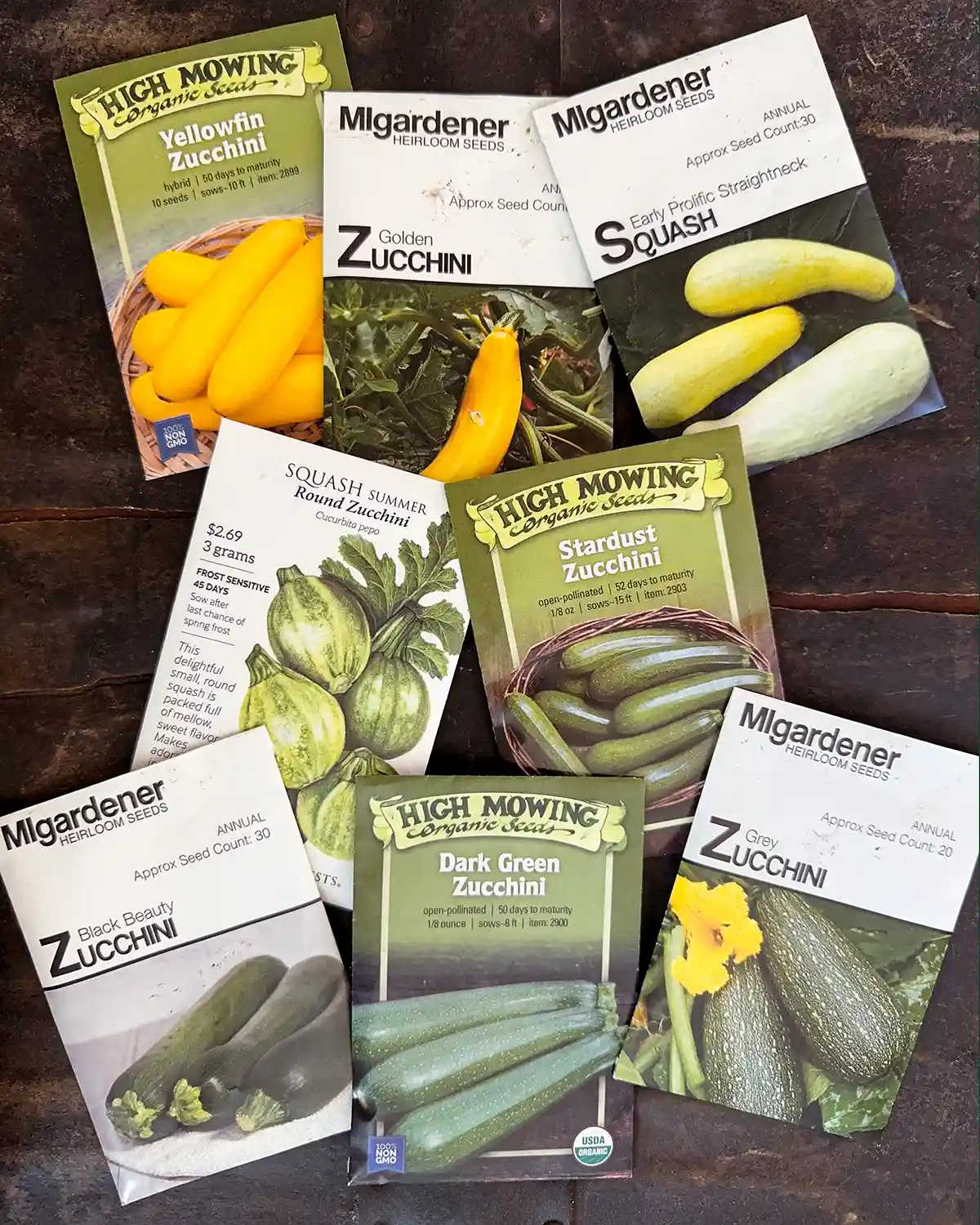
While most gardeners seem to grow too much summer squash and zucchini, I never seem to grow enough. I want to try succession sowing a little bit with the zucchini plants and see if I can stagger the first harvests a bit better this year. One new variety I’m trying is a round zucchini with the intention of stuffing it and roasting it. Here are all the summer squashes and zucchinis I’m growing.
- Black Beauty Zucchini
- Dark Green Zucchini
- Early Prolific Straightneck Squash
- Golden Zucchini
- Grey Zucchini
- Round Zucchini*
- Stardust Zucchini*
- Yellowfin Zucchini*
Squash (Winter)
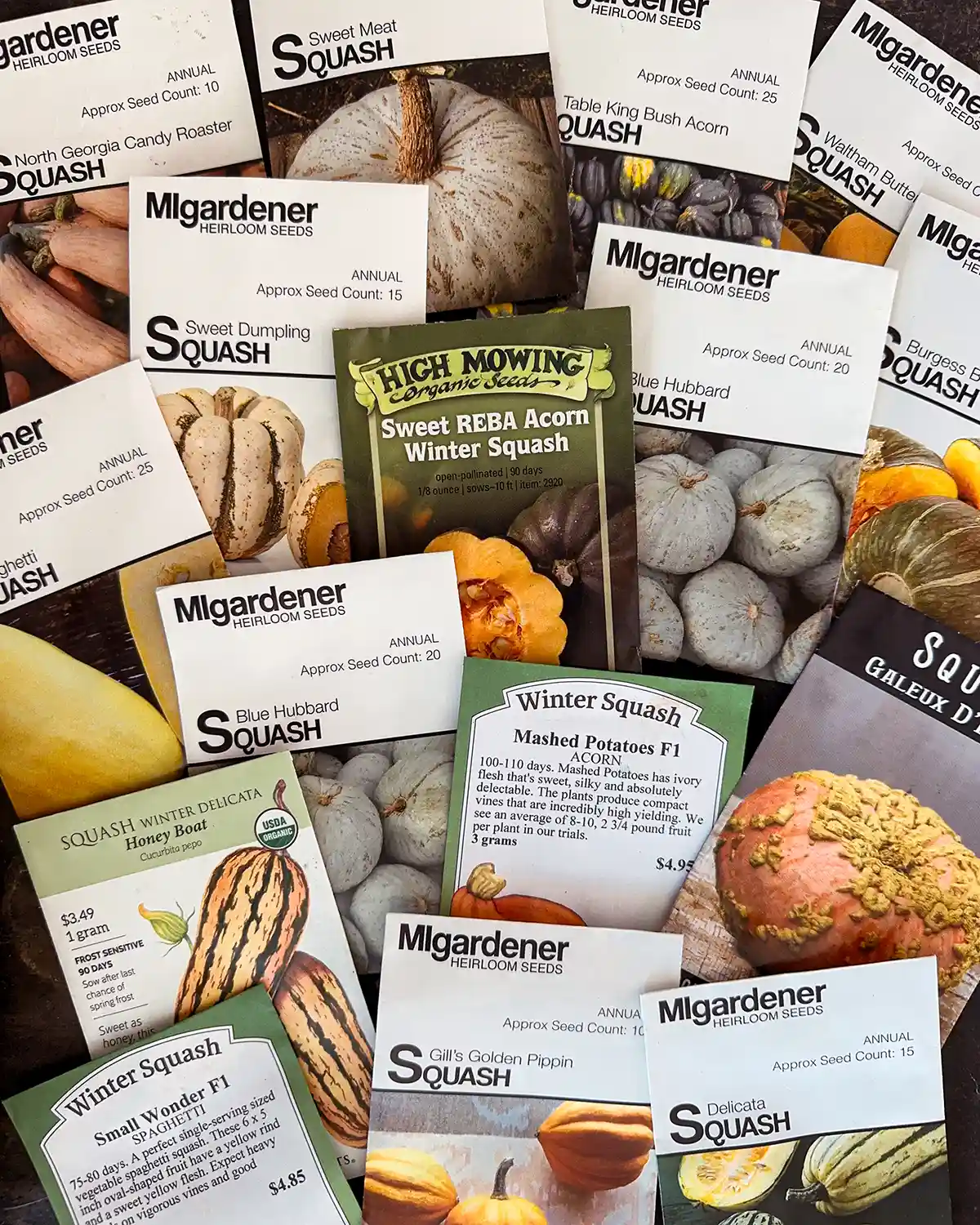
I have deep love and respect for a winter squash. Many of them have amazing storage capabilities (I still have a couple stored in our basement right now), and some produce massive amounts of food (I’m talking about you, Blue Hubbard). Every year, I seem to add another must-grow winter squash to the list, and the list is getting long. But finally, there are no new winter squash plants this season. Have I finally found my go-to list? Here’s where I’m at this season.
- Baby Blue Hubbard Squash
- Blue Hubbard Squash
- Burgess Buttercup Winter Squash
- Delicata Squash
- Galeux D’Eysines Squash
- Gil’s Golden Pippin Squash
- Honey Boat Delicata Squash
- Mashed Potatoes Acorn Squash
- North Georgia Candy Roaster
- Small Wonder Spaghetti Squash
- Spaghetti Squash
- Sweet Dumpling
- Sweet Meat
- Sweet Reba Acorn Winter Squash
- Table King Bush Acorn Squash
- Waltham Butternut Winter Squash
Swiss Chard
Swiss chard is one of those early spring greens that grows prolifically in the cooler temperatures and then dies off in the summer, but makes for a fabulous fall crop. We are a Swiss chard-eating family, putting it in pasta dishes, spring soups, and eating it straight up with vinegar. Over the years, we’ve nailed down our two favorite varieties (although Neon Glow and Rainbow are basically the same, just from different sellers).

Tomatoes
And now for the crowning jewels of the garden, every gardener’s most prized plants and most talked about category, the tomato. There are so many fun, unique tomatoes out there, and if I’m being honest, I want to try them all. But I reined it in and thought about what we like to eat most and tried to stick to reasonable amounts in each category.
Paste/Plum/Midsize Tomatoes
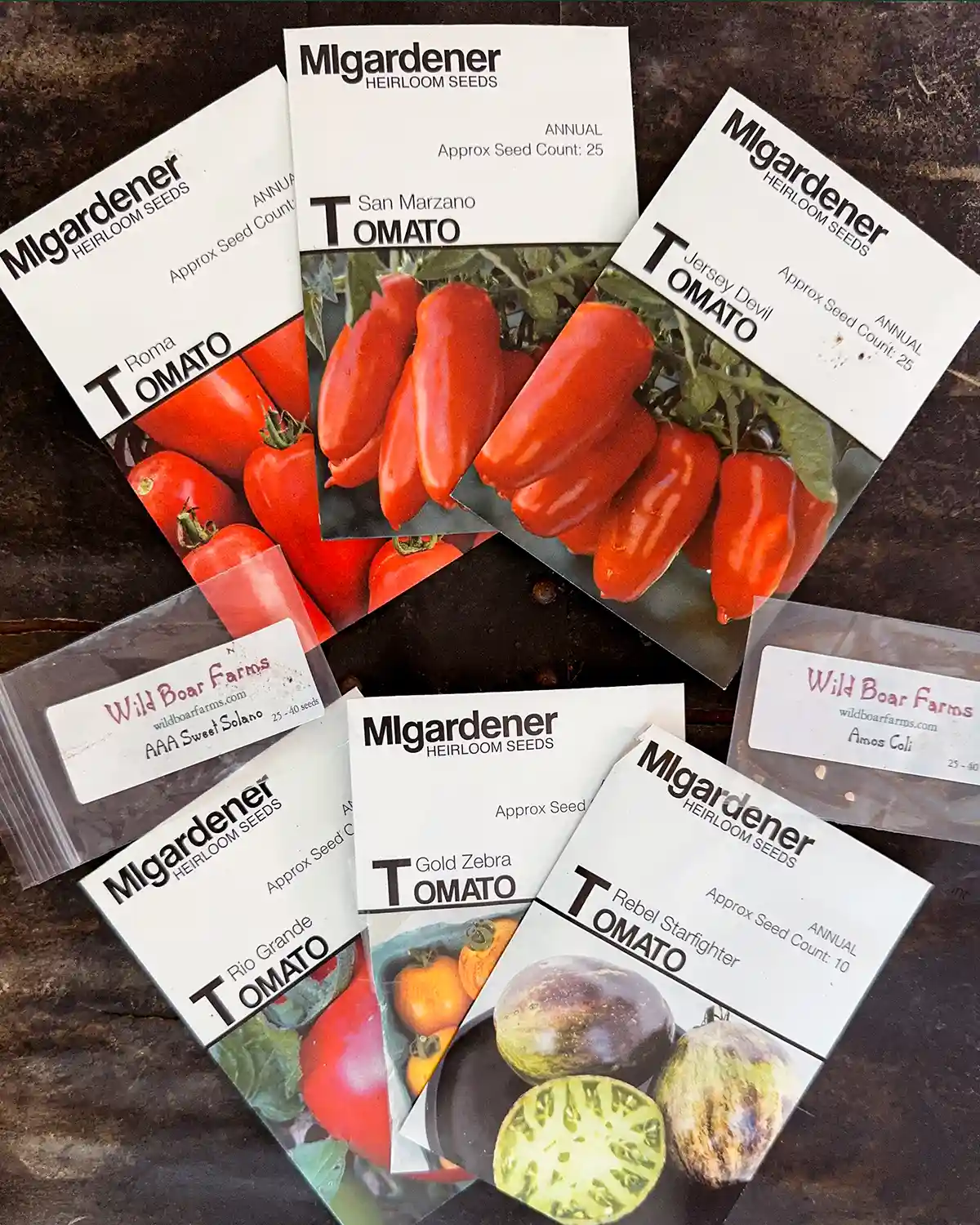
These are the backbone of my tomato garden and the ones I turn to for fresh salsa and canning for winter storage. My favorite tasting variety is the San Marzano, a paste tomato, but I’ve had pretty regular problems with blossom end rot. I’ve heard that’s common with San Marzanos, so I’m trying a couple of other types to see if they perform any better. And how fun is Rebel Starfighter? It’s okay to buy tomato seeds because they look like the night sky, right?!
- AAA Sweet Solano
- Amos Coli
- Gold Zebra*
- Jersey Devil*
- Rebel Starfighter*
- Rio Grande Tomato
- Roma Tomato
- San Marzano Tomato
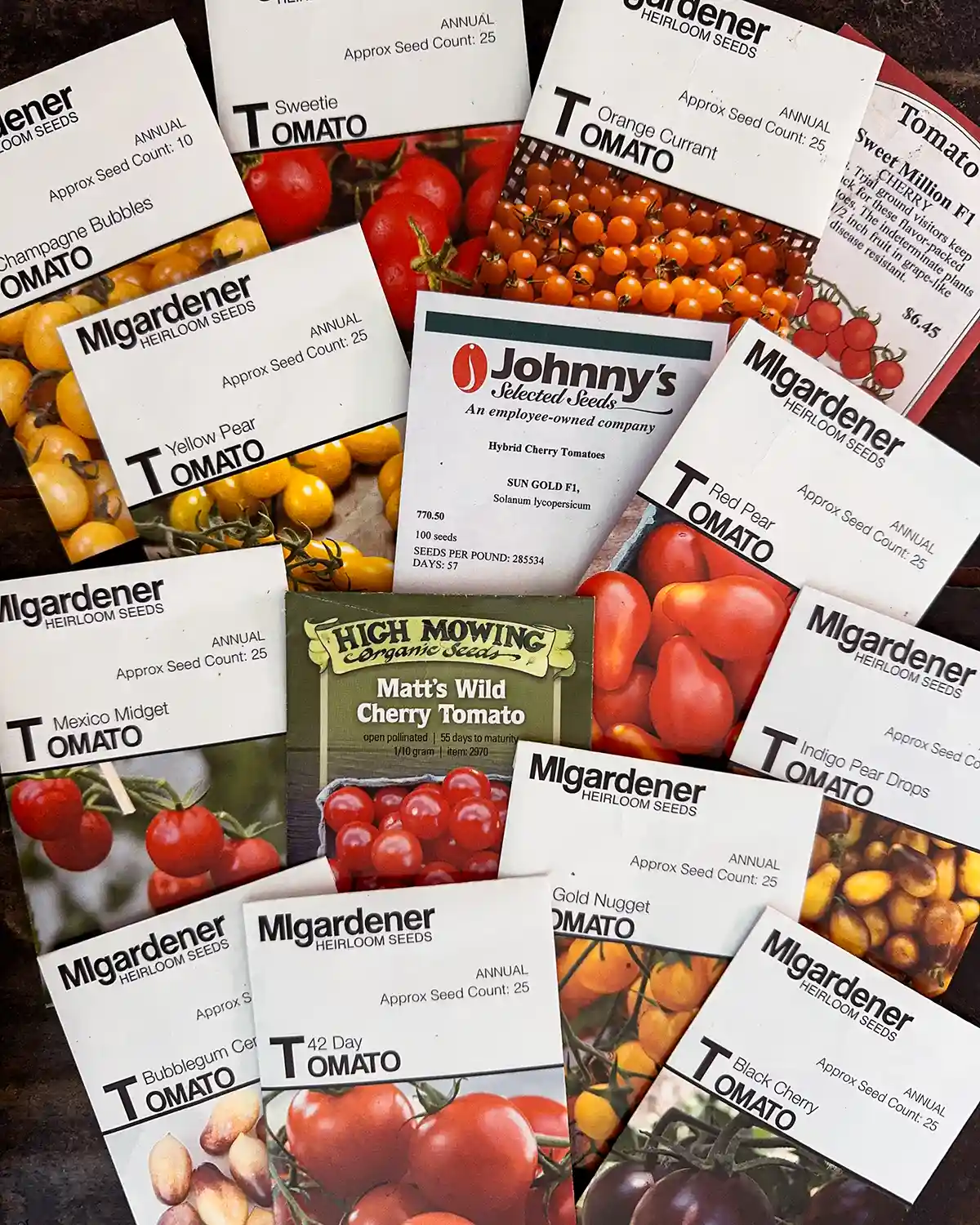
Cherry/Pear Tomatoes
I never, I repeat, never, grow enough cherry and pear-shaped tomatoes. I don’t remember the last time a cherry tomato harvest made it back to the house. Every year, I grow more of them, and every year the kids eat the plants clean before I can cook with them.
My cherry tomato grow list includes my usual suspects, just more of them, along with a couple of new ones to try. I let the girls pick out a few this year, and they are particularly stoked about the Bubblegum Centiflor. The description states the flavor has notes of bubblegum. I’m intrigued.
- 42 Day Tomato
- Black Cherry Tomato
- Bubblegum Centiflor*
- Champagne Bubbles Tomato
- Gold Nugget Cherry Tomato
- Indigo Pear Drops Tomato*
- Matt’s Wild Cherry Tomato
- Mexico Midget Cherry Tomato
- Orange Currant Tomato
- Red Pear Tomato
- Sungold Cherry Tomato
- Sweet Million Cherry Tomato
- Sweetie Cherry Tomato
- Yellow Pear Tomato
Large Beefsteak Tomatoes
I basically grow this variety for one reason: tomato sandwiches. You’ve never had a tomato sandwich until you’ve had one with fresh-from-the-garden tomatoes, and combining a couple of different varieties with different acidity levels in one sandwich. It is delightful, and I look forward to it all year.
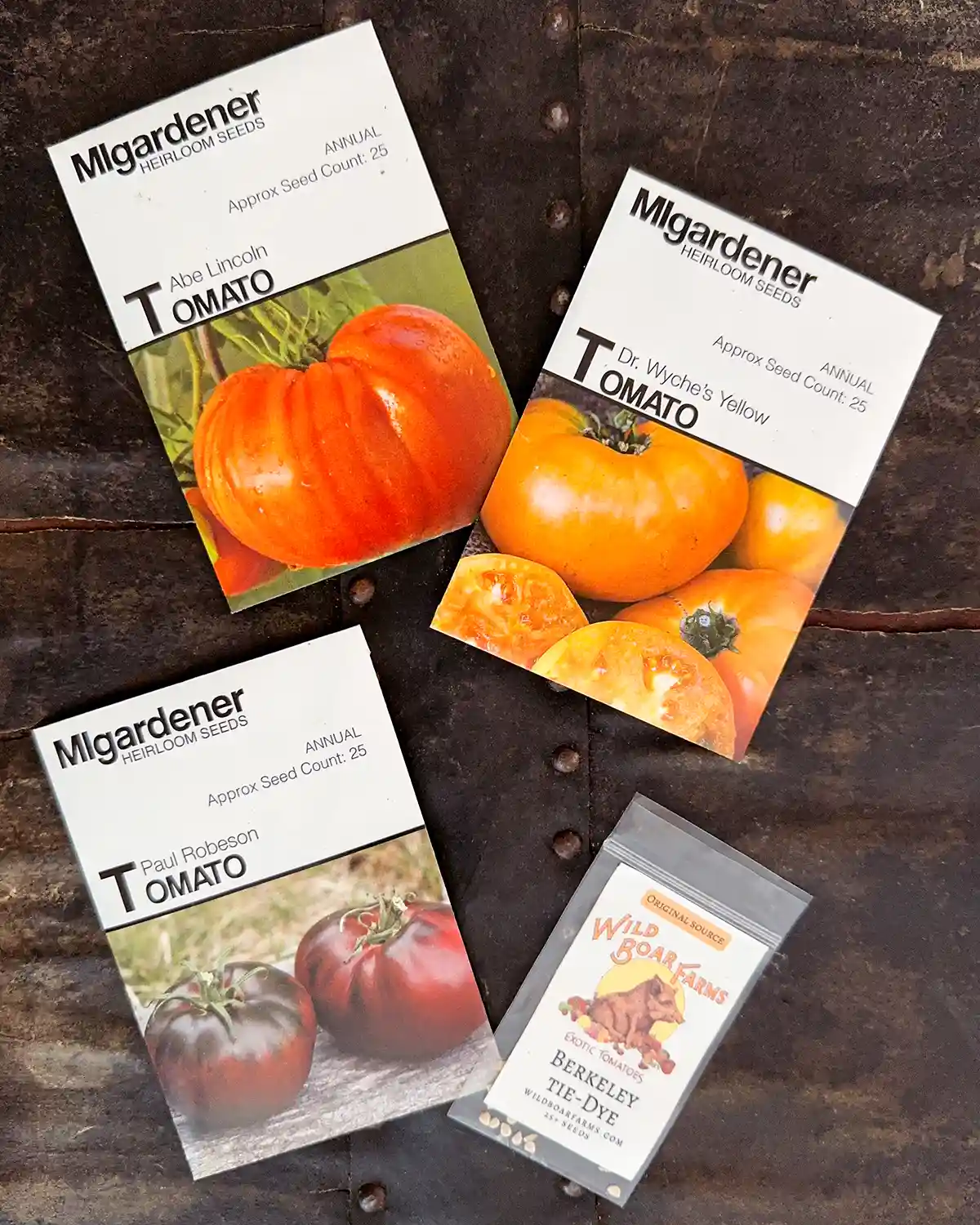
Specialty Tomatoes
If you have kids and you want to grow them the most prolific, delicious, and delightful garden snack there is, I cannot recommend Ground Cherries enough. They are these tiny little sweet, husk cherry tomatoes that taste like pineapple. I love them, the kids love them, and even my husband loves them.

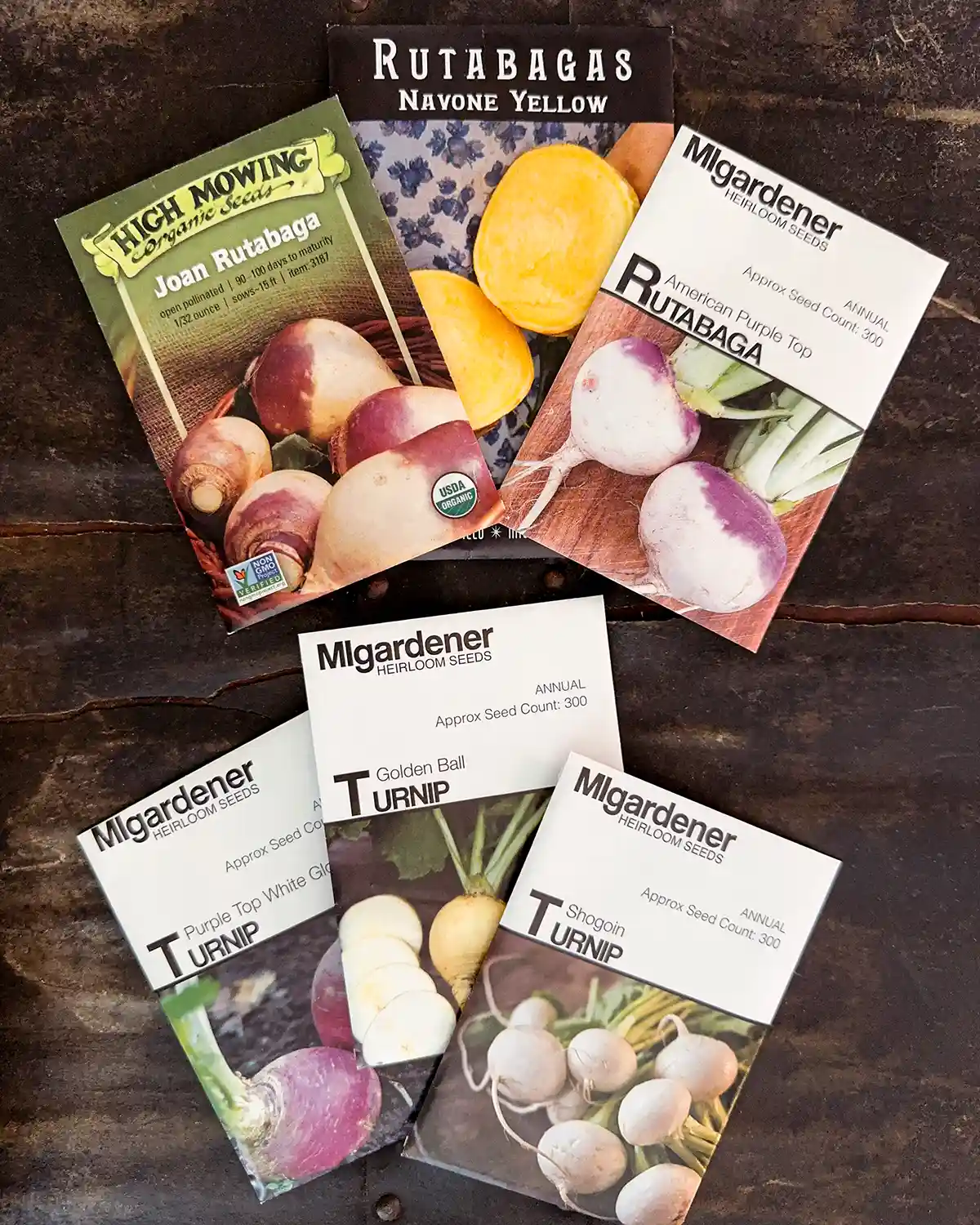
Turnips/Rutabagas
If I could only choose one variety of root vegetable to grow and eat for the rest of my life, it would be the Navone Yellow Rutabaga. If I could throw in a second, it includes the Golden Ball Turnip. Both are slightly sweet, combined with the earthiness of a root vegetable. I tend to grow the same mix every year, and each grows well in our gardens.
- American Purple Top Rutabaga
- Golden Ball Turnip
- Joan Rutabaga
- Navone Yellow Rutabaga
- Purple White Globe Turnip
- Shogoin Turnip
What Are You Growing?
I always hesitate when I share a list like this because it seems excessive and over the top. And yes, it is right now. But when I first started growing a garden, I started with 9 packets of seeds, one each of: cherry tomato, spinach, shelling peas, lettuce, cucumber, beans, jalapeno, zucchini, and corn. Each year, we learned what we liked and what grew well. If something did really well, we saved the seeds for next year. This was 14 years ago.
Every season, our garden expands just a little bit, and the variety we grow widens a little bit. We take into consideration the growing needs and tastes of our family, along with the simple joy of trying new things. It’s a big reason why I garden.
So no matter if you’re an experienced gardener or just starting, I hope you learned something and found a new variety to try. Curiosity is one of the best characteristics of the gardener.
Pssst…Now you tell me, what are you growing in the garden this year?



Oooh, thank you for this! What a helpful roundup. And I was especially excited to see your Etsy sources; I had no idea there were reputable seed vendors there.
Happy gardening!
I’ve always been a little wary of Etsy seed sellers but have definitely found a few gems, including this one. It’s been a great source for some odd varieties.