
It’s that time of the year again: the great back-to-school kids’ clothes decluttering, organizing, and shopping time. I dread this task every single year. Mostly because this is the season that exposes that my kids somehow own 47 shirts (when they only wear dresses), three pairs of pants that fit (and don’t have holes), and approximately zero socks that have agreed to stay together. Hashtag every year.
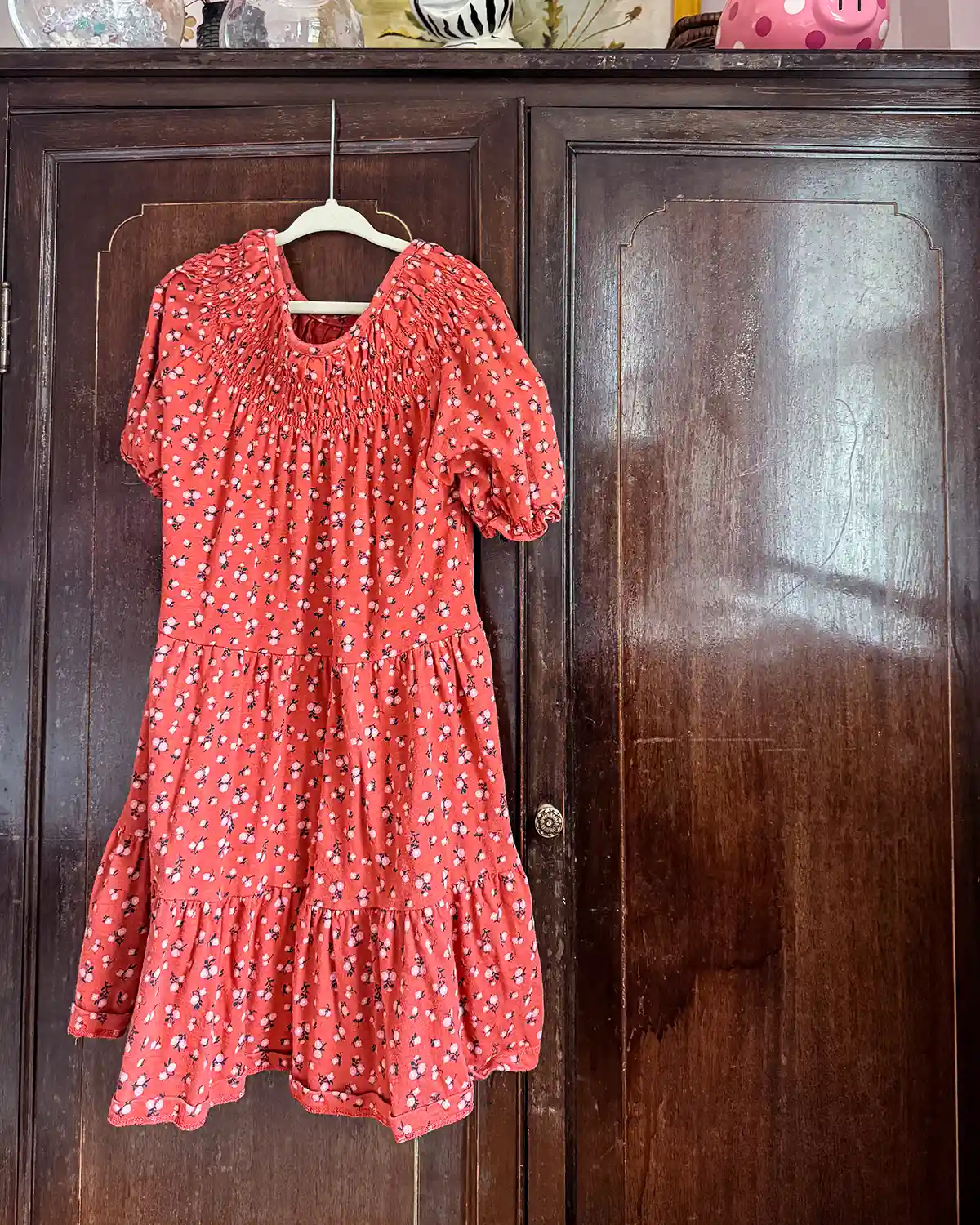
Before you hit the stores and start to panic buy school clothes, take a little time to clean out the closet, sort through everything (and I do mean everything), and send the too-small, too-worn, and mysteriously unloved clothes on their merry way. Whether it’s to the attic to be saved for a younger sibling, the thrift store, or the trash pile.
A good closet declutter not only makes room for the new school-year wardrobe, but also gives you a chance to see what your kids actually have and, more importantly, what they actually need. So grab some baskets, a notepad and pen, and an extra-large coffee to get these closets ready for another year of tiny humans changing sizes at an alarming rate. So channel your inner Konmari and let’s get to work with these tips for how to declutter and start organizing kids clothes. For the adults, here’s a wardrobe decluttering article for you.
Clear Out Everything And Sort
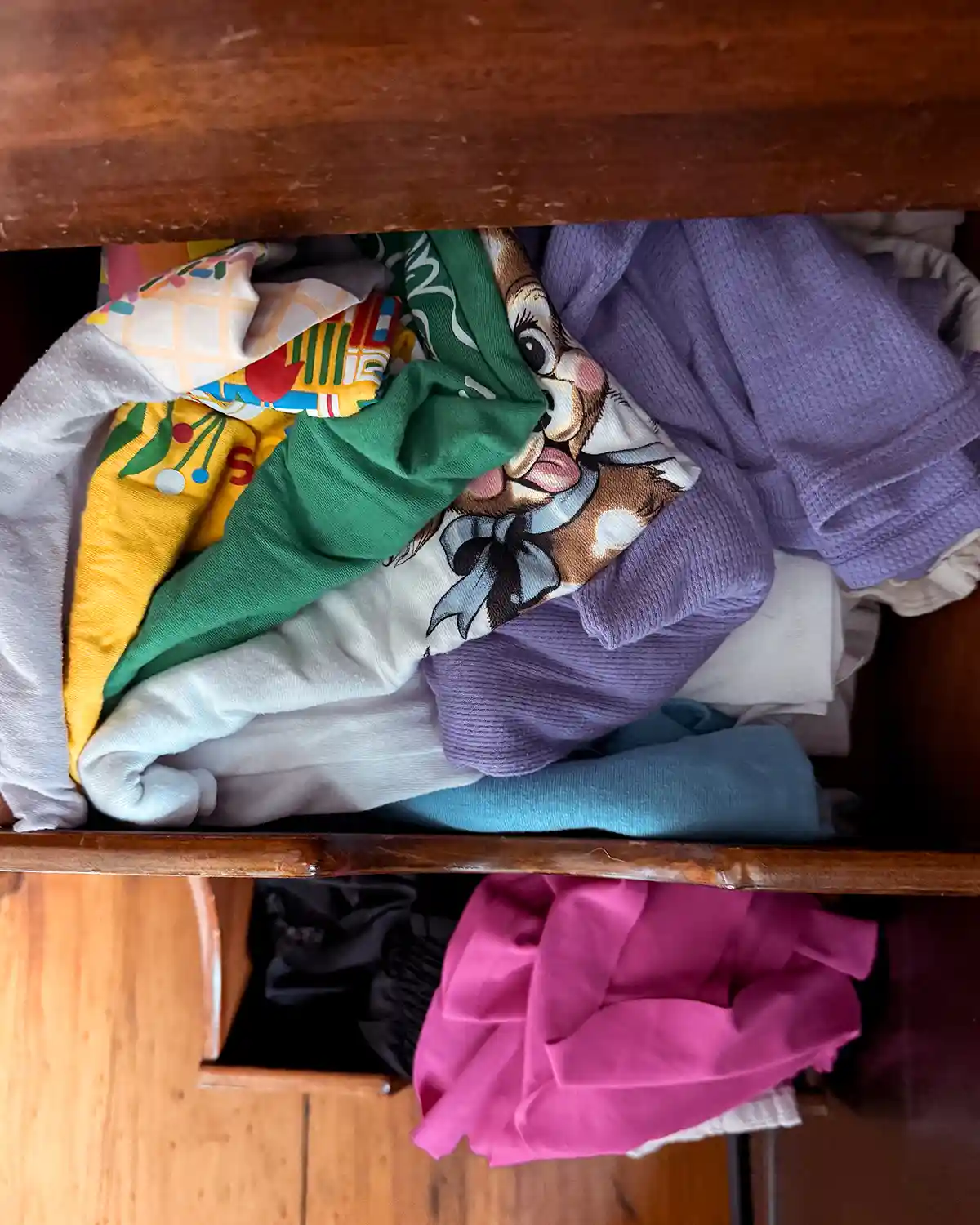
And by clear out everything, I mean EVERYTHING. This is a great first step and one not to be missed. Every item comes out of the closet, dresser, wardrobe, under-bed baskets, chair pile, random clothes storage bin, or wherever the kids’ clothes have colonized. Give the containers and furniture a good wipe down while you’re at it. Then sort by clothes type. Like shirts, pants, dresses, sweaters/sweatshirts, etc. Make the categories work for you and don’t worry about whether or not the kids have outgrown clothes in the mix.
Why This Helps? You and your kid can visually see everything you’re working with. When you have all the leggings pulled out of the drawer, it becomes easier to spot the clothes that no longer fit or are never worn. Plus, there’s always a sneaky pair of too-small shorts stuck behind the sweaters. You’ll quickly notice that the t-shirt pile is ginormous while the tiny pile of leggings is a bit concerning.
2 – Start Making A Clothes List
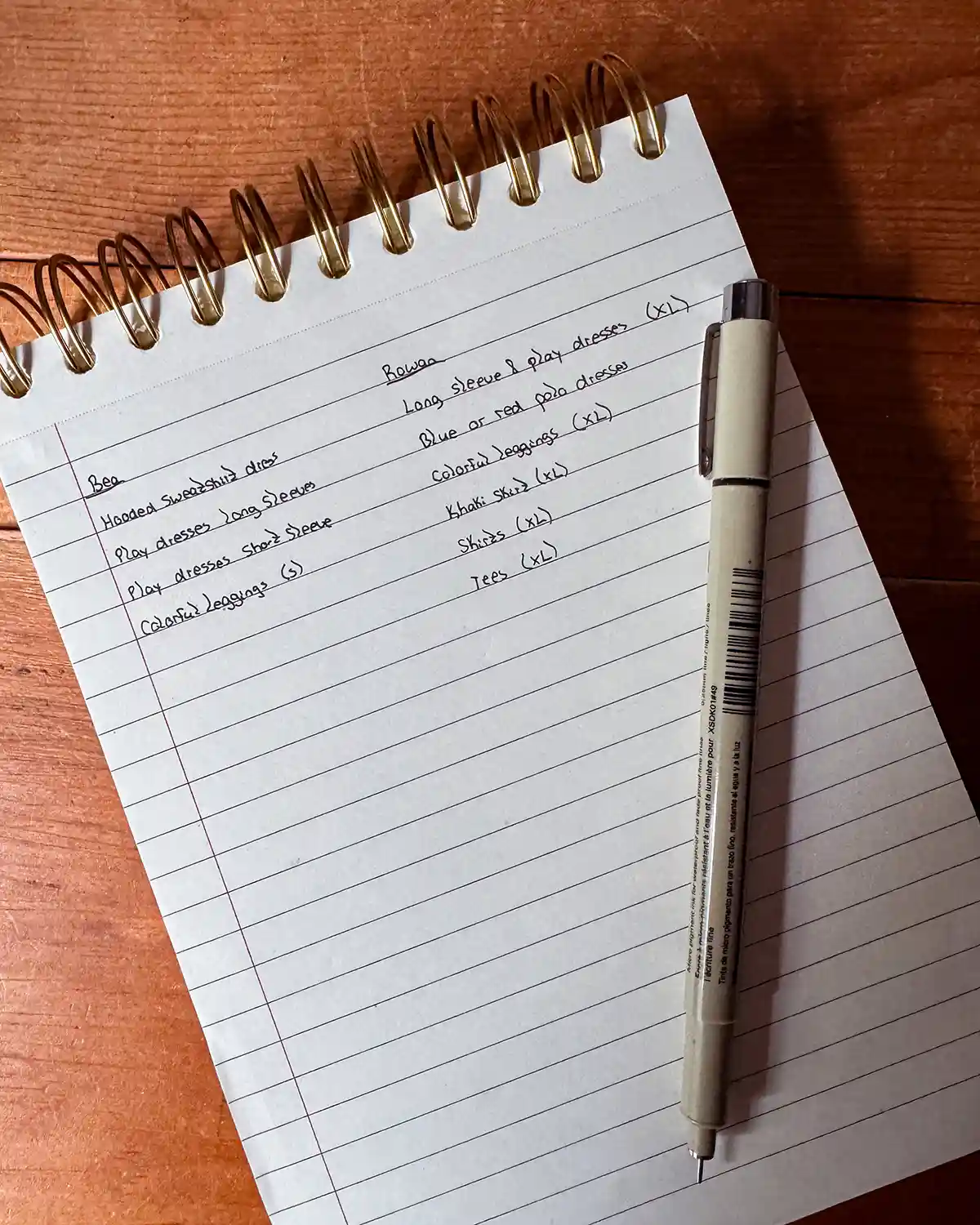
Now is the time to keep that notepad and pen handy. While you’re clearing things out, you’ll notice things that the kids need. Start writing every thought down. For example, some of our notes during decluttering included: khaki pleated skirt like sister’s, longer polo dress in XL (L too short), more colorful leggings, no short sleeve dresses (she already has too many). Make notes of what they have too little/too much of, what sizes are fitting/not fitting, colors they love/hate, what they really need vs what’s on the wishlist.
Why This Works? If you wait until the end of your session to make a list, you will not remember things. Nor will the children. Seriously, every year I ask the kids what they need or want for back-to-school clothes. In the moment, I get no response, but while we’re shuffling through clothes, the ideas pour out of them.
3 – Declutter Your Kids’ Clothes Category By Category
Once all the clothes have been sorted, go category by category to declutter items and make notes. Start with the easiest categories first, whether it’s dresses or sweatshirts. As you sort through each category, keep in mind how often you do laundry, what your kids really wear, and how many of each item your kids need. It’s different for every kid and every family. It also changes year by year, so don’t get too comfortable.
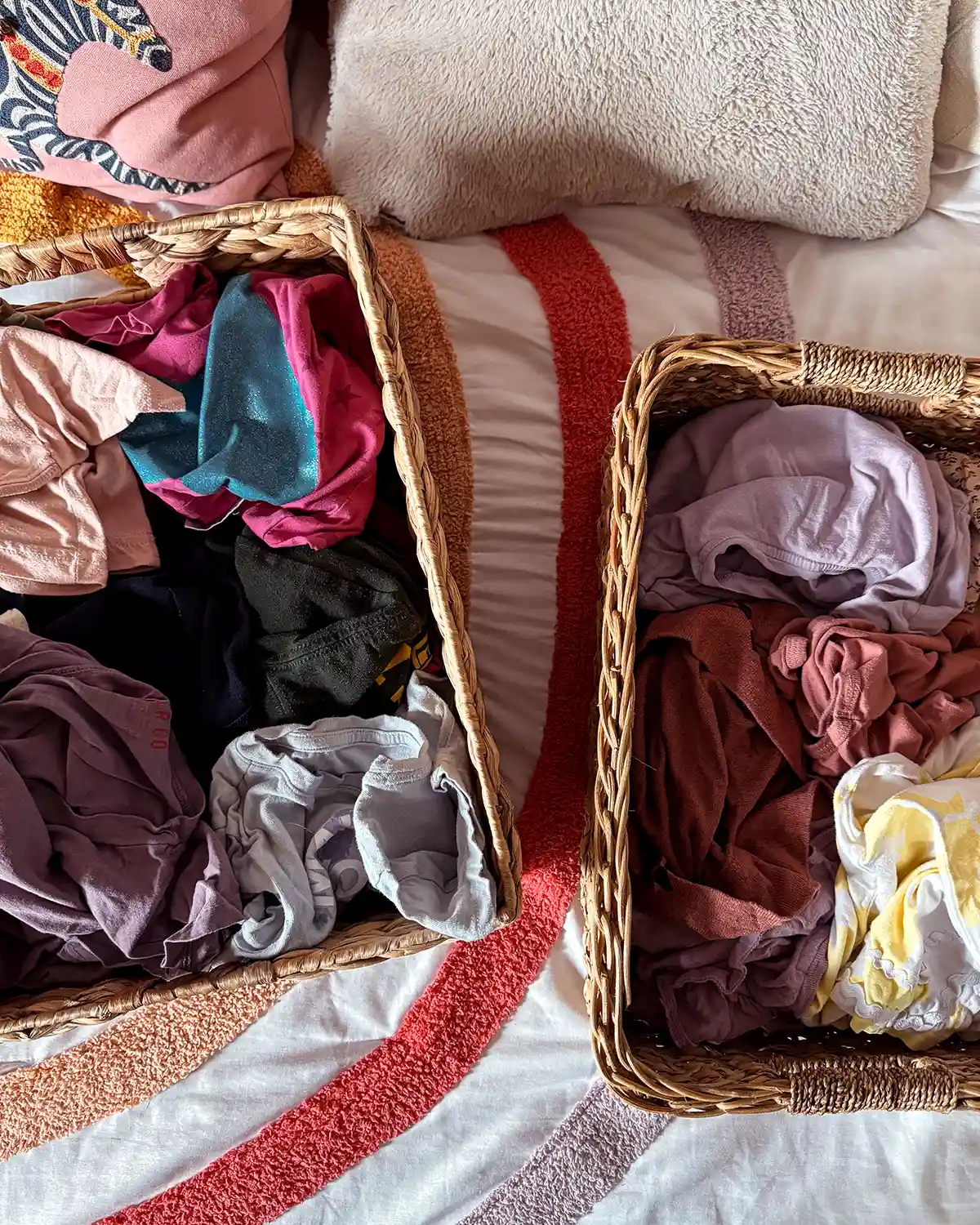
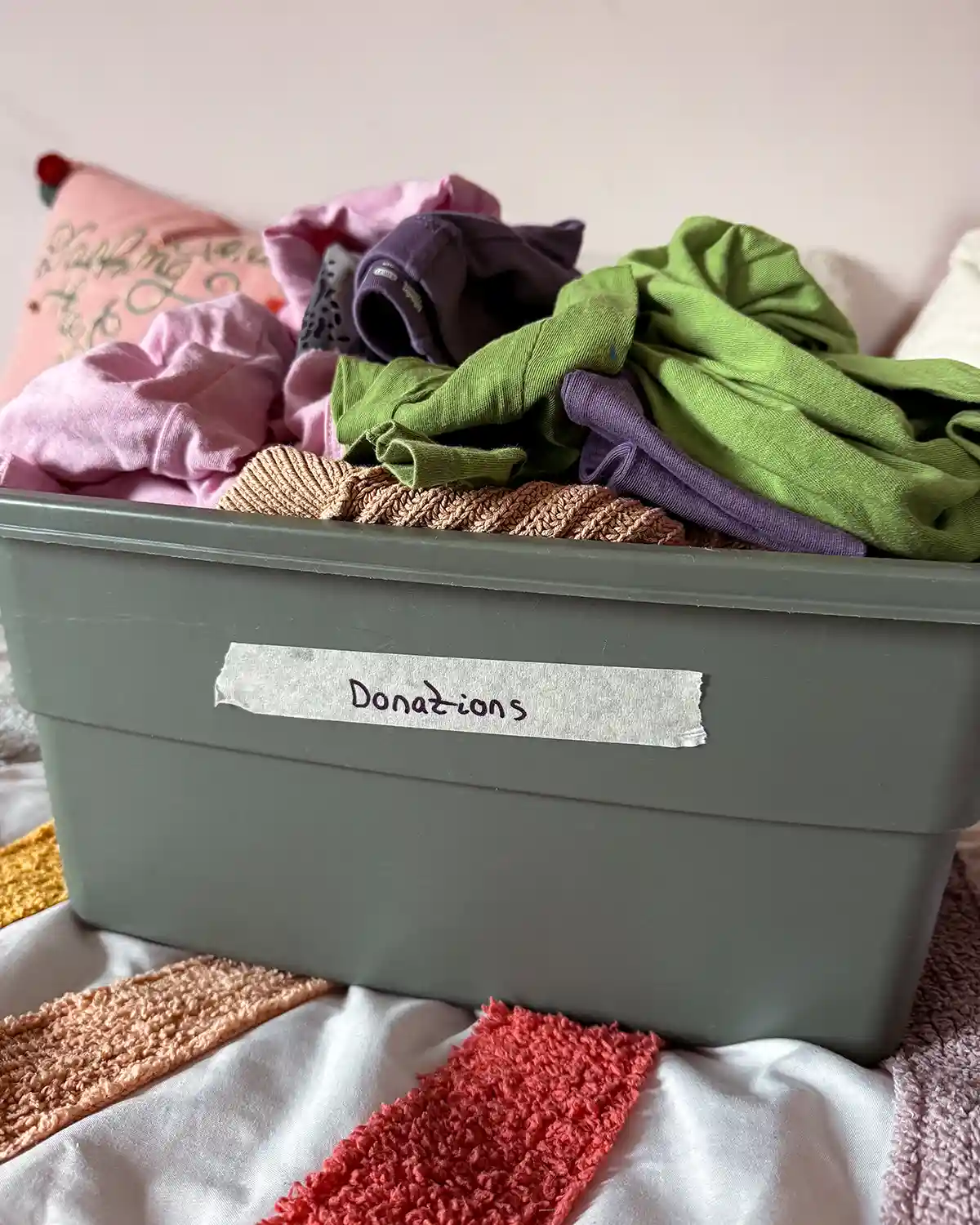
As you work through each category, piling or tossing items into a bin, a decision tree can be helpful. For instance, first up, is the item full of holes or badly stained? If so, directly to the trash. Does the item fit? If it doesn’t, put it in the donate pile (or keep for another sibling pile). Does it get worn? If not, maybe it’s time to get rid of things.
Why This Helps? In the end, you’re left with a pile of keepers. If the pile is too big and you don’t have the space for it, go through it again until you get to the right amount for you and your family. If the pile is too small, add the number you need to the list. Make any notes of specific things you might be looking for. For instance, if you pass on a too-small, bright pink hooded sweatshirt dress, but it’s one of your daughter’s favorites, the simple act of telling her you’ll add to the shopping list and promise to look for something similar that fits can help avoid a meltdown.
4 – Make Decluttering Clothes Fun
Every chore has the potential to be just a little bit more fun. Ratchet up the fun factor when decluttering kids clothes by making it into a game involving the family. It can be as silly as how many t-shirts can I declutter in 10 seconds to having fashion shows and dragging a reluctant Dad in to judge.
What worked for getting our kids involved this year was creating an assembly line and playing keep or donate, a game that’s not really a game. When sorting through my youngest daughter’s shirts, my eldest daughter would hold one up and yell “keep or donate.” My youngest would decide as fast as she could; sometimes we would even start counting down. After she decided, the t-shirt would either get tossed in the thrift pile (like literally tossed like a basketball into the basket) or tossed to mom to fold and put away in the drawer. It was weird; we brought the energy, and somehow my girls managed to help me declutter and clean for almost three hours straight. What?!
Why This Works? Simple. Everything is more fun when it’s a game, and there’s excitement and positive energy around a task.
5 – Trash What’s Really Trash
I’m guilty of it, and I’m sure you’ve done it too. The thought, “someone may really need this (insert type of clothing damage here) item, I’ll just send it to the donation center.” It can be hard to trash a clothing item since it feels wasteful, neglectful, or shameful. But think of the clothing item from the buyer’s perspective when shopping at a thrift store. There are often so many pieces to choose from. Is someone really going to want that pair of threadbare leggings with the tiny holes at the knee? Or the sweatshirt with the giant ketchup stain down the front? Probably not. People are usually shopping second hand for items in good condition. It’s okay to throw those things away.
Why This Helps? Going into decluttering clothes with the mindset that you’re going to trash the trash, or thinking from the perspective of the thrift store shopper or employee, will make actually throwing the items away so much easier. You’ve practiced, you’re prepared, it may still be hard, but now it’s just a little bit easier.
6 – Pay Attention To What Your Kids Really Wear, Like, and Dislike
Kids are crazy, folks, and what they say doesn’t always align with what they do. For instance, one child may say they love dresses while in the stores. While back-to-school shopping, they pick out several new dresses. But when they get ready for school each day, they choose leggings and a sweatshirt. Or maybe it centers around a color, style, etc. Pay attention to what your kids actually wear, what they like, and what they dislike.
Why This Works? The more you find out and write down on your notepad about kids’ likes/dislikes, the easier and more efficient back-to-school shopping will be. You’ll notice the details like buttons and clasps on the clothes they pick out, ones they don’t like, and can steer them in a different direction. And the less money spent on school clothes they won’t wear, the better. For me personally, it’s handy to know these things when I’m out thrifting without my children. I know Rowan hates jeans and Bea is in her skirts era. I look for the things they like.
7 – Ask Strangely Specific Questions About Their Clothes
Sometimes their likes aren’t immediately obvious, so go ahead and ask them the questions. While decluttering, ask your kids about their likes and dislikes. Get curious about why they’re donating certain items but not others. You may uncover some extremely specific information about your child’s clothing preferences.
Maybe they hate the type of clasp on jeans and will only wear a button. Maybe they have declared war on the color yellow and a shirt cannot contain even one microscopic speck of it. Perhaps they’re inexplicably opposed to the tiny eyelet trim on the pocket, which, naturally, leads to the revelation that they hate shirt pockets in general. These are the IMPORTANT facts, people.
Why This Helps? You are about to receive a landslide of oddly specific reasons why your kid refuses to wear perfectly good clothing. Some will make complete sense while others will leave you staring into the distance wondering how a three-inch strip of lace became a dealbreaker. And yes, there’s a decent chance their preferences will change tomorrow. But focus on today. Write these nuggets of clothing wisdom down on your shopping list and let them guide what you buy (or don’t buy) for the new school year. This applies to new clothes, thrifted finds, and even those well-meaning hand-me-downs that keep showing up from your neighbor’s sister.
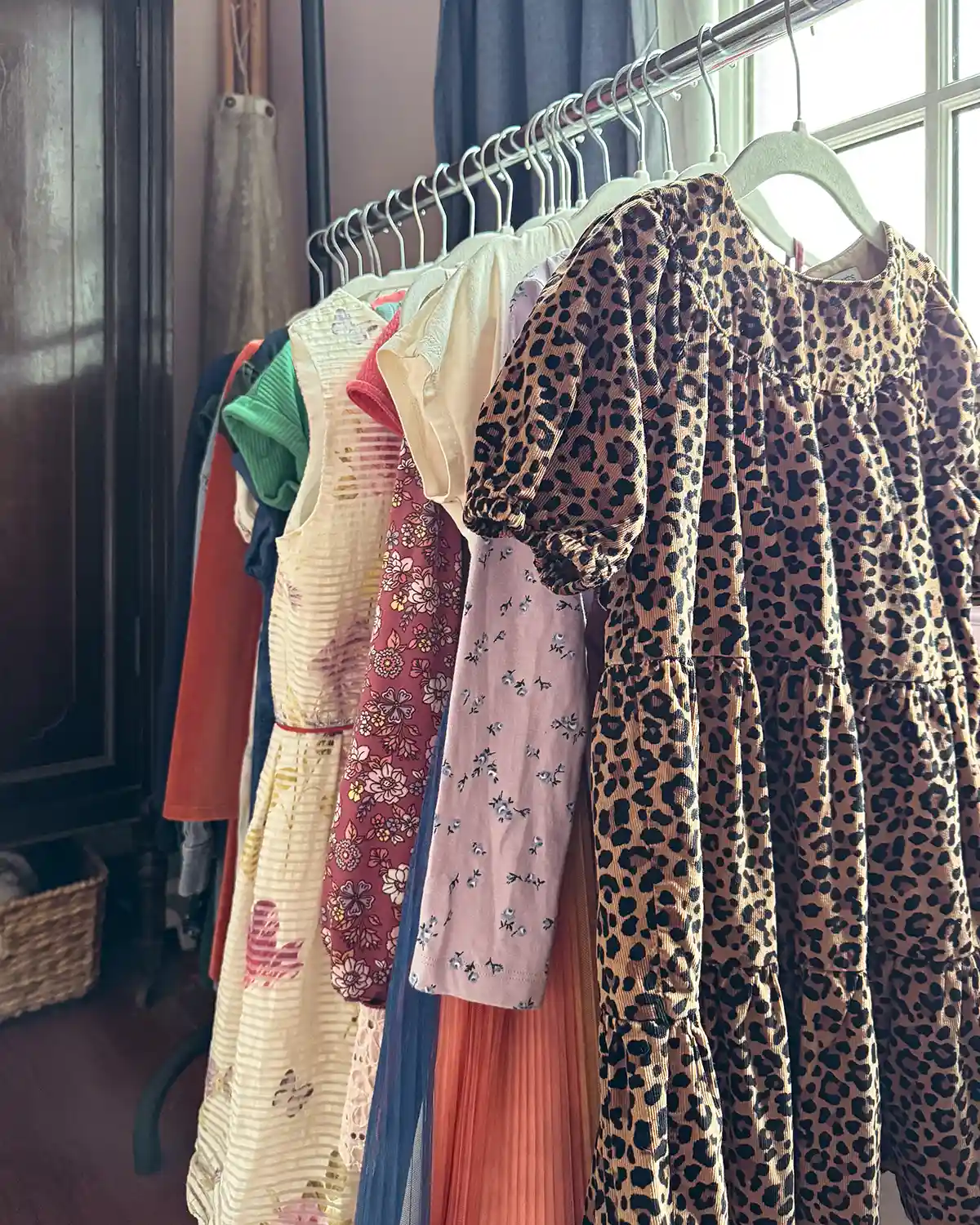
8 – Declutter Kids’ Clothes Seasonally
Like most decluttering projects, paring down the kids’ clothes isn’t a one-and-done situation. Children continue to grow, and clothes continue to mysteriously multiply. Much like feeding the children, it needs to happen regularly, although thankfully, not quite that regularly.
Pick a few times throughout the year that make sense for your family and schedule a kids’ clothing reset. For most of us, the easiest rhythm is to tie it to the seasons, since what kids wear changes along with the weather. You might do it twice a year or every season, depending on how quickly your kids outgrow their wardrobe and how much clothing they have.
Why This Works? Once seasonal clothing decluttering becomes a habit, you can put it on the calendar and then stop thinking about it. This is my favorite part! I declutter my kids’ clothes twice a year with them: once in early August to get ready for fall and winter, and again in mid-spring to get ready for summer. I put the date in my planner and refuse to spend one single brain cell worrying about the kids’ closets until declutter day arrives.
A seasonal reset also gives you a natural opportunity to try everything on, check sizes, and figure out what needs replacing before you actually need it. And because kids grow at a rate that can only be described as rude, a twice-yearly (or even quarterly) try-on can save you from discovering on the first chilly morning of October that none of the pants fit anymore.
9 – Not Everything Is Sentimental
When something becomes sentimental, decluttering it can feel like trying to evict a tiny emotional roommate. Suddenly, that stained tank top your kid wore to the ice cream shop at the Nubble Lighthouse is not just a stained tank top; it is summer of 2025. The tank top transforms into childhood memories. Memories like the last summer their hair was white-blond, and their favorite ice cream flavor was rainbow sherbet.
But not every piece of clothing needs to become a family heirloom. There is a difference between the outfit your baby came home from the hospital in and the shirt they wore to Target that one time. Both were worn by your child, both hold memories, but only one needs a home in the special box in the attic.
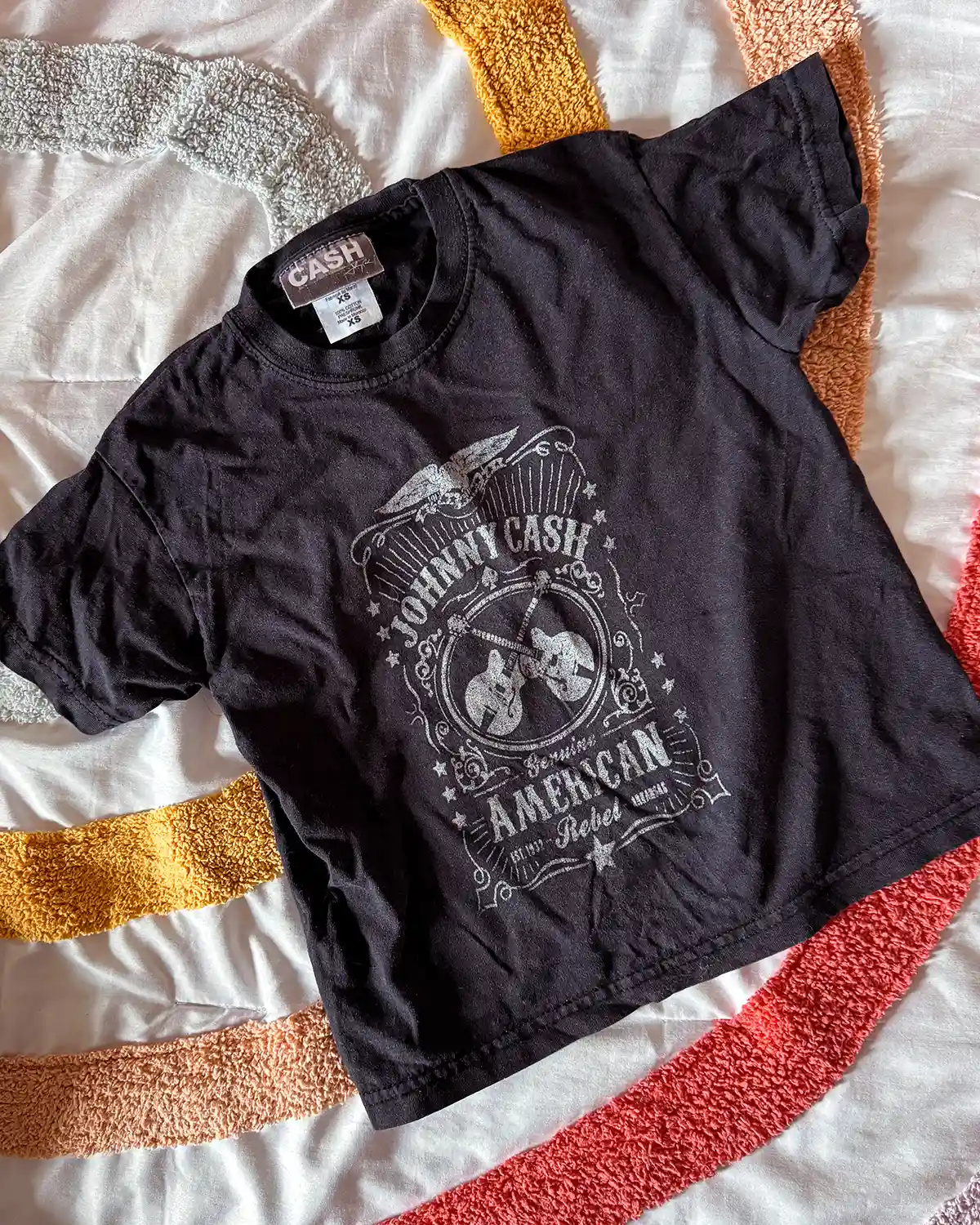
Think about the level of sentimentality. That Nubble Lighthouse tank top might be sweet, but it’s probably not in the same ballpark as the Johnny Cash toddler t-shirt that every cousin has worn and posed for a photo in over the years. That shirt has history. It’s basically the Sisterhood of the Traveling Pants but with cousins and a black t-shirt.
Go into the decluttering process with a not-everything-is-sentimental mindset. If you’re having a hard time letting things go, give yourself a limit. Maybe you keep a certain number of special outfits, or one favorite piece from each age or stage. The goal isn’t to get rid of every memory; it’s to make room for the really good ones to shine.
One mindset shift that has helped me let go of kids’ clothing is reminding myself that a piece of clothing isn’t fulfilling its destiny by sitting in a box in our attic. Those dresses were made to be worn! Take it from Elsa: let them go and be adorable on another kid who will love them.
Why This Helps? Kids are often enthusiastic collectors of everything, even clothing. A shirt with a hole in it? Still wearable. A shoe they can’t fit their big toe in? Maybe it’s a doll shoe! And as parents, we’re teaching them that it’s okay to appreciate something, remember it, and then pass it along. We’re also teaching them that we don’t have to keep everything to keep the memory. And honestly, if everything is sentimental, is anything really sentimental?
10 – Something Is Better Than Nothing
If decluttering is hard for you, your kids, or the entire family, remember that it’s not a competition and you do not have to win the closet cleanout Olympics. Although I’m gunning for the speed wrapping event at the holiday Olympics. Hashtag goals. Anyway…if the idea of sorting through every single piece of clothing feels so overwhelming that you’d rather crawl under the bed and live there, lower the bar. Maybe you only go through shirts today or fill one donation bag. That’s still fewer things taking up precious closet space, and we didn’t get overwhelmed while decluttering.
Try not to fall into the all-or-nothing thinking trap of “If I can’t do this perfectly, there’s no point in doing it at all.” A little progress is still progress, and a slightly less chaotic closet is still a slightly less chaotic closet. So if you went from having five overstuffed drawers to now the pajama drawer closes easily, and every pajama set or nightgown fits your kid, and he or she wears it, celebrate that win!
Why This Works? Decluttering is a muscle, and like most muscles, it gets stronger with regular workouts. You wouldn’t expect to go to your first weight lifting session and bench 150 pounds, would you? Well, I’m sure someone out there could, but that’s beside my point.
You don’t need to tackle your children’s entire wardrobes or even just one child’s closet in one heroic afternoon. Just 15 minutes of decluttering makes a difference. Break up the task into smaller, more manageable chunks for everyone. The more you practice making decisions about what stays and what goes, the easier those decisions become.
11 – Donate It If It’s Too Hard For You To Care For
Let’s talk about high-maintenance clothing. You know the kind: hand wash separately, lay flat to dry, do not wring, whisper encouraging words to the fabric, and absolutely DO NOT let it encounter the dryer. Ugh.
I consider my time precious, and one place I’m unwilling to spend it is performing elaborate spa treatments on children’s clothing. I have enough laundry to do without adding a pile of tiny garments that require their own individualized care plans. If something comes home with special washing or drying instructions, it’s probably heading straight to the donation pile.
But you do you! If laundry is your love language and you genuinely don’t mind treating a tiny sweater like an antique, carry on. This tip is for the rest of us. I mean, I legitimately love doing laundry, but this is where I draw the line. If you know you’re never going to consistently make time for complicated clothing care, permit yourself to let those pieces go.
Why This Helps? As parents, we’re already doing approximately 9,000 things a day, and laundry does not need additional layers of bureaucracy. The fewer special instructions you have to remember, the simpler your laundry routine becomes. Letting go of clothes that require more care than you’re willing to give them prevents the dreaded “precious shirt sitting in the dirty clothes pile for three weeks because nobody has dealt with it” situation.
12 – Shop With The List In Hand To Prevent Clutter
And finally, we arrive at the part that isn’t technically decluttering but may be the most important part of preventing the clothing chaos from creeping right back in: shop with the list. Or with hand-me-downs, accept donations after consulting the list.
Before you buy something new, thrift something, or accept a bag of perfectly good hand-me-downs from a friend, check the list. Does your kid actually need it? Will they wear it? Does it pass the strangely specific clothing-preference test? If the answer is no, you do not need to bring it home. Even if it’s adorable AND 70% off.
Why This Works? The easiest way to keep kids’ wardrobes under control is to stop adding clothes they don’t need in the first place. Shopping from your list helps you fill the actual gaps instead of accidentally creating an even larger pile of clothes to sort through four to six months from now. It saves money, saves time, and keeps drawers from reaching their literal breaking point.
And keep paying attention. Your kids’ preferences will change right along with their size. Their tolerance for itchy tags, yellow shirts, and offensive pockets will change. Take note and adjust your list as you go.
The goal isn’t a perfectly decluttered, minimalist kids’ wardrobe. It’s a wardrobe full of clothes that fit, that they actually like, and that you can keep reasonably clean. That’s a win in my book!
Happy back to school! Or happy whatever-season-it-is-when-you-find-this. May your closets be manageable, your shopping lists be accurate, and your children’s pants continue to fit for at least five consecutive minutes. You’ve got this! I’m cheering you on!
Pssst…Okay, so who else is religious about the back-to-school kids’ clothes decluttering? And do you repeat this for other seasons too? If so, what is your favorite tip for keeping the amount of kids’ clothing manageable? Do share!



Great advice.
Thank you.