It’s the most wonderful time of the year when families are heading out to the local Christmas tree farm for a fresh-cut Christmas tree. Or maybe to the local Christmas tree stand. Regardless, it’s time to procure the family tree and set it up for seasonal success. Kind of like prepping a child for college, except you have a day to do it and it often involves a chainsaw. Anyway, let’s talk about how to care for a Christmas tree. Consider this a basic guide to Christmas tree care.
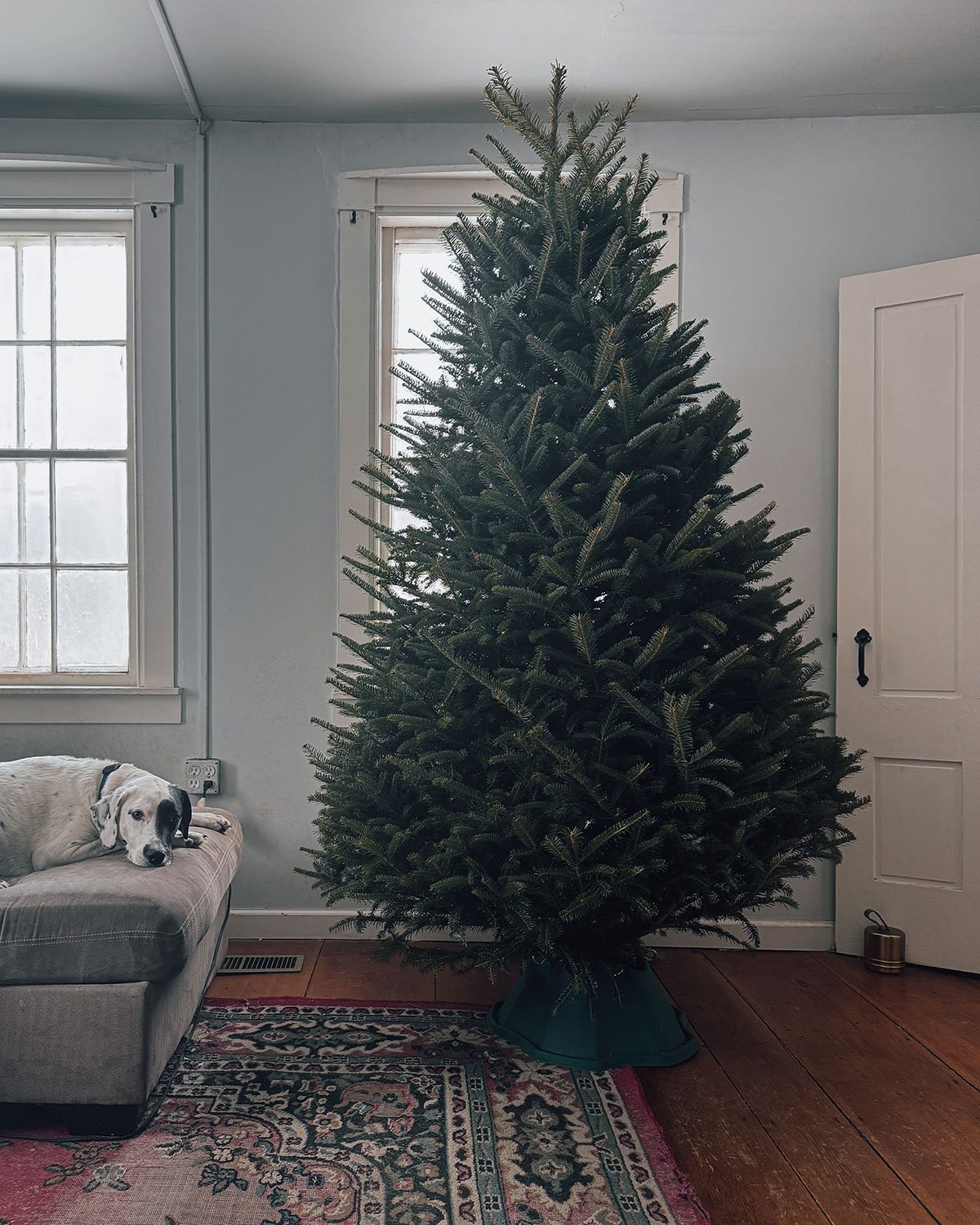
Our family is staunchly in the fresh tree camp after years of artificial trees. There’s just something about having children that makes you want that magical, Griswold family Christmas vibe with a full, healthy tree. Little full, lotta sap. We’ve learned a few things about proper tree care and longevity. Some years the tree is going strong into late January (yes…I keep my tree up as long as my husband lets me), but other years it’s January first, and we’re throwing the crispy tree into the burn pile.
What Are The Essential Christmas Tree Care Tips?
Select A Healthy, Real Tree
You know when you have a sad houseplant and how much work it takes to bring the sad, dying houseplant back to life? The same goes for Christmas trees. You don’t want to select a dry tree and try to revive it. Choosing the right tree is easier if you can cut your own. Check the bark and trunks. It should feel kind of sticky. Look over the needles. Do they look healthy? Healthy fir trees will have needles that snap when folded in half, while pine needles will bend. If you’re shopping in a tree lot, pick up the tree and gently tap the trunk onto the ground. Do the needles fall off? If so, it may be too dry.

Cut The Trunk
When you get home with your tree, give the trunk a trim. If you cut the tree yourself and can get the trunk into water in under 6 hours, this step can be skipped. After a tree trunk is cut, sap immediately begins to gum up and seal the cut. This can prevent proper water uptake. Just before you place the tree in water, cut a slice off the bottom of the trunk. At least 1-2″ off the cut end should do. A chainsaw works the best to do this but a Sawzall with a sharp pruning blade can also work.
When cutting, do it straight across like slicing a bottom ring off. Do not make angled cuts. Angled cuts affect the tree’s water absorption and also expose the trunk to drying if the water reservoir is dipping low.

Give The Tree A Drink Of Warm Water
Before putting your Christmas tree in the stand, give it a drink of warm to hot (not scalding) water. Put the base of the trunk in a bucket and fill it with warm water. This helps dissolve any sap that’s formed and opens up the freshly cut trunk for better and quicker water uptake. The sooner your fresh cut tree gets watered, the less you’ll experience needle loss problems later on.
Choose A Location
Just like with real estate, the location of your real tree matters. Things to avoid because they will expedite the drying out of trees: heat vents, wood stoves, other heat sources nearby, direct sunlight, and generally warmer or drier areas. Not only do these areas contribute to drying of the tree, but several are a fire hazard. Pick a cool location (room temperature matters), and your tree will have a better opportunity to thrive.
Pssst…we deliberately break this rule with a tree in a window and next to a heat vent. We often close the heat vent for the season and the window…it is what it is. We like it there too much to move it. It’s magical to come home in the evening and see the lit tree in the window, sometimes with tiny faces in the window awaiting their mom’s return. And see our full Christmas home tour from last year here.
Secure The Tree In The Base
With a location secured, bring out the base for your Christmas tree. A traditional reservoir-type Christmas tree stand works best. Give it a quick inspection because no one likes to discover the stand leaks onto their hardwood floors after the tree is set up and decorated.
One tip, do not shave the bark off the base of the tree or whittle the sides of the trunk to fit in the stand. Those layers are necessary for optimal water absorption and retention since the outer layers of a trunk are the most efficient for water uptake. If the trunk doesn’t fit, upgrade to a bigger stand.
Also, stand design matters. If you can, choose a tree stand with a large water reservoir. You do not want to ever let that reservoir dry out, and the amount of water a tree consumes in its first week is significant. A good rule of thumb is that a stand reservoir should be able to hold one quart of water for every inch of diameter of the trunk to get adequate water to the tree. If you’re working with a smaller reservoir, you can cheat the system using an empty wine bottle filled with water to gravity feed water into the stand. Bonus, the glug sound from the DIY self-watering system is satisfying.

Give The Tree A Lot Of Water
Now that your tree is secured in a stand, give it a drink with plenty of water. Tree lot specimens may have had a long journey, some have been en route for one to two weeks, and could be really thirsty by the time they reach their new home. They can consume up to a gallon of water a day when first watered. The sooner you water the tree, the better longevity. If you can’t get the tree in a stand right away, place it in a bucket of water until you can.
Fresh water is best for a tree. There are many tips out there saying to give the tree sugar water or add aspirin to it to slow the drying process. I don’t believe in these things, haven’t found any science backed research studies concerning water additives for a healthy tree, and feel the simplest option is the best option.
Never Let The Water Reservoir Go Dry
Perhaps the most important step in the proper care of a fresh Christmas tree is never to let the water in the stand go empty. In fact, try not to let it get low. In some cases, there may be water in the stand, but it’s so low that it’s not reaching the base of the tree trunk. Make it a habit to water the tree consistently, especially in the first week when uptake is significant. Set an alarm, task the kids, and find the most effective way for you and your own tree.
Decorate But Watch Those Lights
Just like keeping trees away from major sources of heat, it’s also important to choose light sets carefully. Low heat, miniature lights are a solid choice for tree lights.

So here’s to a holiday season with solid, basic Christmas tree care, resulting in your real Christmas tree lasting through the merriment. Merry Christmas!!
Pssst….Do you have any basic tips for how to care for a Christmas tree? If so, share them in the comments. I love to learn new tips and tricks to keep our tree in perfect condition for as long as possible.