Let me paint (pun intended) a picture of the first time I bought a paint roller. I was a young, 20-something who just bought her first fixer-upper. The last time I painted a room was in my middle school years, and I tackled the project with a foam brush; I didn’t even know what a roller was! Back to the new house. Bound and determined to paint the entire house in a rainbow of colors before move-in day (like every first-time home buyer in their twenties), I was on a budget and just bought the cheapest paint roller and cover off the shelf. Spoiler alert: it fell apart while painting the first room of the house. Lesson learned.
Since then, I’ve logged hundreds of painting hours and picked up some knowledge about the different types of paint rollers. And more importantly, how to choose the BEST paint roller and cover for your project.
5 Different Types Of Paint Rollers
Let’s start with a basic rundown of the main types of paint rollers on the market. They range from your traditional roller to specialty and textured rollers.
Manual Paint Rollers
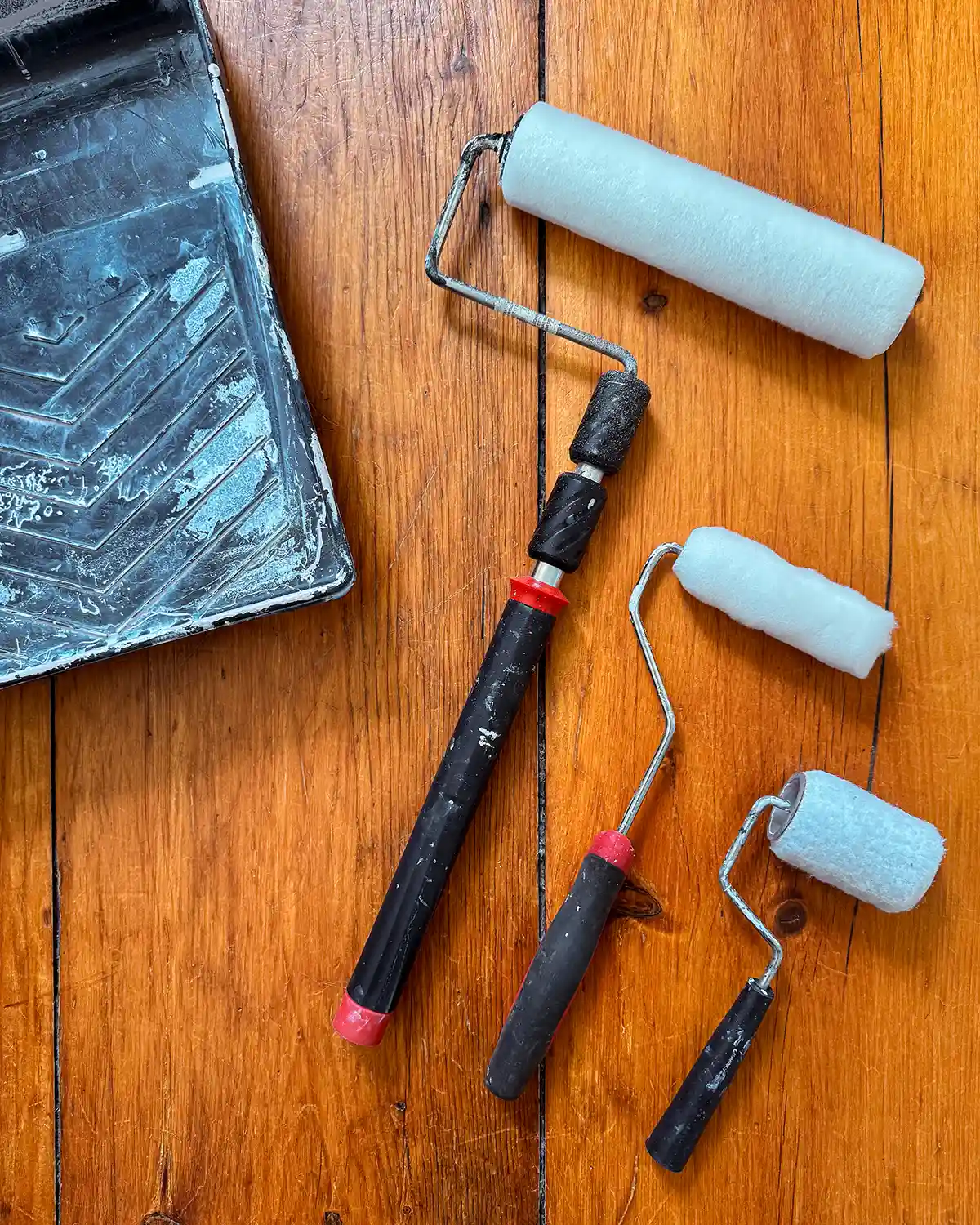
Manual paint rollers are the most traditional type and what we commonly think of when considering a roller for a paint job. Manual rollers cover large surfaces quickly and offer a wide variety of roller covers, so you’ll be sure to use the best roller cover option for your project.
In terms of budget, this standard roller is extremely budget-friendly for a basic frame. They can get more expensive when you start looking at options with comfort grips, ergonomic designs, adjustable paint rollers, and extension poles for painting high areas.
The size is most commonly a 9-inch roller. The one I’ve used for the past ten years is the Shur-Line extending comfort grip roller. Love it! It has earned its marks paint splatters.
Mini Paint Rollers
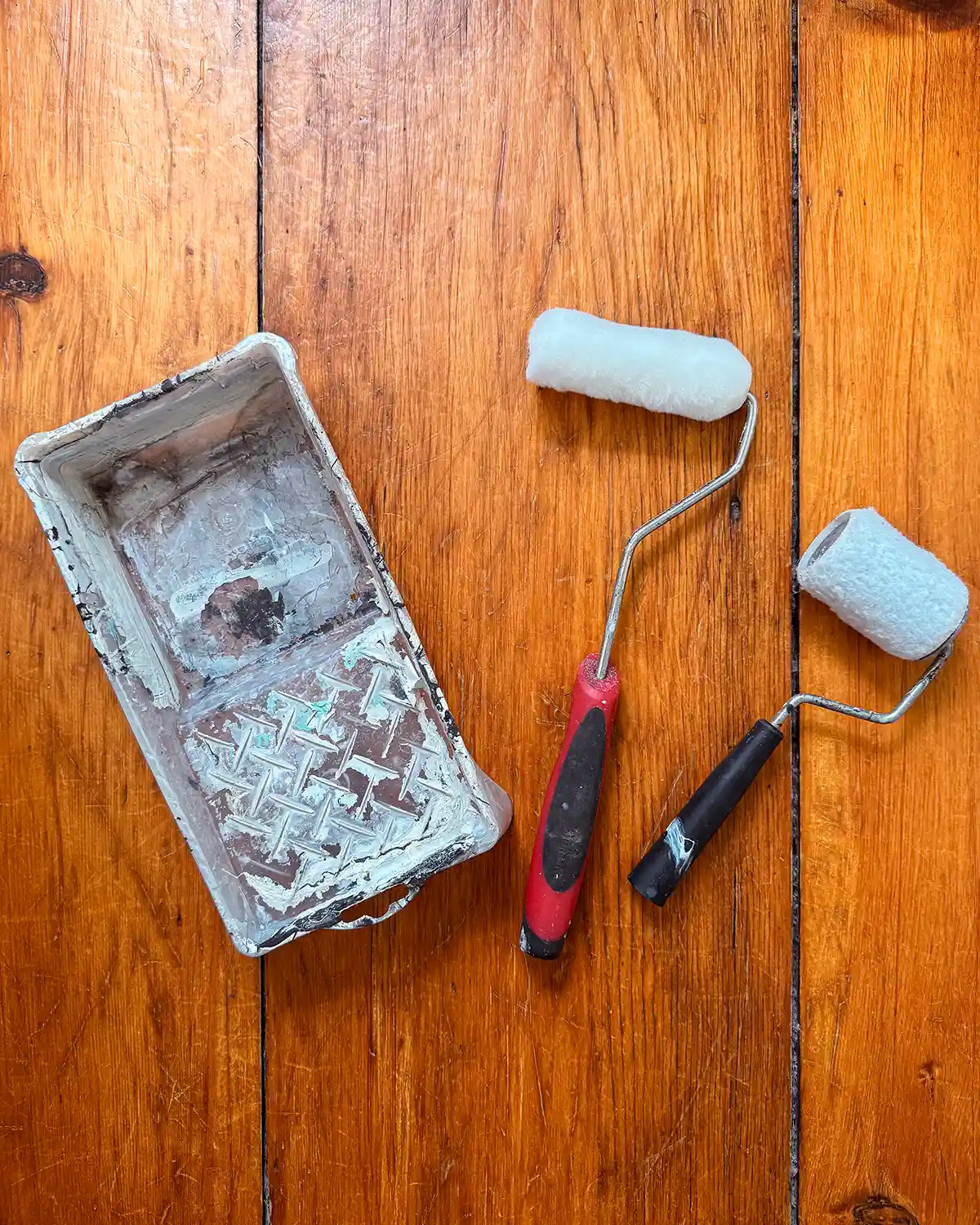
Mini rollers, also known as hot dog rollers, are the best choice for painting small areas. They provide the best results for doors, trim, cabinets, and other small areas where you want a smooth finish that a paint brush can’t provide and a manual roller is too big for. They’re particularly great for tight areas.
These rollers, when combined with a mini paint tray, make for quick, easy, and efficient painting for small projects. Start with a mini roller set with a reusable tray.
Paint Pad Rollers
While paint pad rollers (like this paint pad applicator) are technically a “roller,” they’re a flat pad attached to a handle that is used for painting. Their best feature is their precision. Paint pad rollers can be used right up against trim and corners for a precise, smooth finish, saving time on cutting in.
Paint pads also hold alot of paint, making them a good choice for large, blank walls. In addition, they don’t spatter as much as a traditional, manual roller.
These rollers are best suited for smooth surfaces, free of texture or uneven areas.
Textured Paint Rollers
Textured paint rollers are a type of roller, often made of synthetic materials, that add surface texture to an otherwise smooth wall or surface. The most popular textured rollers try to mimic the surface of fabric, stucco, and stone. Here’s an example of a roller cover for a sponge-painted finish.
Some of the benefits of using this type of roller are to add visual interest to a room or cover imperfections on a surface.
Specialty Paint Rollers
Similar to textured rollers are specialty rollers, but instead of adding texture to the painted surface, they add pattern. Remember the faux bois (wood grain pattern) trend of the 2010s? That’s a great example of using a specialty paint roller to get an interesting pattern on your painted surface. Here’s an example of a roller that paints a leaf pattern.
Paint Roller Characteristics
There’s a wide variety of characteristics when it comes to paint rollers. And for this section, we’re mainly looking at the more traditional manual and mini rollers. From size to cover material and nap length, there’s a lot to consider.
Anatomy Of A Roller
To start, let’s talk about the basic anatomy of a paint roller.
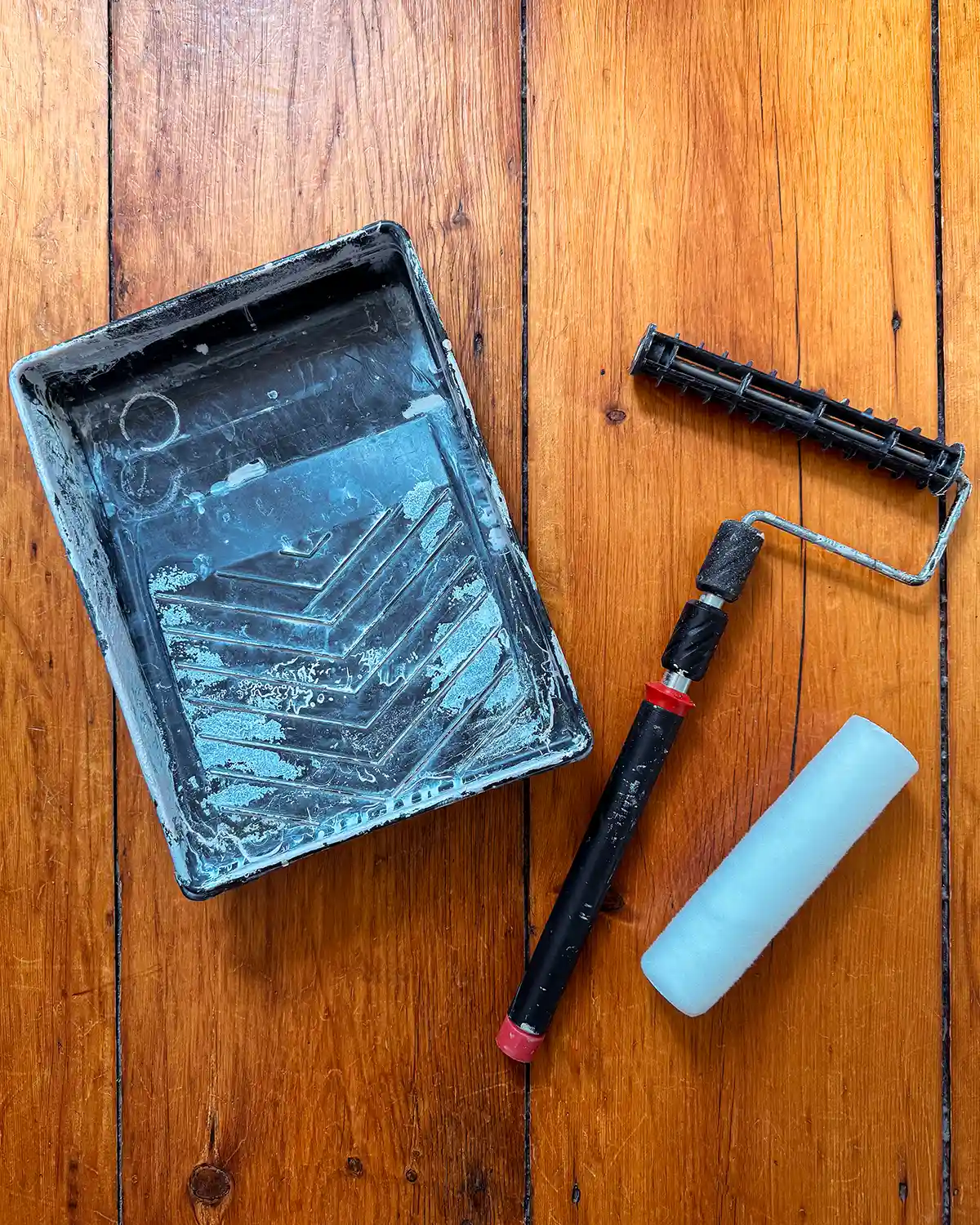
First, you have a roller frame. This is the basic tool for paint rolling. It consists of a handle for the painter to hold, along with a spinning part for a roller cover to slip over. The frame is reusable and can last a lifetime if cared for properly. When selecting a roller frame, there are different sizes and features to consider. Like whether or not the handle extends, is it ergonomic, etc. If you’re doing alot of painting, a good quality ergonomic roller frame is a wise investment.
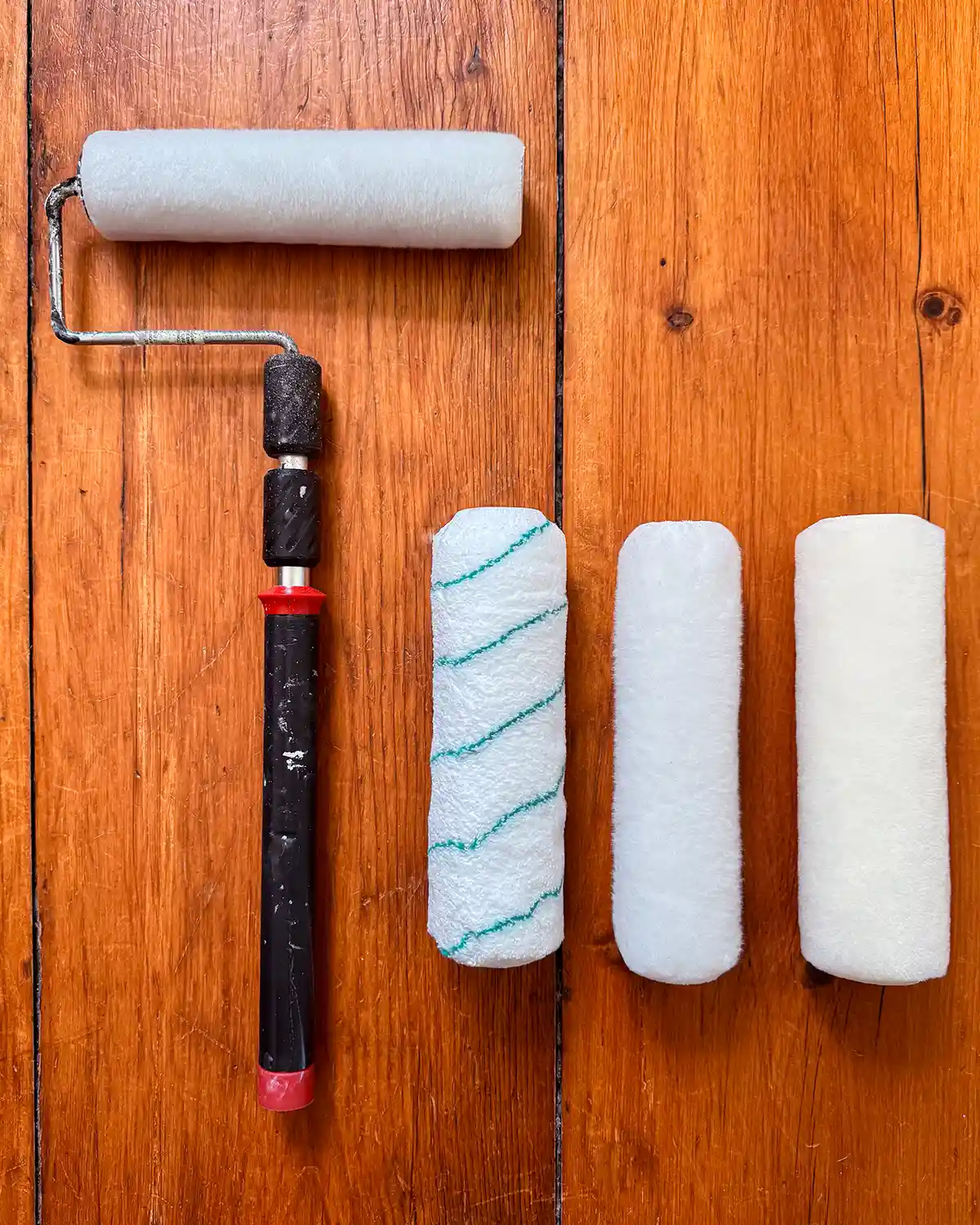
Next are the paint roller sleeves or covers. These slip onto the roller frame and are the part that absorbs and holds the paint to be applied to the surface. Covers come in a wide variety of sizes, materials, and naps (thickness of the material). Depending on the quality, roller covers can be cleaned and reused many times before requiring replacement.
In conjunction with a paint roller, you also need a paint tray. This should be chosen according to the size of the roller you’re using. Invest in a high-quality, super sturdy paint tray. Speaking from experience, the cheaper ones can twist and break eventually, spilling paint.
Size
There are two main sizes for paint rollers. A traditional 9-inch roller is the most common size for most homeowners and DIYers. It covers a room quickly and efficiently. There are 12-inch paint rollers available, but they are used most commonly by professional painters.
Some projects demand a smaller roller, and these most commonly can be found in the 4″ size. You can also find mini rollers in 2″, 3″, and 6″ sizes.
Material
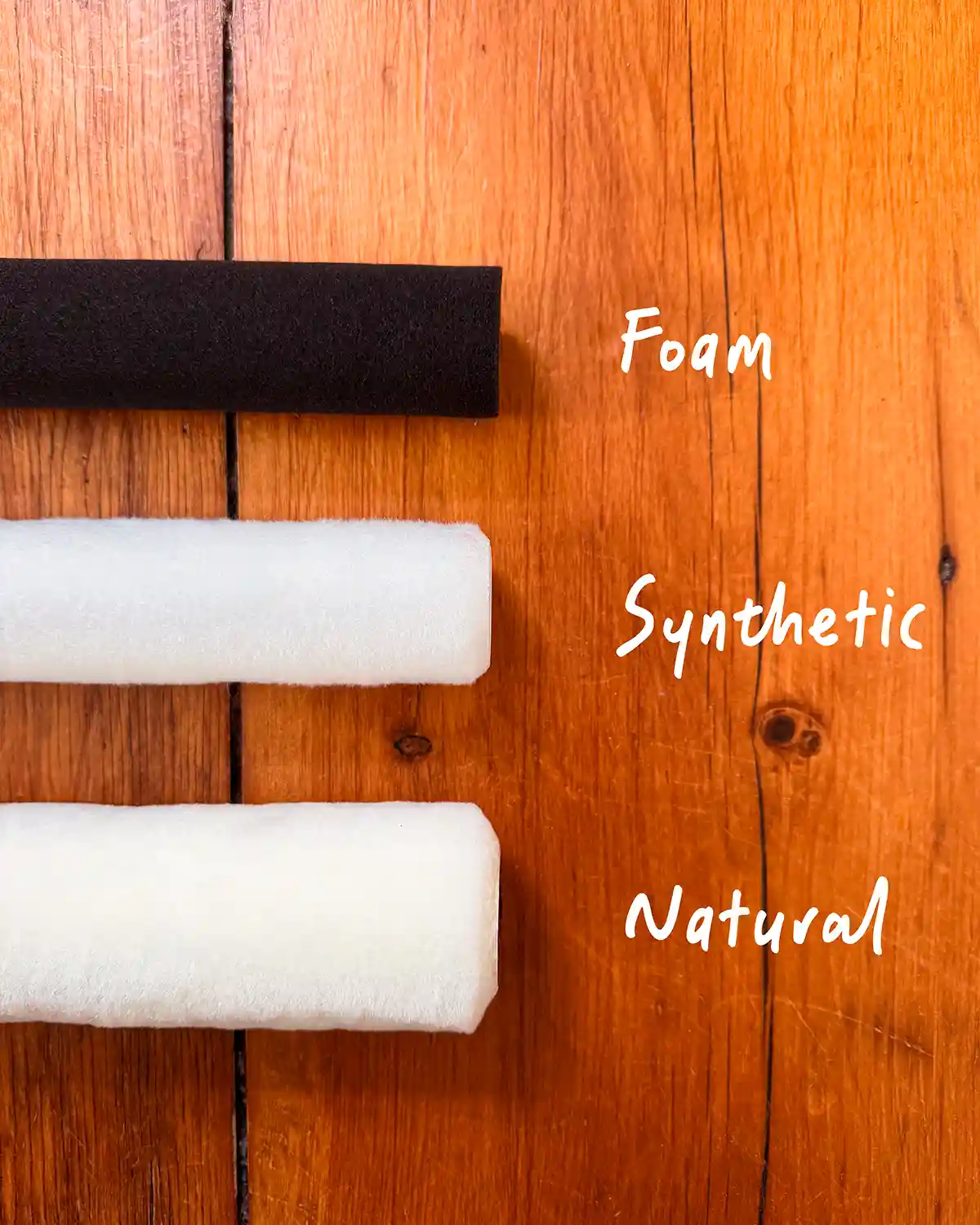
Paint roller covers come in a variety of different materials, from synthetics to natural fibers. Deciding which cover material makes the most sense to you depends on your project.
Foam Rollers
Foam rollers provide the smoothest finish and work great on cabinets, doors, trim, and other areas demanding a super smooth, streak-free finish. Foam rollers work best with oil-based paints. While they can be used with water-based paints, other synthetic rollers are a better choice.
Synthetic Fiber
Synthetic rollers are like the Swiss army knife of paint roller materials and can be used on the widest range of painting projects. When in doubt on which material to choose, a synthetic fiber roller is a good choice.
This material is best paired with water-based paint products. They absorb paint well and apply it evenly for a smooth finish. These rollers are a great choice for painting entire rooms with smooth to mildly textured or uneven surfaces.
Synthetic covers are also extremely durable, as long as you purchase a good quality one, and can last a long time given proper care.
Wool Or Natural Fiber
Paint rollers made of wool or natural fibers are the most absorbent material on the market. Because of this, they make for quicker painting jobs, requiring less time reabsorbing the paint from the tray.
Since these rollers are thicker and hold more paint, they work exceptionally well on uneven or textured walls, providing excellent coverage. They are also the right paint roller choice for exterior projects with rougher textures, such as brick or stucco.
Natural fiber rollers are much more difficult to find than their synthetic counterparts and generally speaking cost more money. Our local hardware stores no longer carry them, but I have found them at Home Depot before.
Roller Naps
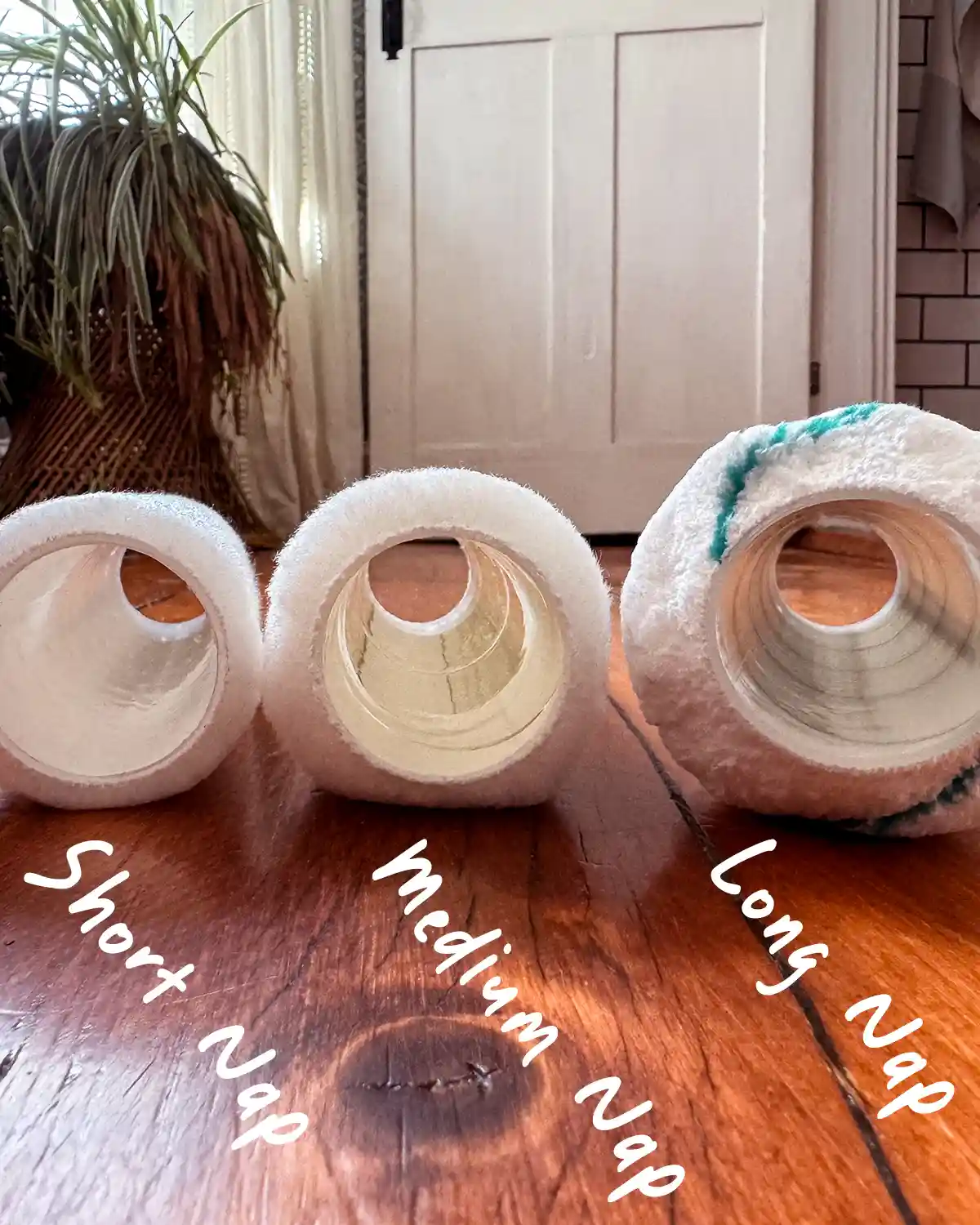
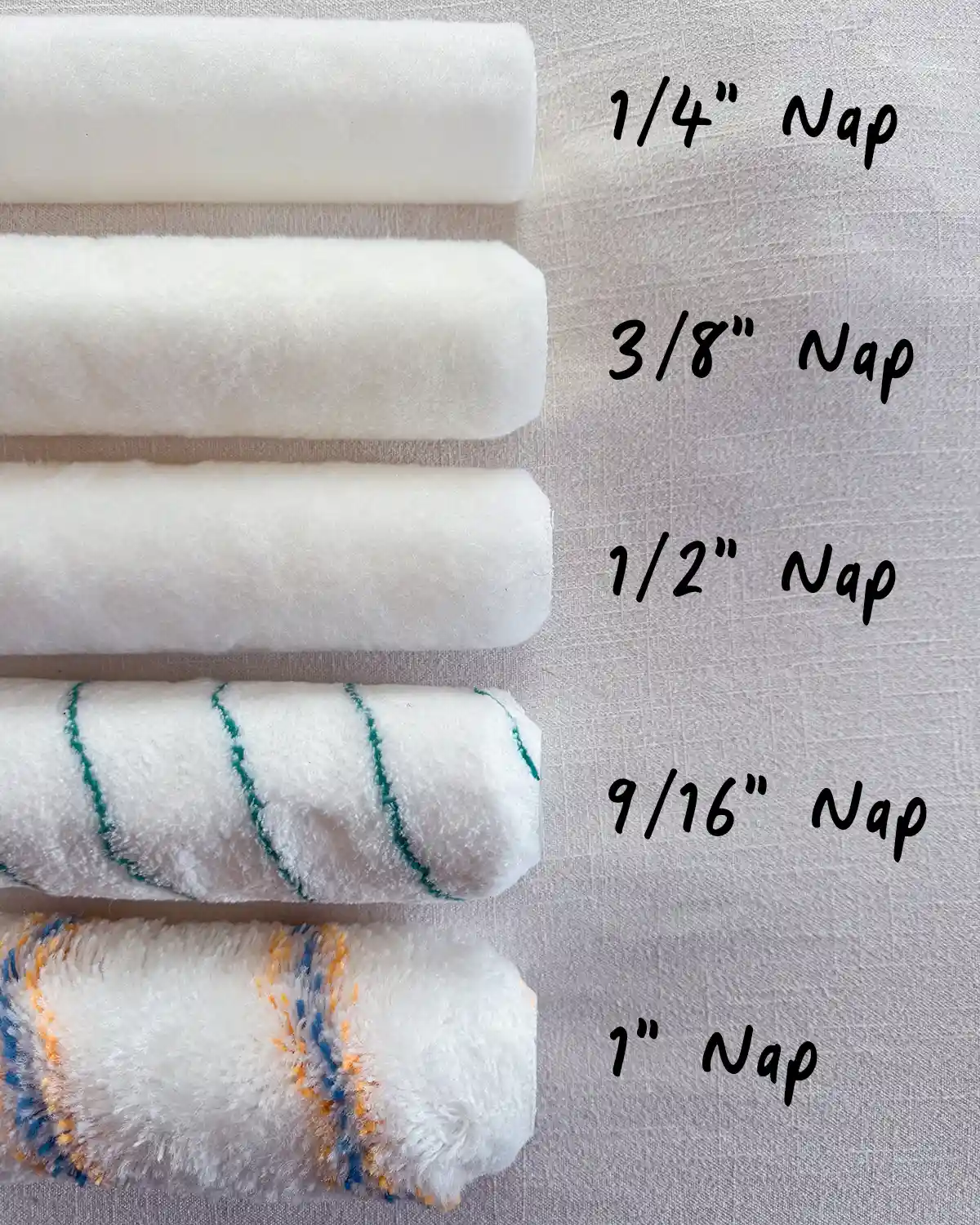
Roller naps, or nap length, is essentially the size of the material on the roller cover. Nap size affects how much paint the roller absorbs and the finish result for different surfaces.
Short Nap – Up To 1/4″
A short nap roller has a pile length of up to 1/4″. These rollers are ideal for flat surfaces requiring a smooth finish. The rollers hold less paint than a larger nap size, so they prevent drips and streaks for smooth finishes.
The ideal projects to use short nap rollers include cabinets, furniture, trim, smooth drywall or ceilings, shelves, or other flat surfaces. It can be used with both water-based and oil-based paints.
Medium Nap – 3/8″ to 1/2″
Medium nap rollers have a pile length of 3/8″ to 1/2″. With the added thickness, they hold more paint and also provide great coverage on semi-smooth surfaces. These rollers can cover slightly textured surfaces or uneven walls.
The ideal projects for medium nap rollers include interior walls and ceilings, and surfaces with imperfections.
Long Nap – 3/4″ And Over
Long nap rollers have a pile length of 3/4″ or longer. These roller covers hold a lot of paint and make textured painting jobs of rougher surfaces much easier and faster.
The ideal projects for long nap rollers include textured exterior surfaces like stucco, bricks, cinder blocks, popcorn ceilings, and other super rough surfaces.
How To Choose The Right Roller Cover
When it comes to choosing the right roller and cover for your project, there are a few considerations to factor in.
How Big Is Your Project?
First, how big is your project? For larger areas like walls and ceilings, opt for a 9-inch manual roller. For smaller areas and projects, a mini roller may be a better choice.
Interior Or Exterior?
Is your project an interior painting project or something exterior? If it’s interior walls, look at using a manual roller with a 3/8″ or 1/2″ synthetic cover. If it’s a textured exterior project, maybe a larger nap is required.
What Paint Type?
The type of paint you’re using dictates which roller cover makes the most sense. A foam roller is the best option for oil-based paints since it provides the smoothest finish. Most water-based paints prefer a synthetic fiber roller cover for a smooth, streak and bubble-free finish.
What Paint Finish?
What paint finish are you using for your project? Glossy paints are applied differently from flat and eggshell finishes. Glossy finishes can be unforgiving. It’s best to choose a lint-free roller cover option with a short nap. For flat or eggshell finishes, opt for a more common 1/2″ synthetic roller for a smooth finish.
Smooth Or Textured Surface?
Next, consider the texture of the surface you’re painting. The rule of thumb is to use short-nap synthetic rollers for smooth surfaces, transitioning to higher-nap natural fiber rollers for more textured surfaces.
What Is Your Budget
The final consideration is your budget, weighing cost vs. quality. If you have the budget and you’re planning on tackling more than one painting project with the tools and supplies, opt for the higher-quality paint rollers, covers, and trays. They will provide a top-notch finish and will last a long time with proper care.
But there is a time and a place when opting for the cheaper materials is the way to go. I’ve been there. A new homeowner with renovation expenses mounting, the budget is slim, you’re feeling house poor, and now there are all these tools and supplies you need to repair and maintain the home. Go with the cheaper option; there is no shame in that, and you can always upgrade later should your circumstances change.
And with that, I bid you happy painting and wish you all the best on your next painting project.