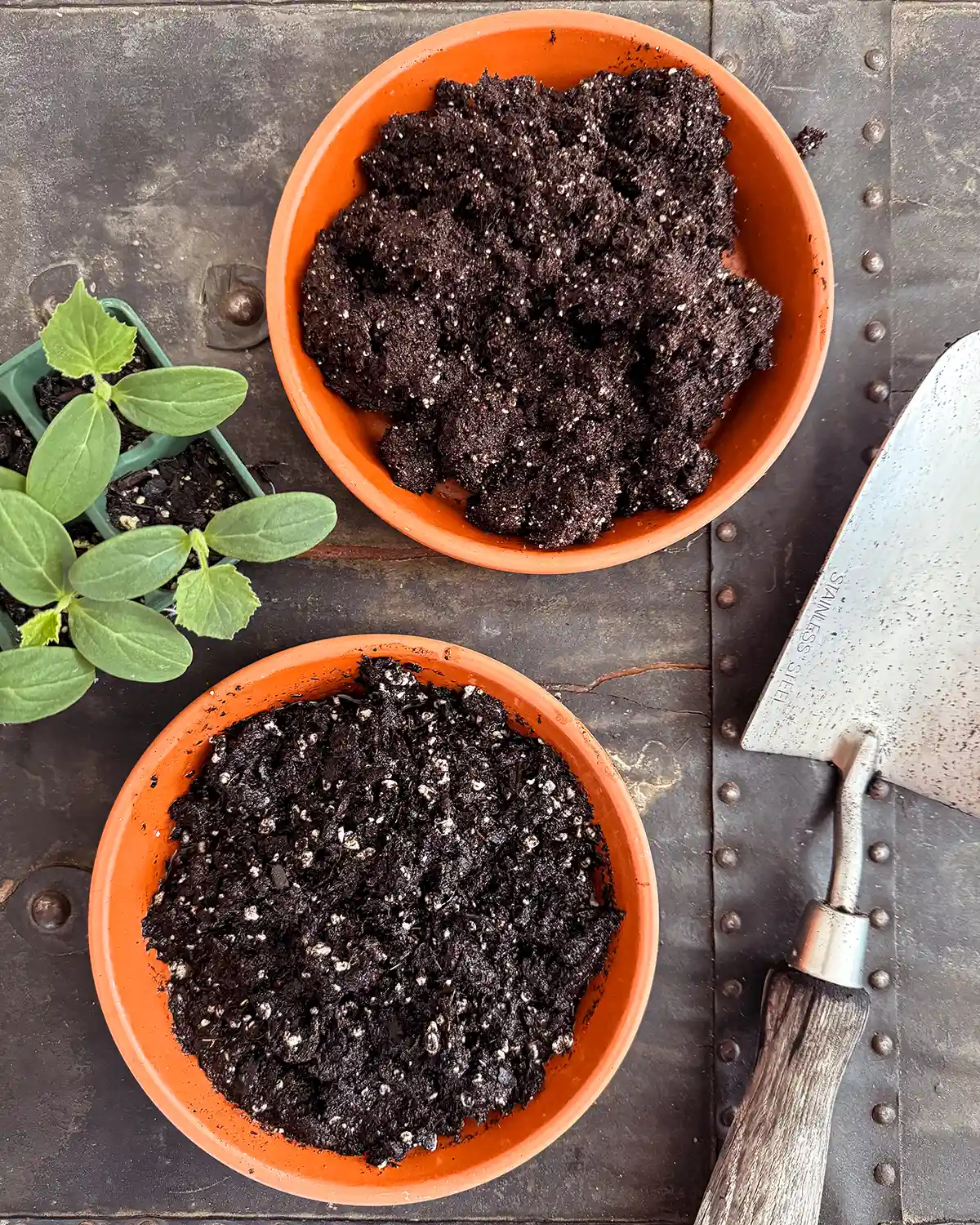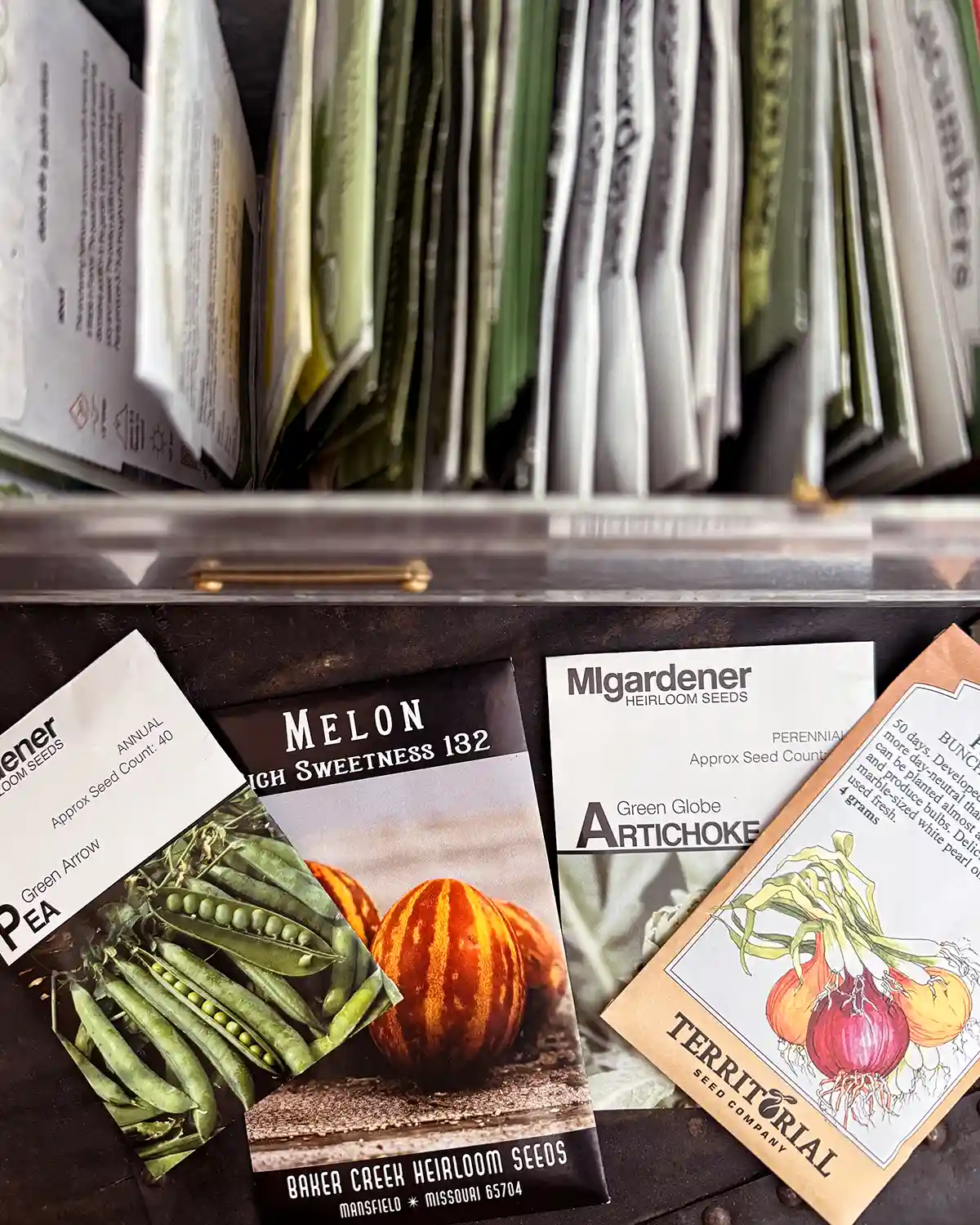
Let me paint a picture for you. It’s the height of summer; the days are sweltering, you’re constantly watering the garden in summer heat, but it never seems like enough, you’re drowning in zucchini, battling squash bugs, the weeds have overtaken…well…everything, and the last thing on your mind is a fall vegetable garden. But it’s time to start thinking about it and putting a plan in place because fall might be the garden’s best second act. But what vegetables should you plant in a fall garden?
In this guide, I’ll walk you through what to plant for a fall garden, when to plant it (some fall crops need to be planted in the spring), and the one thing that changes everything: where you live. Because in gardening, timing is everything and your zip code gets a vote. I’ll share not only my favorite fall veggies to plant, but also some of my tried-and-true varieties. However, take it with a grain of salt, because every garden is different. What works best for me may be a terrible choice for your space.
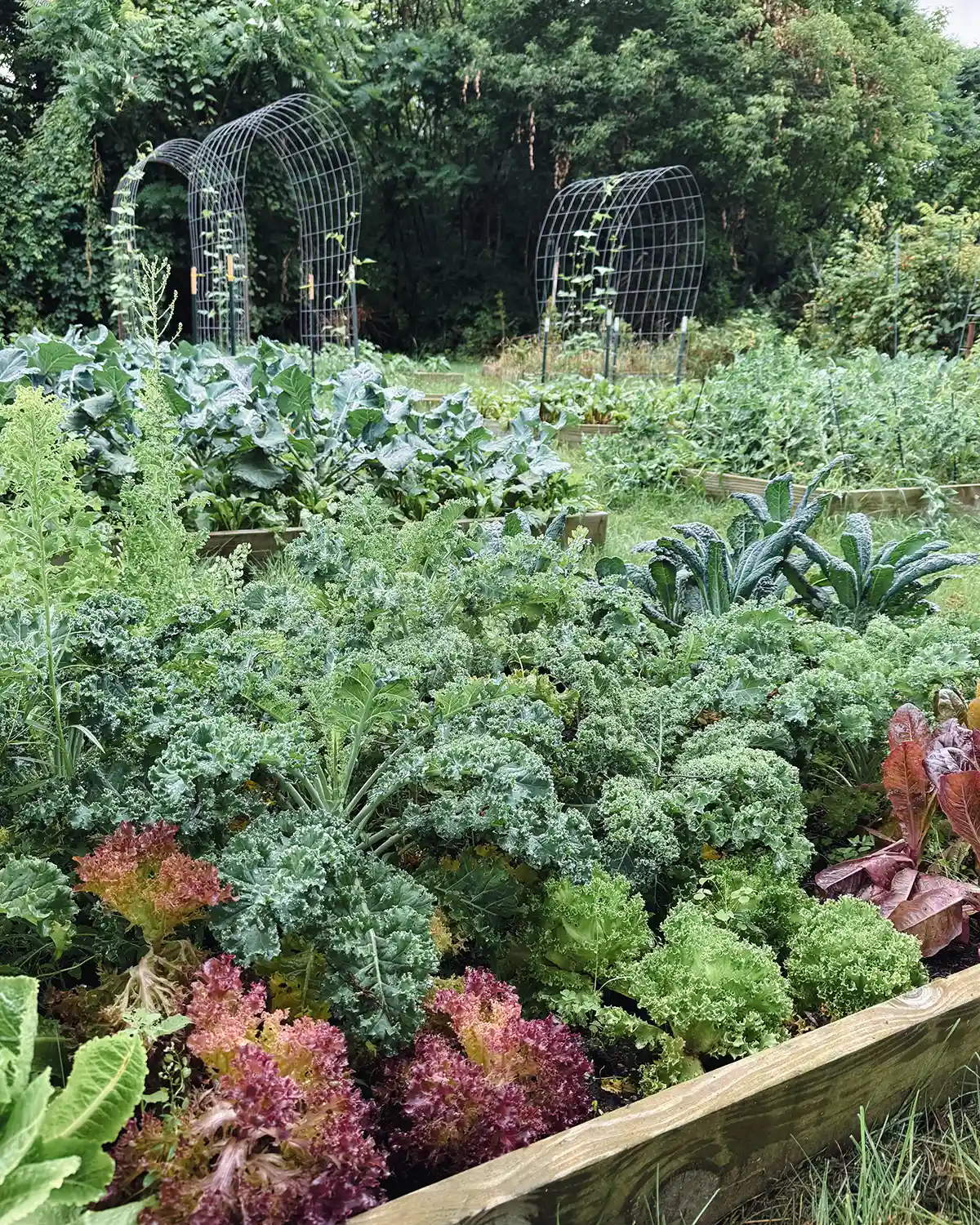
And before we begin, for reference, I’m growing in zone 5A in central Vermont. Use the USDA zone map to find your growing zone. The Old Farmer’s Almanac first/last frost date calculator is also handy.
Lettuce
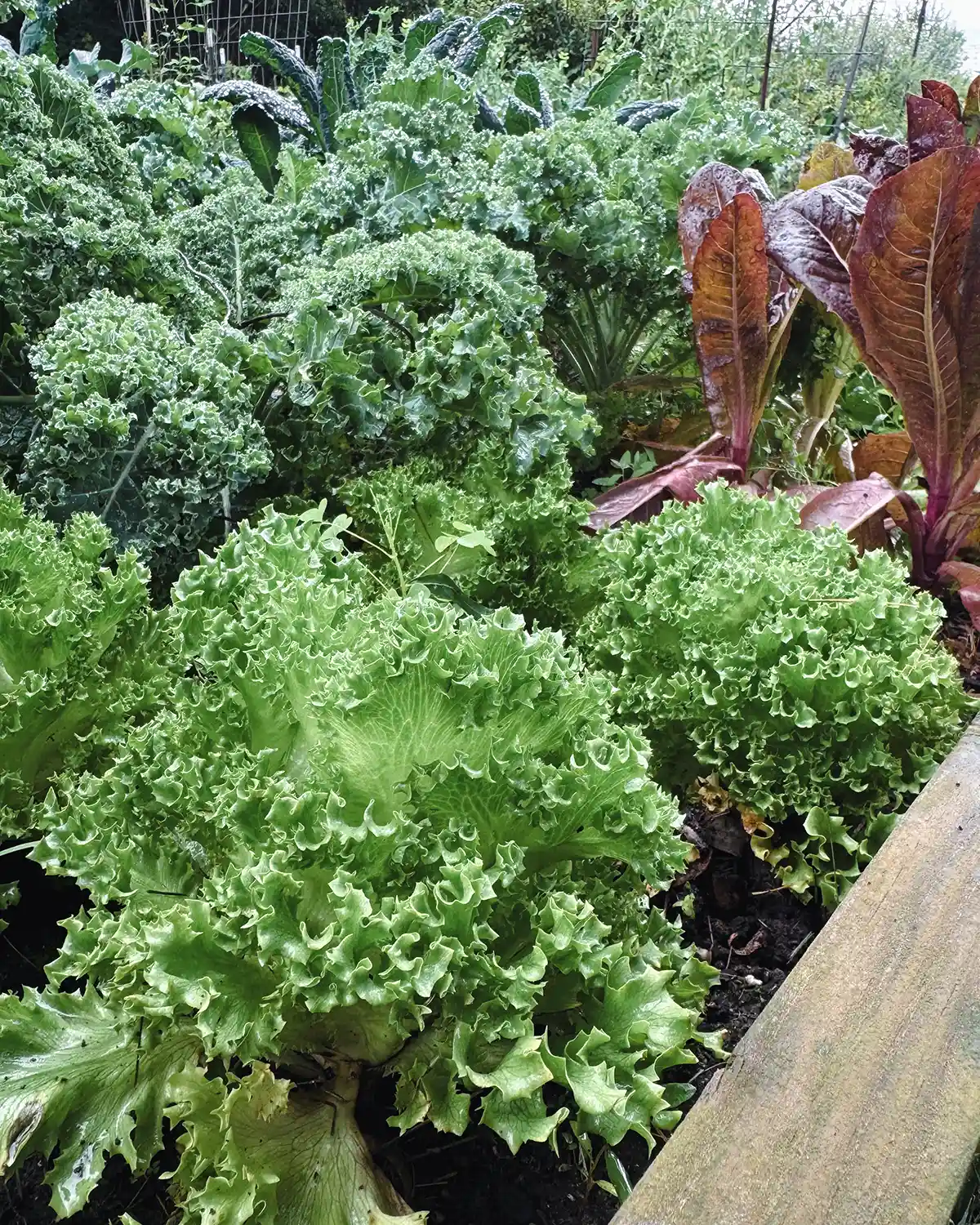
Lettuce is an excellent vegetable to plant in the fall. Most lettuce varieties struggle and turn bitter in summer’s heat and prefer the growing conditions of the spring and fall. Pull up those bolted lettuce plants from your spring garden and replace them with some fresh greens for fall.
Timing: Many lettuce seeds need 40-50 days to reach maturity.
Favorite Varieties: Any of the Salanova lettuces, Red Romaine, and Marvel.
Arugula
Arugula, with its spicy tang, is a great green to plant in the fall since it tends to bolt super quickly once temperatures rise. Plant a few rows of this peppery plant this fall to add a bit of a kick to fall salads.
Timing: Arugula typically needs 20 to 40 days to mature.
Favorite Varieties: Slow Bolt and Esmee for something a little less spicy.
Spinach
Spinach is one of the queens of the fall vegetable garden with its cool-weather growing habits. It much prefers fall temperatures for growing, with the crisp weather helping the green establish a sweeter taste. Spread spinach seeds later in summer since wide varieties need 30 days to start producing pickable leaves. Some cooler season spinach varieties thrive and continue to produce through the late fall and into winter when kept under cold frames. Succession sow it every week from late August through autumn for continuous picking.
Timing: Spinach needs 30 to 50 days to grow.
Favorite Varieties: Winter Giant is one of the cold-hardiest varieties, or Space for fast yields.
Swiss Chard
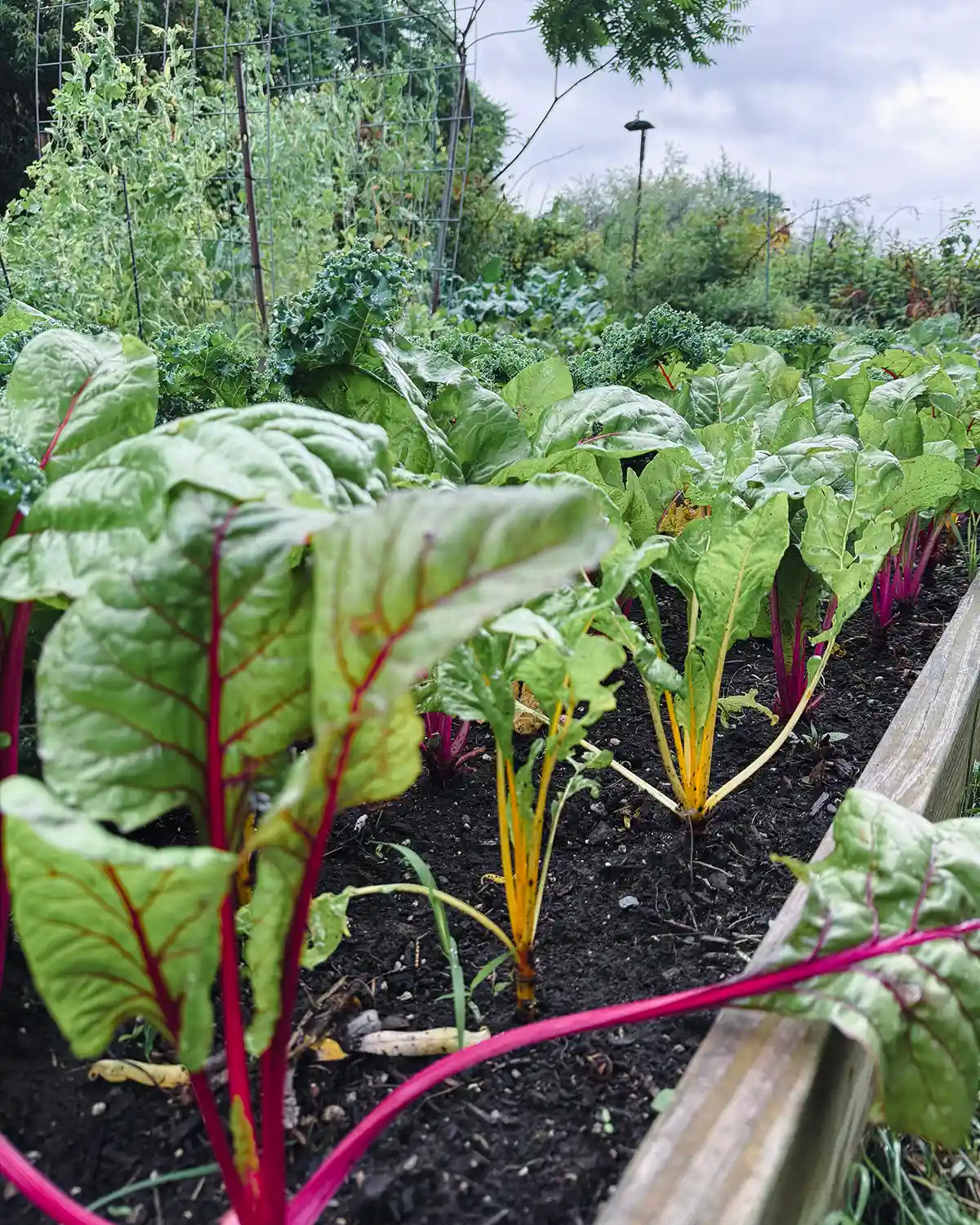
Swiss Chard is another green that thrives in the cooler temps of spring and fall. In the height of summer, the leaves come under attack from pests and the plants bolt with warmer temps. But in the fall, chard thrives. Both the leaves and the stems are edible and delicious to harvest in the fall. Plant it in the garden in the late summer for fall pickings.
Timing: Swiss chard requires 50 to 60 days to reach maturity for big, leafy greens.
Favorite Varieties: Rainbow Swiss Chard.
Kale
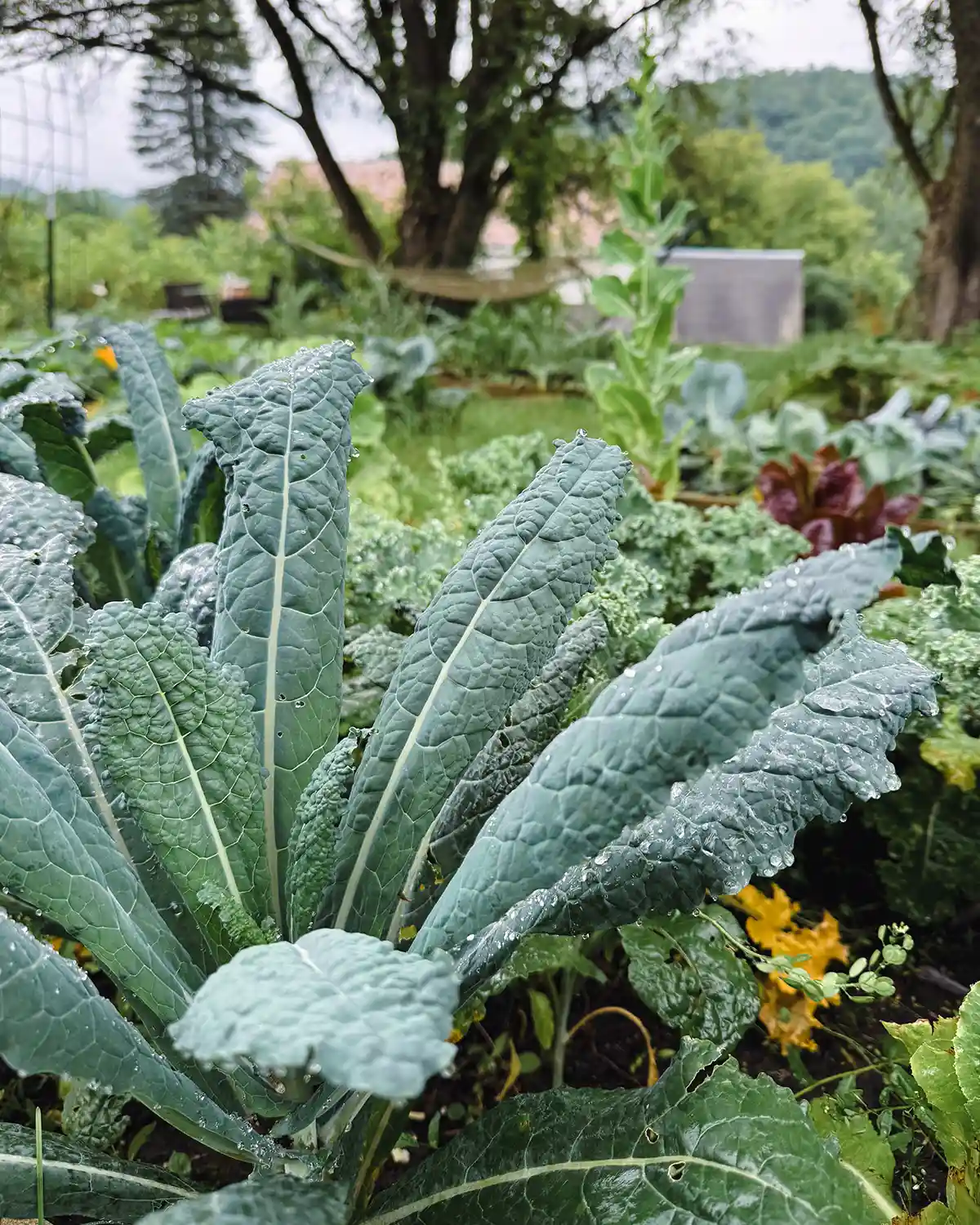
Kale is an excellent choice for cooler weather vegetable gardening and another vegetable whose flavor improves with a frost. Fun fact: kale becomes sweeter after a light frost because cooler temps trigger the plant to convert starches to sugars.
Timing: Kale needs 50 to 75 days to reach maturity.
Favorite Varieties: Blue Curled Scotch for full-size, traditional leaves. And Tuscan Baby Leaf for a fast-maturing, baby leaf variety (start picking in 25 days).
Collard Greens
A favorite leafy green in southern plots, collard greens (and mustard greens too) are a delicious superfood. It’s easy to grow and very heat and cold tolerant. It can take a while to grow, so start it mid-summer to ensure productive yields.
Timing: Start collards earlier in the summer since they need about 70 days to reach maturity.
Favorite Varieties: Georgia Southern Collards for a classic, easy-to-grow variety.
Brussels Sprouts
Unlike many fall vegetables on this list, Brussels sprouts require a little more pre-planning since they require a long time to reach maturity. Start them in early summer for heavy yields in the fall through the early winter (depending on where you live). Most varieties withstand frosts, yielding a long harvest season.
Timing: Brussels sprouts require 80 to 100 days to start producing. If you live in a place with cold winters, start seeds indoors in May or June. If you live in a location with mild winters, start seeds in July and August, then another round in March and April for continuous harvests.
Favorite Varieties: Hestia Brussels Sprouts for heavy yields, delicious flavor, and burst/rot resistance.
Broccoli
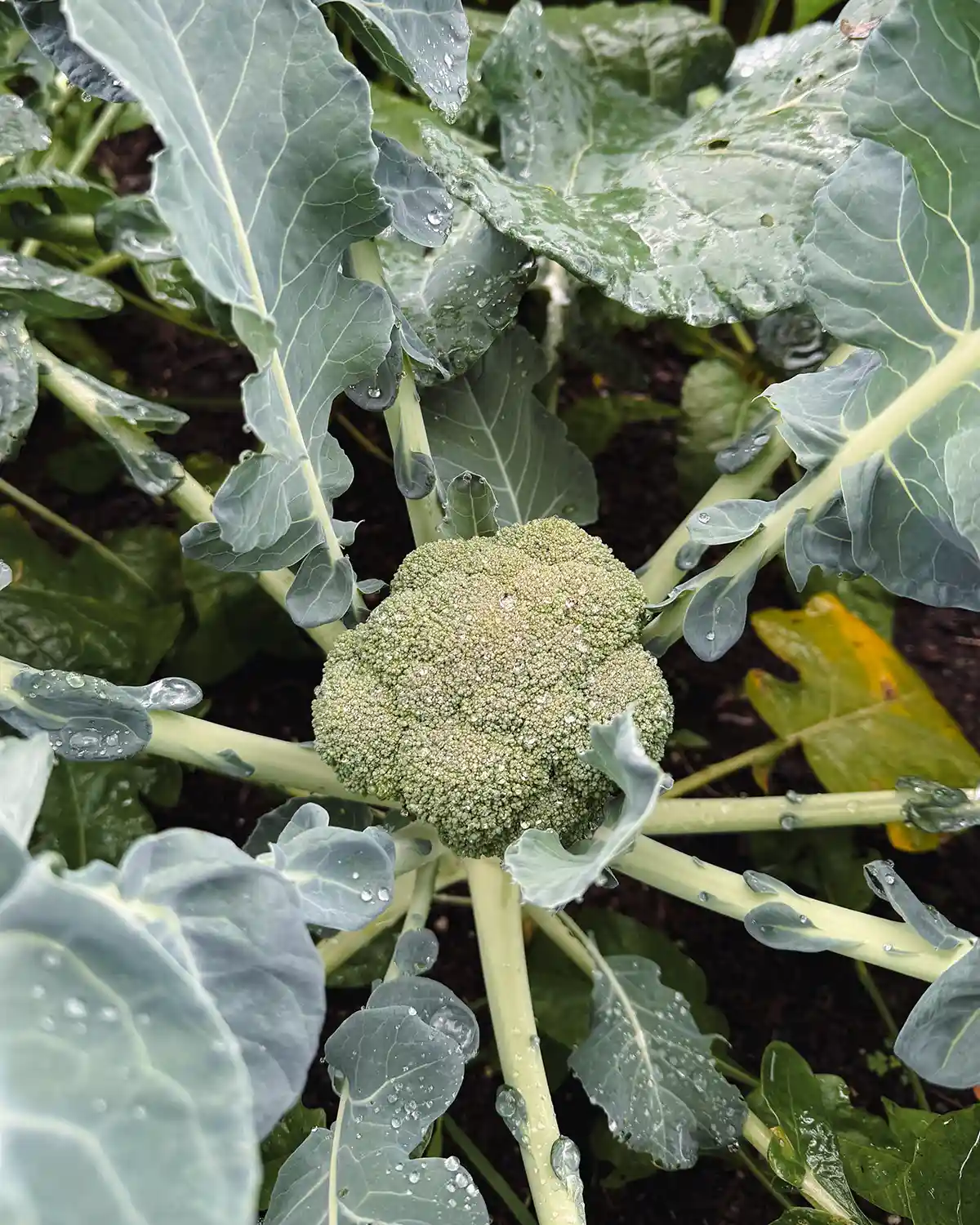
While broccoli can be grown in the spring, it really thrives amongst the cool-season vegetables. The cooler temperatures make growing easier and produce a delicious product. Broccoli is a plant that requires relatively consistent moisture, one reason it struggles in the summer. Fall growing conditions are better suited for the plants’ needs.
Timing: Broccoli typically needs between 60 and 85 days to produce full-size heads after transplanting outside, into the garden. Seeds are best started inside around 8 weeks before your anticipated last frost date. While a complicated vegetable to grow in the spring/summer, it’s much easier in the fall.
Favorite Varieties: Covina for the most productive and stress-resistant variety (it’s a champ in both hot and cold weather). Honorable mention to Belstar. For extra-large heads, try Imperial.
Broccoli Rabe
Broccoli rabe, also known as rapini, looks similar to broccoli but more closely relates to the turnip family, featuring a more bitter taste, and is more popular in the Mediterranean than in North America. The plants bolt quickly in the heat and much prefer the cooler, fall growing season.
Timing: Broccoli rabe needs 40 to 60 days to maturity.
Favorite Varieties: Broccoli Rabe.
Cauliflower
Cauliflower, similar to broccoli and Brussels sprouts, needs a bit of preplanning for cool-season crops. While the plant is cold-tolerant, it likes to do most of its growing before temps dip below 50 degrees.
Timing: Cauliflower requires 50 to 75 days to reach maturity after transplanting seedlings outside. Start seeds 6 to 8 weeks before your last frost.
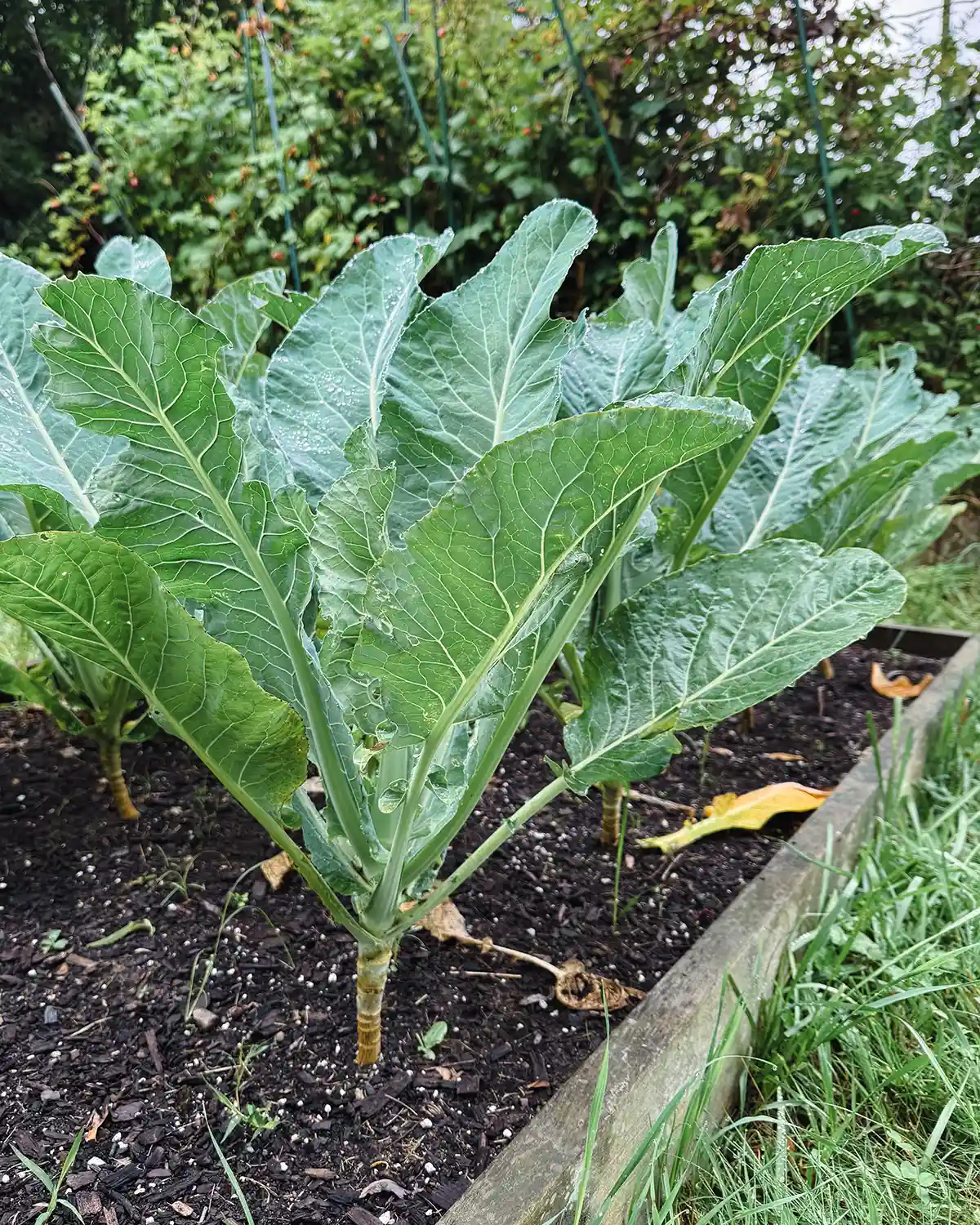
Favorite Varieties: Skywalker Cauliflower (an old standby for spring and fall) and Alcantara Cauliflower (a new variety with leaves that grow upright and wrap around the head to keep it blanched). Here’s Alcantara in my spring/summer garden beds.
Cabbage
Cabbage is another member of the fall temperature-loving plant club. While some longer-maturing, large-headed cabbage varieties need to be planted in the spring, many are quick-maturing and can be planted in mid-summer for a fall harvest. When September hits, trade in summer slaws for colcannon.
Timing: Depending on the variety, cabbage can take 60 to 90 days (or more) to reach maturity. Choose quick-maturing varieties for fall.
Favorite Varieties: Caraflex (for its quick growth and unique shape), Golden Acre (a classic, quick-growing cabbage), One Kilo Slow Bolt (napa cabbage variety).
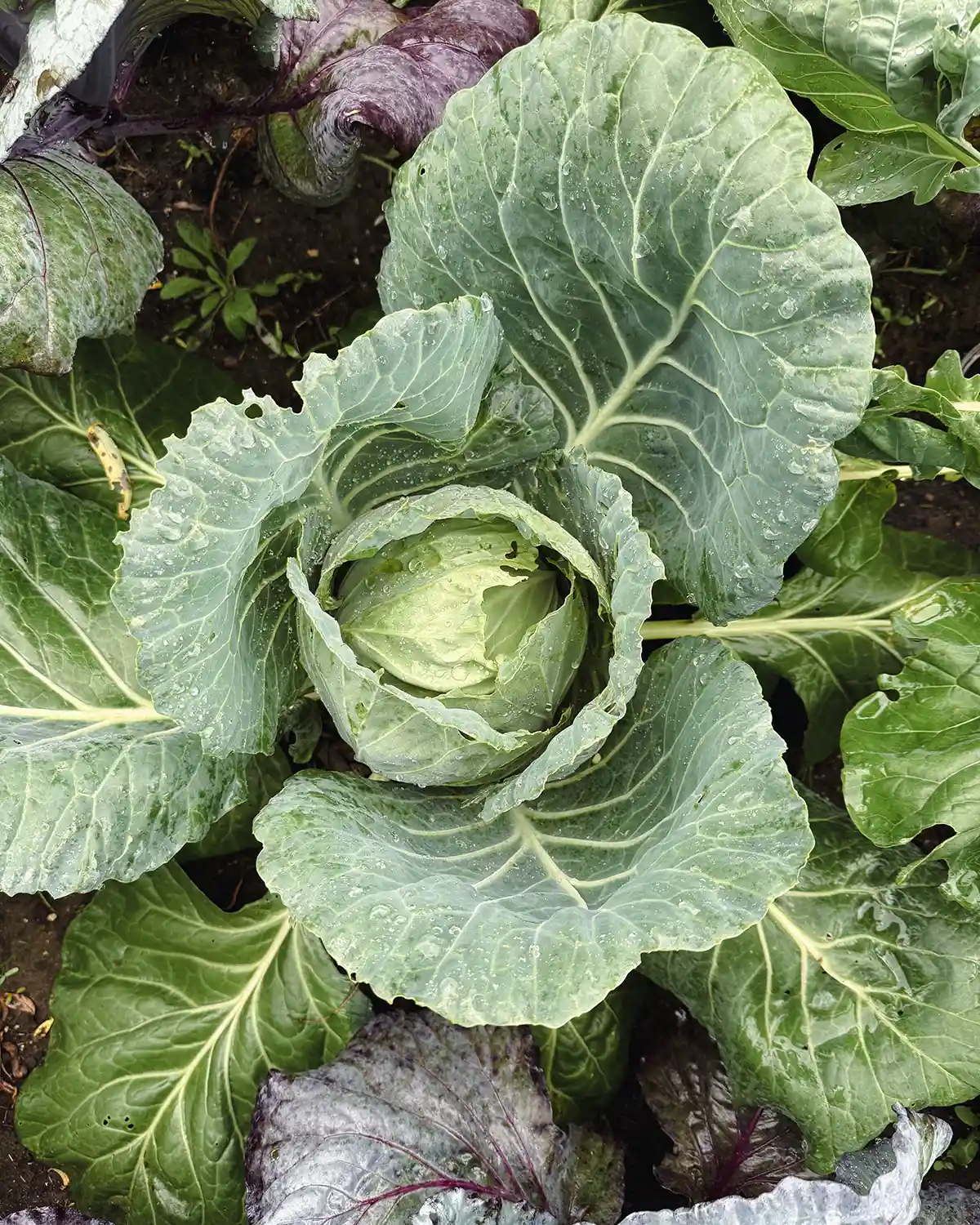
Kohlrabi
Kohlrabi is a fun vegetable to grow in the garden. It reminds me of a cross between a beet and a cabbage. Its growth habit is similar to beets, but its flavor and texture are more cabbage-like. You can succession-sow kohlrabi every two weeks beginning in the spring and through the fall for continuous harvests.
Timing: Kohlrabi reaches full maturity in 50 to 60 days, although in cooler weather it can take a little longer.
Favorite Varieties: Kolibri (purple variety) and Trero (green variety) are both fast-maturing and consistent growers.
Radishes
While radishes are typically considered a spring crop and one of the first plants of the growing season, they also make excellent fall crops. Radishes bolt quickly in the summer weather but grow consistently in cooler temps until the first frost. Radishes are not frost hardy.
Timing: Succession-sow every few weeks beginning in August or September, until four weeks before your first average frost date.
Favorite Varieties: Easter Egg (for the color variety), Cherry Belle, and French Breakfast.
Carrots
Carrots are another fall vegetable that gets sweeter with the cold weather, which is why summer grocery store carrots taste like disappointment. Take your candied carrot recipe up a notch with some sweet, fall carrots this growing season. There’s a wide variety of carrots out there, so look for ones that will mature before your first hard frost. However, some varieties withstand the cold better than others and, if used with insulating row cover and mulch, can be harvested through winter.
Timing: Carrots need 55 to 80 days to reach maturity.
Favorite Varieties: Rainbow Mix (variety of colors and flavors) and Napoli (fast-growing, stores well, and pickable in winter with proper insulating).
Parsnips
Parsnips are an ultra cold-hardy root vegetable that is delicious as a puree or chopped up in soups and stews, with its sweet, nutty flavor. In locations with milder winters, parsnips can continue growing and overwinter. Places with harsher winters can also overwinter parsnips with some row cover and mulch insulation.
Timing: Most parsnips require 100 to 180 days of growth. Because of this, parsnip seeds should be sown in the spring when soil has warmed to 50 degrees.
Favorite Varieties: All American (quicker growth) and Halblange (size and flavor).
Beets
Beets are one of the unsung fall vegetable varieties in the garden. The earthy root vegetables love cool weather and get sweeter when the temperature drops. For those who aren’t fans of their flavor, might I suggest starting with a golden beet. In the words of my children, beets taste like dirt. Beets produce a compound called geosmin that gives them that flavor. The golden varieties produce less of it, so their earthy, “dirt” flavor is milder.
Timing: Most beet varieties mature in 50 to 70 days, but some types do take longer. You can typically sow seeds until 8-10 weeks before you typically get a killing frost.
Favorite Varieties: Red Ace and Golden Detroit.
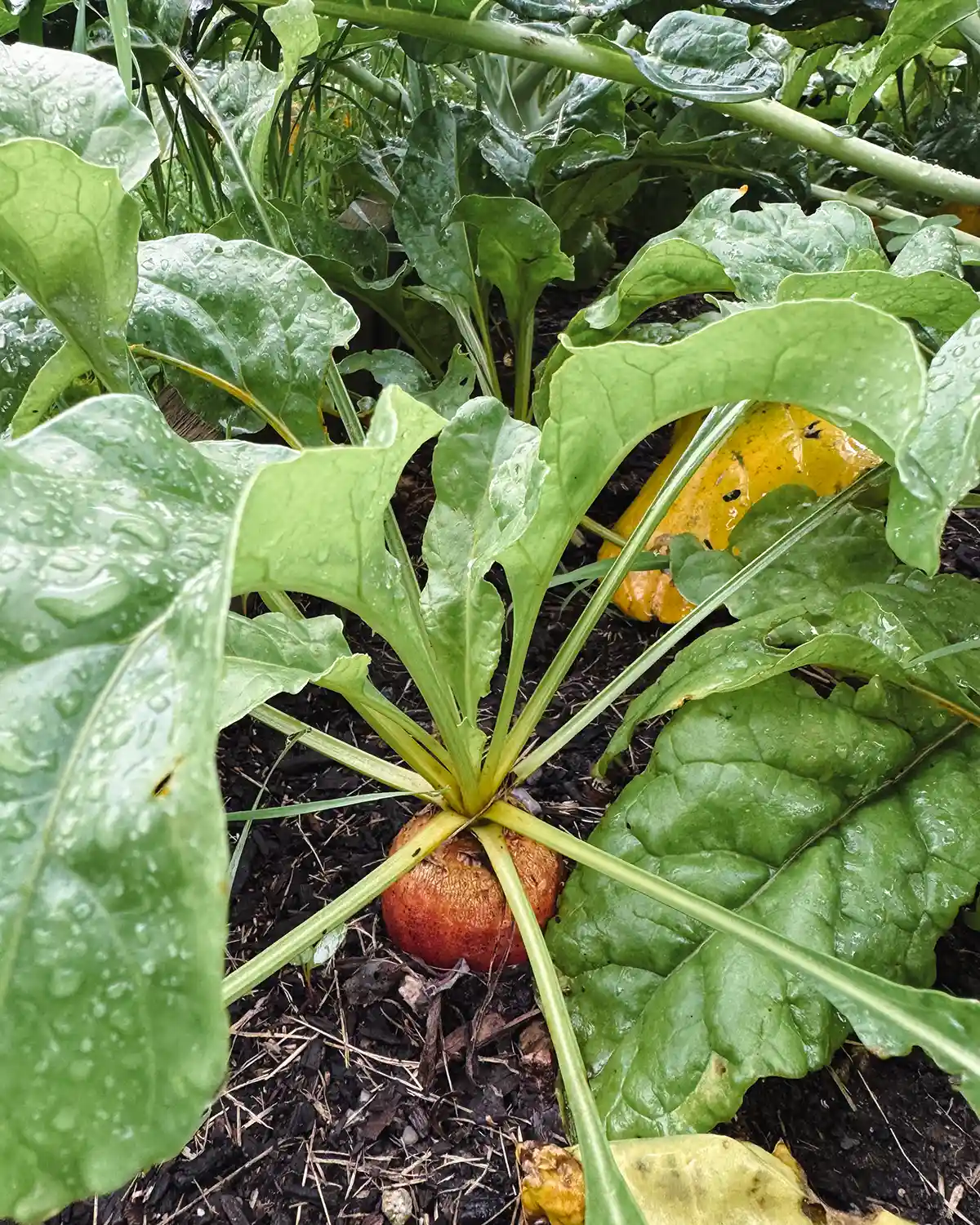
Turnips
Turnips produce small to medium-sized edible root balls filled with earthy flavor. The plant thrives in cooler weather and can tolerate light frosts. Small, radish-type varieties can be planted in early fall while larger, more traditional varieties need a longer growing season.
Timing: Small turnip varieties mature in 40 to 50 days while larger, more traditional types take 50 to 75 days.
Favorite Varieties: Chogoin (small, radish-type variety) and Purple White Globe (traditional turnip variety).
Rutabagas
Rutabagas might be my favorite root vegetable with their buttery, earthy, yet slightly sweet flavor. While beets and turnips thrive in fall temperatures, a little more preplanning is required for this fall crop due to longer growing seasons. Rutabagas can handle light frosts and, if covered well with mulch and row cover to protect the root crops, tolerate winter harvesting.
Timing: Requires 80 to 100 days to reach maturity. Depending on your growing zone, rutabagas are often sown in late spring for fall.
Favorite Varieties: American Purple Top and Navone Yellow.
Green Beans
While not traditionally considered a fall crop since they are not cold hardy at all, green beans, like radishes, grow quickly, and you can often squeeze one last flush out of bush beans in the fall.
Timing: Bush beans need about 50 to 60 days to reach maturity. Time your planting date from your average first frost date since green beans are not frost-tolerant. They’re an excellent candidate for succession sowing. Try to plant small patches of seeds every 1-2 weeks for a continual harvest through late summer.
Favorite Varieties: Maxibel Haricot (tender French filet) and Provider (heavy yields).
Celery
Celery is another fall veggie that grows well in cooler temperatures. With a longer maturity time, plan out your timing for fall celery. It can survive light frosts and temperatures down to 28 degrees. Using row covers can prolong harvests well into November for fall soups and stews. The key to fall celery growth is consistent watering. They do not like to dry out.
Timing: 100 to 120 days to reach maturity. Plant 10-14 weeks before the freezing temperatures arrive.
Favorite Varieties: Tango Celery (fast maturing)
Snow Peas
Snow peas are a great kid snack (they’re especially loved in our house paired with hummus) and another crop that prefers the cool temps over summer’s heat. They slow their growth and production habits in the cooler weather, so plan accordingly for a fall crop.
Timing: Snow peas need 50 to 70 days to produce pickable pods. Tuck seeds into the earth 8 to 10 weeks before your average frost.
Favorite Varieties: Mammoth Melting and Golden Sweet.
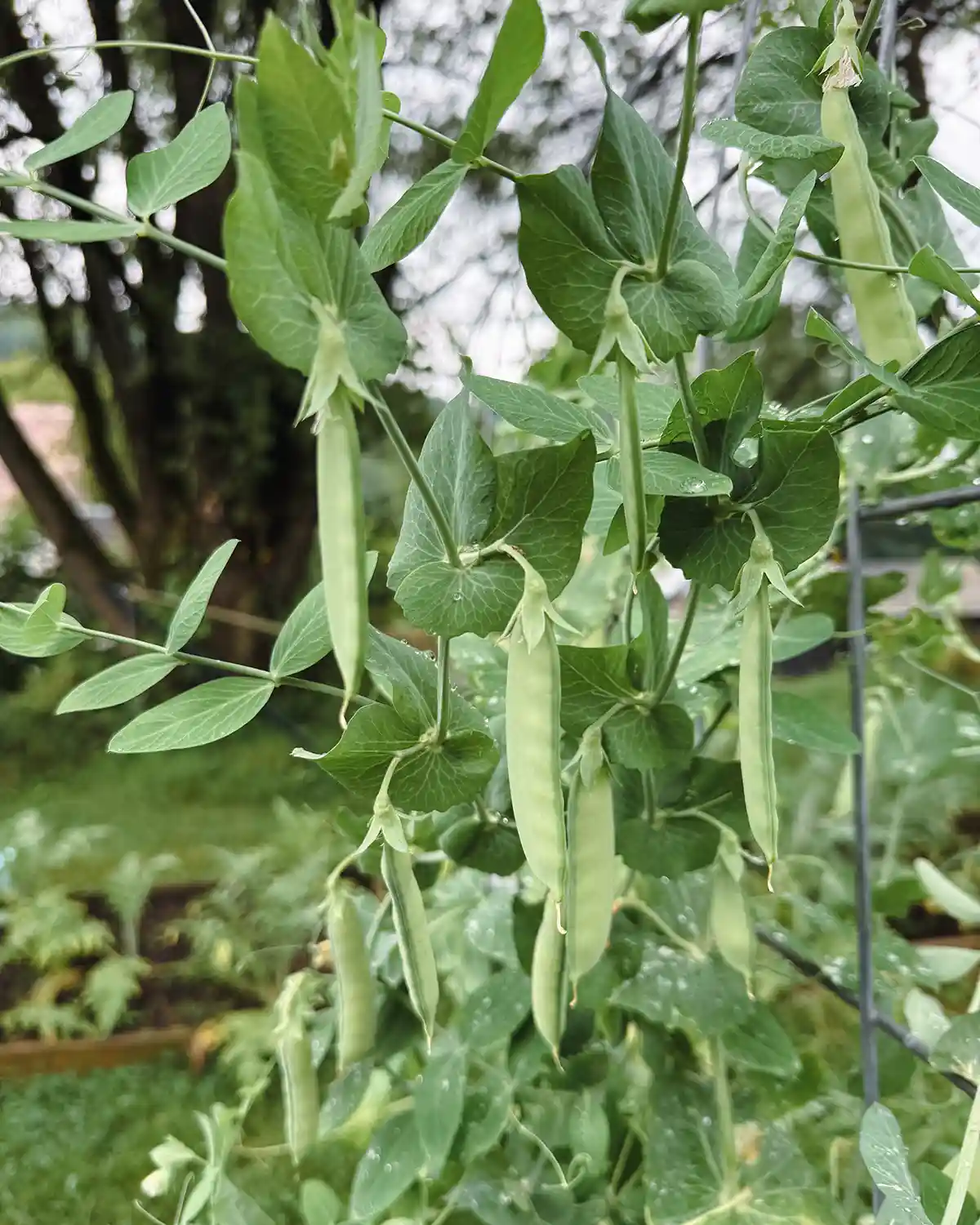
Snap Peas
Snap peas, like the other varieties, love cooler weather and, like most other cool weather crops, get sweeter as the temps drop. Fall peas are another great snacking veggie grown in fall and are also delicious sauteed or in a stir fry. Be sure to watch the pods like a hawk once they start producing because they can quickly turn bitter.
Timing: Snap peas take 50 to 70 days to harvest. Plant seeds 8 to 10 weeks before your region’s fall frost.
Favorite Varieties: Sugar Anne and Spring Blush.
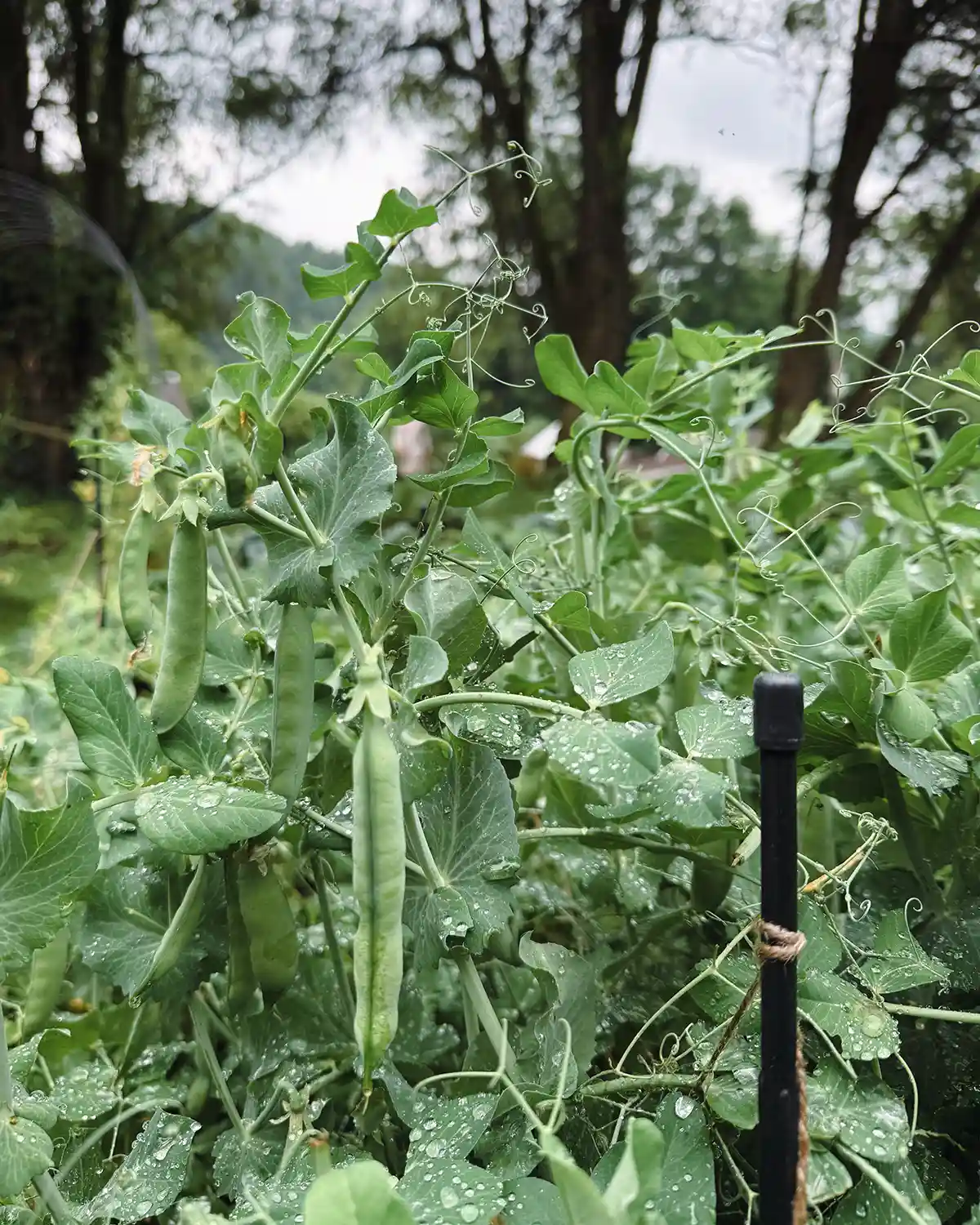
Shelling Peas
Shelling peas are my all-time favorite hardy vegetable to grow, both in the spring and the fall. There’s just something nostalgic about sitting on the deck and shelling the peas from the pods for dinner. While these plants quickly ramp up production in the spring, they can be a little slower in the fall. Spread seeds in the earth mid-summer, allowing a bit of extra time to produce before the frost.
Timing: Shelling peas need 60 to 70 days to reach maturity. Plop seeds directly into the soil 8 to 10 weeks before average frost.
Favorite Varieties: Green Arrow Shelling Peas and Laxton’s Progress #9 Shelling Peas.
Pearl Onions
Pearl onions are small, radish-sized or smaller white onions that are a common ingredient in fall and winter stews. It’s a staple in Julia Child’s boef bourgignon recipe. A few varieties grow exceptionally fast and are neutral-day, meaning they’ll produce a bulb regardless of the amount of sunlight they get (as long as they receive some). While larger onions can tolerate a light frost, pearl onions are more susceptible to frost damage. Time them to grow in the fall before your average frost date.
Timing: Pearl onions typically take about 50-70 days to produce. Sow seeds 8 to 10 weeks before your average first frost. Fresh seeds are best for a high germination rate because these tend to germinate poorly after a year.
Favorite Varieties: Pacific Pearl (fast maturing, day-neutral).
Leeks
Leeks are exceptionally frost-hardy once established and, depending on the variety chosen, can be picked long after the first frosts and into winter. Varieties are often labeled as early season or late season, so choose one appropriate for your growing zone and plans. Their flavor improves after a few cool nights, making them a favorite fall vegetable.
Timing: Leeks need 75 to 120 days to reach maturity. Time plants for picking to begin around your first frost, for fall varieties.
Favorite Varieties: Tadorna (110 days but one of the best for winter harvests) and Primor French Baby (110 days; they size up fast).
Scallions
While scallions grow quickly and can be planted for fall, most varieties don’t tolerate frost well. Sow them all spring through the summer until a couple of months before your average frost date. That gives scallions plenty of time to grow. Snip out the largest ones all fall, thinning your scallion patch and encouraging more growth. A few hybrid varieties can be overwintered, even in our cold Vermont winters.
Timing: Scallions need 50 to 70 days to grow. Succession sow every two weeks until 8 to 10 weeks before your average first frost.
Favorite Varieties: Tokyo Long White Bunching and Evergreen Bunching (great for overwintering).
Cilantro
While our desire to consume cilantro is strongest in the summer (salsas, street corn salad, tacos, etc.), it is not a summer crop and much prefers cooler growing temperatures. Wide varieties of cilantro are quick to bolt in the summer, and the leaves taste bitter. Sow seeds mid-summer and start snipping bunches when it’s sweetest in the fall.
Timing: Cilantro needs 50 to 55 days before plucking leaves. Sow at least 4 to 6 weeks before average frost date.
Favorite Varieties: Leisure (excellent for cut and come again)
Parsley
Parsley has a similar growth habit to cilantro, except we typically use it more in the fall than in the summer. Sow seeds mid-summer to ensure plenty of cut-and-come-again harvests once the temperatures turn cooler. Parsley can tolerate light frosts but won’t survive a hard frost.
Timing: Parsley needs 45 to 60 days to grow before you start snipping leaves. Plant fall seeds at least 4 to 6 weeks before average first frost.
Favorite Varieties: Italian Flat Leaf (a classic variety).
Garlic
While we commonly plant garlic in late fall, it’s not harvested until late spring or early summer. Some plant garlic cloves in the spring, but to ensure strong root development and bulb formation, fall is the perfect time, just after the first hard frost of the year.
Timing: Garlic needs about 8 to 10 months of growth, depending on the variety, from planting date to pulling them out of the ground. Plant in the fall 1 to 2 weeks after the first killing frost.
Favorite Varieties: Garlic growth and varieties is highly dependent on your location. In our zone 5A garden, we’ve had the best success with the hardneck variety Premium Northern White, which is exceptionally cold hardy.
Here’s To The Fall Garden
Speaking from experience, it’s hard to get the fall plants in. It’s the busiest time of the year for a gardener. You’re keeping up with robust summer yields, warding off the pests, and tackling the jungle of weeds. It’s one more thing you have to plan for and plant. But it is worth it!
The fall garden may be the best. With those large leafy greens, herbs that are thriving, and hardy root vegetables to serve as a staple for fall cooking. So take a little time, plan out what you have time for growing this fall, pick a few fall vegetables, and give it a whirl. What’s the worst that could happen? Could a frost come through early and wipe out some things? Or you didn’t get something planted in time? So we wasted a few seeds giving it a try. BUT what is the best possible outcome? A late frost to extend harvest windows, crisp days spent gardening where you’re NOT sweating to death, and bountiful fall harvests which mean fewer trips to the grocery store.
Happy vegetable gardening, lovely bunch!
Pssst…Do you plant a fall garden? What are your favorite and best crops? Or a no-fail hardy vegetable variety? Feel free to share your favorite veggies and varieties in the comments (be sure to include which growing zone you’re in!). Now to plant my fall plants and fill those raised garden beds.